Algeria
 Egypt
 Libya
 Morocco
 Sudan
 Tunisia
 Benin
 Burkina Faso
 Cabo Verde
 Côte d'Ivoire
 Ghana
 Guinea
 Guinea-Bissau
 Liberia
 Mali
 Mauritania
 Niger
 Nigeria
 Senegal
 Sierra Leone
 The Gambia
 Togo
 Cameroon
 Central African Republic
 Chad
 DR Congo
 Equatorial Guinea
 Gabon
 Republic of the Congo
 São Tomé and Príncipe
 Burundi
 Comoros
 Djibouti
 Eritrea
 Ethiopia
 Kenya
 Madagascar
 Malawi
 Mauritius
 Mozambique
 Rwanda
 Seychelles
 Somalia
 South Sudan
 Tanzania
 Uganda
 Angola
 Botswana
 Eswatini
 Lesotho
 Namibia
 Zambia
 Zimbabwe
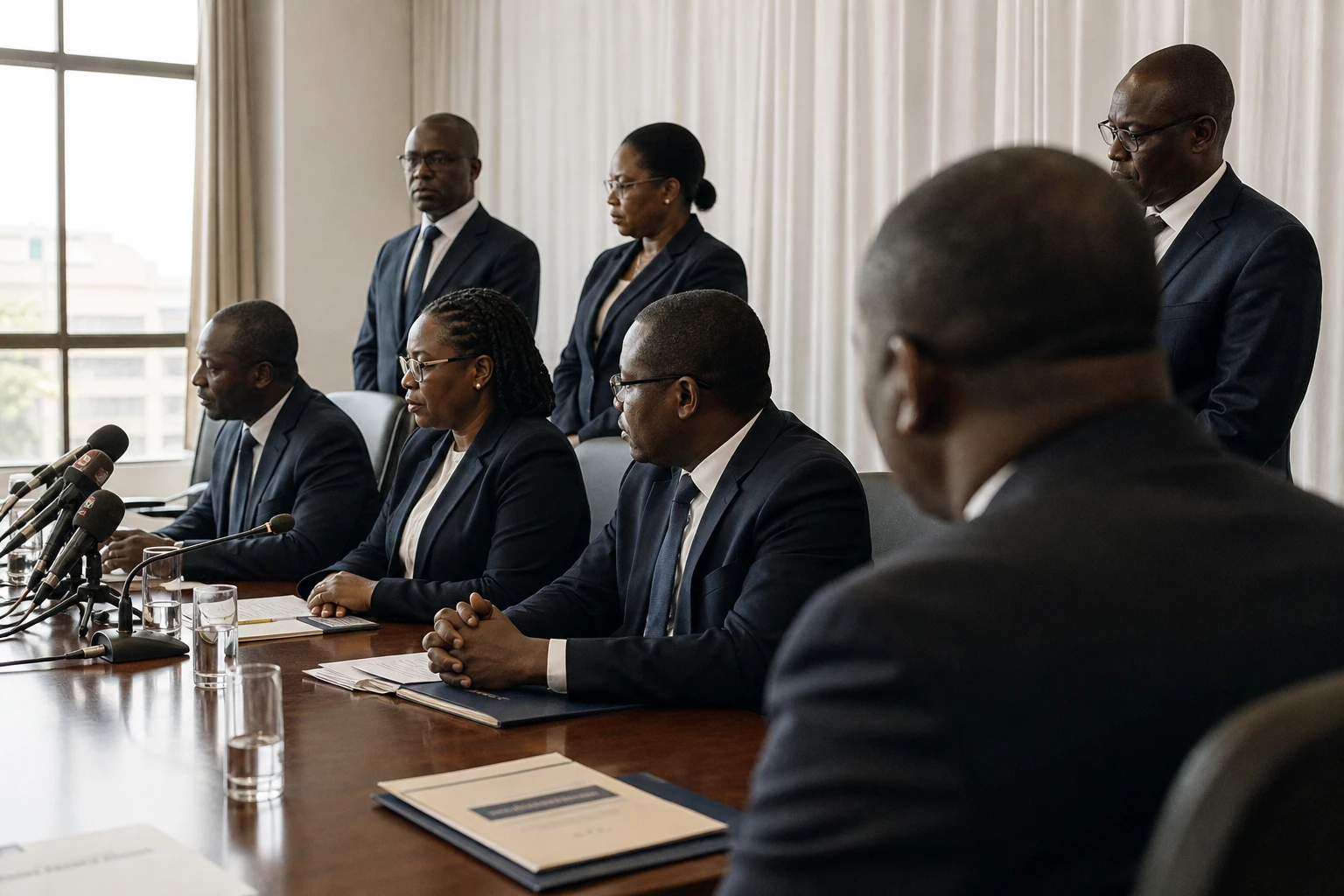
In Accra, a private gesture gives way to a state decision
When nationals are repatriated in an emergency, the first question is not just one of assistance. It is also about its role: who pays, who decides, and how can the dignity of those returning be protected? In Ghana, the government has chosen to turn down a GH¢20 million contribution offered by MTN Ghana to support Ghanaians affected by anti-foreigner violence in South Africa. The government says it has the means to fund the evacuations and the reintegration of returnees itself.
The episode goes beyond Ghana alone. It speaks to a broader reality in southern Africa: pressure on migrants, security responses, and tensions that arise when jobs, housing and the informal economy become arenas of confrontation. In Pretoria, South Africa’s capital, the government has for several months stressed that protests against foreigners must not degenerate into violence, while tightening its migration controls.
What Ghana says, and why it is refusing the money
In a statement issued on 26 August 2026, Ghana’s Ministry of Foreign Affairs confirmed that it had taken note of MTN Ghana’s proposal, which followed an interview with the company’s board chairman, Dr Ishmael Yamson. The government welcomes the intention but says it cannot accept the contribution. The reason is simple: President John Mahama’s administration says it has already provided funding for the evacuation and resettlement of the Ghanaians concerned.
The refusal does not rule out private assistance. It puts it in its proper context. In Accra, the authorities want to remain in control of a sensitive operation that is diplomatic, humanitarian and political at the same time. They also point out that this position had already been conveyed to MTN during a meeting with Foreign Minister Samuel Okudzeto Ablakwa on 14 August 2026.
The calculation is also institutional. When a state funds the return of its own citizens, it asserts its capacity to protect them. It also avoids an emergency migration situation being seen as dependence on a private actor. In a context where the presence of Africans abroad can quickly become a matter of sovereignty, the message is clear: assistance to nationals is first and foremost the responsibility of the state.
In South Africa, a social cohesion crisis becomes a regional issue
The crisis did not begin in Accra. It is playing out in South Africa, where the authorities have for several months acknowledged a rise in protests against people in the country irregularly. On 7 June 2026, President Cyril Ramaphosa called for the fight against irregular immigration not to be confused with the rejection of foreign nationals. The South African government subsequently held a series of briefings condemning acts of vigilantism and reiterating that violence against non-nationals is illegal.
South Africa’s Home Affairs department and police have, for their part, stepped up their operations. In June and August 2026, Pretoria set out details of enforcement operations, arrests of people in the country irregularly and public-order measures around anti-immigration protests. The authorities say they want to respond to social anger without allowing violence to take hold.
At the same time, incidents have been reported in several urban areas. SABC News, for example, reported a confrontation in Vereeniging between South African residents and foreign traders. Such episodes explain why countries of origin are following the situation closely. They are no longer dealing solely with a consular matter. They are facing a crisis in protecting their nationals in a labour market and neighbourhoods where economic competition is fierce.
The role of SADC, the African Union and pan-African networks
Ghana is not standing alone in this matter. In April 2026, it called for tensions linked to anti-foreigner attacks in South Africa to be discussed at African Union level. Pretoria disputed this framing, saying it risked singling out the country without addressing migration across the continent. The episode illustrates one simple point: intra-African migration is no longer just a bilateral matter. It affects regional balances.
The regional dimension is all the more evident because South Africa belongs to SADC, the Southern African Development Community, and continues to play a major economic role in the region. When violence targets migrants from other African countries, the issue is not just one of public order. It affects commercial chains, remittances, mobility networks and trust between member states. The issue therefore extends beyond Pretoria and Accra. It also concerns capitals watching anti-migrant rhetoric grow within their own borders.
The timing gives this matter added significance. The African Union is holding an extraordinary session in Luanda from 29 to 30 August 2026 on preventing and resolving conflicts in Africa. Although the South African crisis is not listed as an open war, it is a reminder that violence directed against foreigners can have lasting diplomatic effects and feed into a continental agenda on protecting people, mobility and social cohesion.
Ultimately, there are two challenges. For Ghana, it is about protecting its nationals without delegating that responsibility. For South Africa, it is about responding to social pressure without normalising hostility towards foreigners. And for Africa as a whole, the question is already clear: how can free movement, public security and respect for people coexist in a regional space where crises of trust spread quickly?