Algeria
 Egypt
 Libya
 Morocco
 Sudan
 Tunisia
 Benin
 Burkina Faso
 Cabo Verde
 Côte d'Ivoire
 Guinea
 Guinea-Bissau
 Liberia
 Mali
 Mauritania
 Niger
 Nigeria
 Senegal
 Sierra Leone
 The Gambia
 Togo
 Cameroon
 Central African Republic
 Chad
 DR Congo
 Equatorial Guinea
 Gabon
 Republic of the Congo
 São Tomé and Príncipe
 Burundi
 Comoros
 Djibouti
 Eritrea
 Ethiopia
 Kenya
 Madagascar
 Malawi
 Mauritius
 Mozambique
 Rwanda
 Seychelles
 Somalia
 South Sudan
 Tanzania
 Uganda
 Angola
 Botswana
 Eswatini
 Lesotho
 Namibia
 South Africa
 Zambia
 Zimbabwe
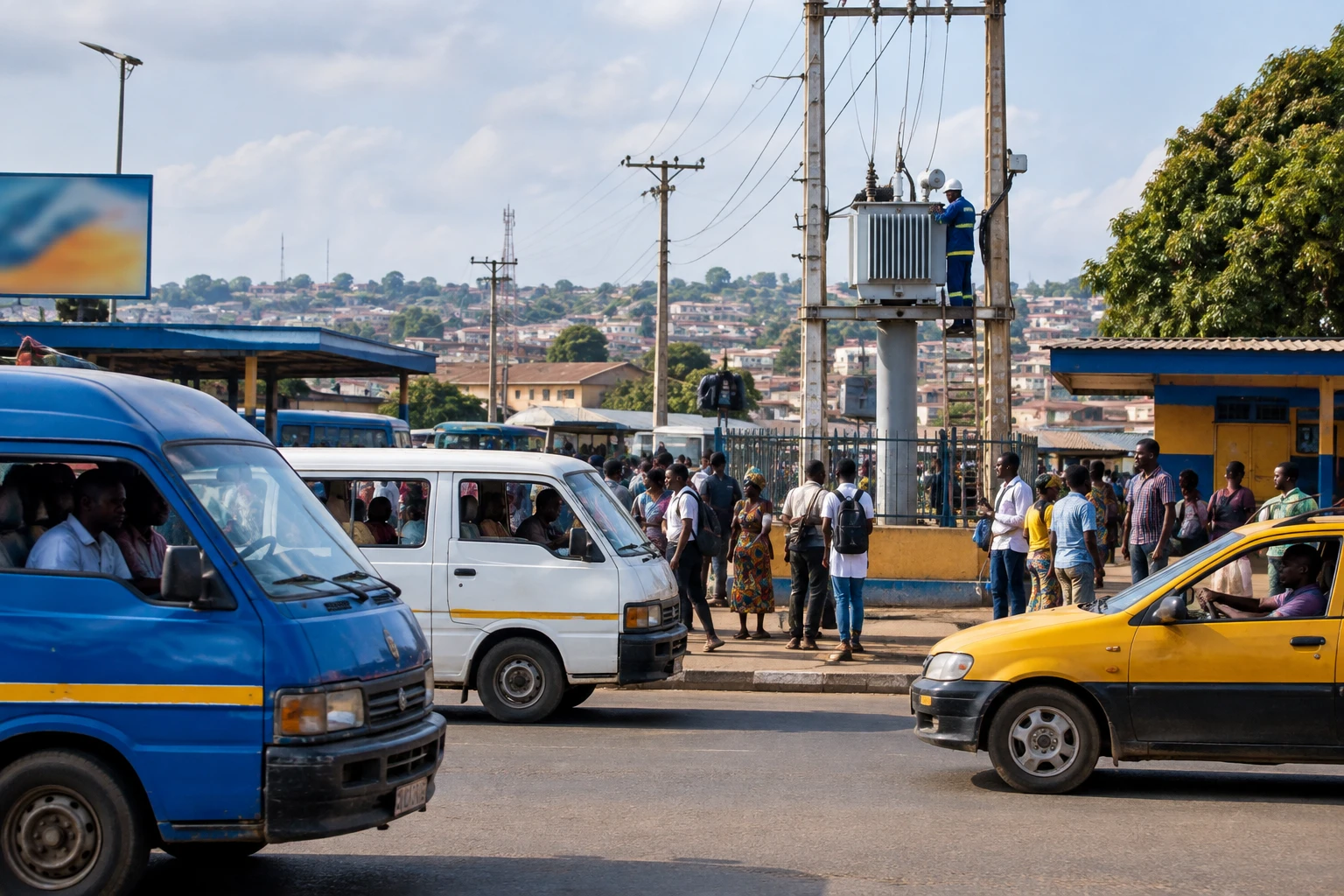
In Ghana, the challenge is not simply to generate enough electricity on an ordinary day. The system must also be able to replace a plant that has shut down quickly, absorb a peak in demand and deliver power to homes and businesses. The energy and green transition minister says this safety margin, known as reserve capacity, is insufficient.
Too little reserve to cope with unexpected events
On 12 October, in Ho, John Abdulai Jinapor said the power generation system did not have enough backup capacity to guarantee a reliable supply. The minister was speaking at the opening of the sector’s annual review. He said he wanted to buy more electricity, while warning against decisions that would weigh on public finances. His remarks were reported by several Ghanaian media outlets, including MyJoyOnline and GhanaWebbers.
Electricity reserves are not the same as installed capacity. A power plant may appear in the statistics without being available when the grid needs it, for example because of a breakdown, maintenance or a fuel shortage. The relevant figure is therefore the power that can actually be brought online, not simply the sum of the equipment that has been built.
This distinction helps explain the minister’s statements in January. He said then that the country was not facing a generation shortfall and that there had been no load-shedding for more than ten months. He attributed reported outages in Accra and Kumasi to operational difficulties. The October admission that reserves were inadequate does not necessarily contradict that claim: a grid can meet usual demand while remaining vulnerable to the sudden loss of a generating unit. The Daily Graphic reported the January remarks.
Restarting power plants and strengthening the grid
The government first wants to restart plants operated by the Volta River Authority (VRA), the state-owned power utility, and make greater use of the Akosombo Dam. Jinapor said these measures should help meet demand and limit reliance on private generation, which he considers expensive. However, the minister did not specify which units were involved or when they might become available, according to the reported remarks.
Public data underline Akosombo’s importance, but are not enough to establish its day-to-day availability. The plant has an installed capacity of 1,020 megawatts, but its so-called dependable capacity — the amount considered available for planning purposes — is put at 900 megawatts by the Energy Commission of Ghana. Across the generation fleet, this gap shows why nominal capacity does not tell the whole story about security of supply. The figures are included in the national energy statistics.
Generation is only part of the problem. Electricity must also be carried from power plants to areas of consumption, then distributed across cities and regions. Jinapor said the government was working with the Ministry of Finance to mobilise $500 million for the transmission grid run by the Ghana Grid Company (GRIDCo). He did not detail the financing terms, the projects covered or the investment timetable.
The minister also reported improved stability following the installation of transformers as part of a wider programme. This equipment mainly strengthens local distribution. It does not replace backup power plants and cannot, on its own, resolve constraints on the transmission grid. The Ministry of Energy clearly distinguishes GRIDCo’s role in transmission from that of distribution operators.
The cost of reliability matters to households and businesses
The choice between generating more electricity, buying power or rehabilitating existing facilities involves different costs. Additional purchases can help fill a short-term gap, but the cost depends on contracts and supply conditions. Restarting power plants, by contrast, requires repairs, fuel and sustained maintenance. The minister did not provide a costed comparison of these options.
The effects of limited reserves are not the same for everyone. An interruption can bring a small business to a halt or disrupt the storage of goods, while a large company may be able to afford a backup generator. Residents in neighbourhoods affected by distribution faults also face outages even when national generation is sufficient. This is why improvements to transformers and lines must go hand in hand with any increase in generation.
The structure of the sector adds a financial dimension. Private producers supply a significant share of Ghana’s electricity, while the VRA remains a major player in public generation. Shifting purchases towards state-owned plants could reduce some costs, but only if those plants are technically available and supplied with fuel. The challenge is therefore to reconcile reliability, affordability and financial viability, without assuming that any single solution will be enough.
A national issue with implications for West Africa
Ghana is a member of the Economic Community of West African States (ECOWAS), which is seeking to strengthen regional exchanges, including in electricity. Interconnections can provide an additional source of supply when systems are under strain, but they do not relieve each country of the need to maintain its power plants and lines. A lack of national reserves can therefore limit the ability to import power when needed or to maintain exchanges when neighbouring grids are themselves under pressure.
For Accra, secondary cities and rural areas, the next step will be less about announcing new capacity than about bringing it into service in a verifiable way. The effective availability of VRA plants, the condition of Akosombo, the mobilisation of the announced $500 million and GRIDCo’s work will all need to be monitored. These factors will show whether Ghana can turn its existing generation fleet and grid projects into reserves that can actually be deployed, without driving up electricity costs excessively.