
 Algeria
 Egypt
 Libya
 Morocco
 Sudan
 Tunisia
 Benin
 Burkina Faso
 Cabo Verde
 Côte d'Ivoire
 Ghana
 Guinea
 Guinea-Bissau
 Liberia
 Mali
 Mauritania
 Niger
 Nigeria
 Senegal
 Sierra Leone
 The Gambia
 Togo
 Cameroon
 Central African Republic
 Chad
 DR Congo
 Equatorial Guinea
 Gabon
 Republic of the Congo
 São Tomé and Príncipe
 Burundi
 Comoros
 Djibouti
 Eritrea
 Ethiopia
 Kenya
 Madagascar
 Malawi
 Mauritius
 Mozambique
 Rwanda
 Seychelles
 Somalia
 South Sudan
 Tanzania
 Uganda
 Angola
 Botswana
 Eswatini
 Lesotho
 Namibia
 Zambia
 Zimbabwe
A question of protection, but also of movement within Africa
When Ghanaian families leave South Africa in haste, the issue goes beyond a consular emergency. It touches on a broader reality: the movement of Africans within their own continent remains fragile, exposed to economic crises, social tensions and rhetoric of rejection. For Ghana, the priority is to protect its nationals. For Pretoria, it is also a matter of preserving its regional credibility, as the country seeks to present itself as an open economic hub and a central player in SADC, the Southern African Development Community, to which it belongs as part of its regional integration framework.
The issue comes amid an already fraught sequence of events. Accra began evacuating its nationals in spring 2026, following violence targeting foreigners in South Africa. Ghanaian authorities then called on the African Union to examine the issue at continental level. Pretoria responded that it accepted a debate on migration, but rejected reducing the discussion to a political condemnation of South Africa.
What Accra and Pretoria are saying
The Ghanaian government has organised several phases of repatriation since May 2026. The first wave involved 300 people, and the operations were subsequently scaled up. In total, 979 Ghanaians had already been sent home by mid-June, according to Ghanaian public media and Accra’s diplomatic service. The final phase announced for the end of July is for about 1,000 people, who registered voluntarily with Ghana’s representation in Pretoria.
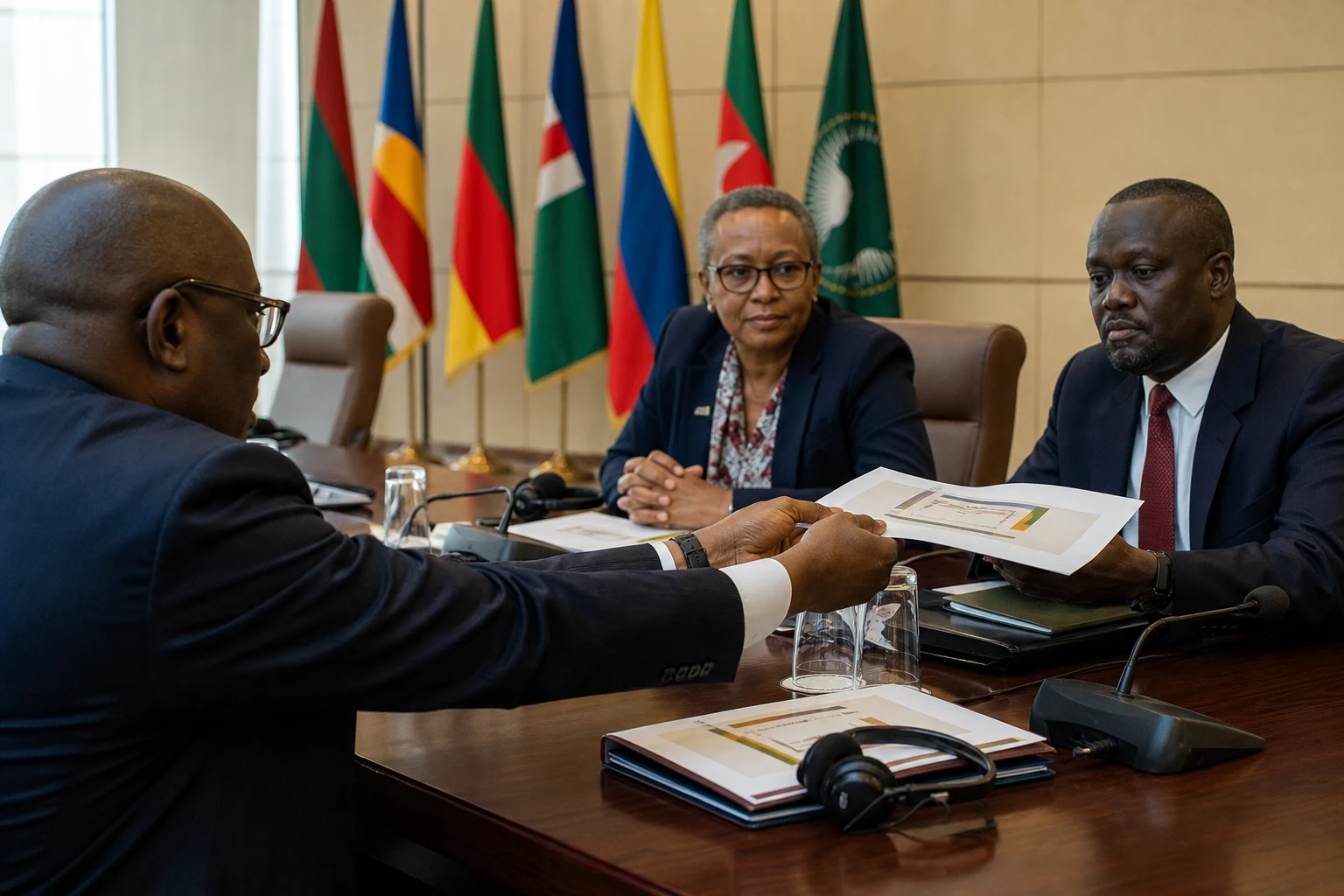
The escalation also has a diplomatic dimension. Ghana has formally asked for a debate on violence against African nationals in South Africa to be added to the AU agenda. Pretoria responded that discussions should focus on the root causes of migration, unemployment, governance and security, rather than singling out South Africa for blame. This defence is based on the idea that African migration cannot be treated as a simple policing problem.
Departures expose economic vulnerabilities
Behind the images of people leaving are jobs, businesses and supply chains. In South Africa, several sectors, particularly agriculture, fear labour shortages if thousands of migrants leave the country. The South African government has also set up a task force to assess the economic impact of departures on trade, tourism and the contribution to gross domestic product. The question is simple: can a country remain competitive when some of its workforce, often foreign-born, no longer feels safe?
For the Ghanaians concerned, the challenge is even more immediate. Many have had to abandon homes, informal businesses or small investments. Returning to Accra does not solve everything: they then need to find accommodation, access healthcare and earn an income. Ghanaian authorities say they have arranged medical, psychosocial and logistical support for returnees. This approach matters, as it prevents those who have returned from being reduced to mere figures in a diplomatic incident.
A test for the African Union and the region
The issue goes beyond the Ghana-South Africa standoff. It tests the African Union’s ability to address migration as a political, social and economic issue all at once. The AU already has a continental framework on migration, as well as a protocol on the free movement of people, but implementation remains slow. The institution nevertheless stresses that mobility, employment and governance must be considered together. This is precisely what the dispute serves to remind us: without safety for migrants, free movement remains more principle than reality.
For West Africa, the message is as political as it is human. Ghana, an influential member of ECOWAS, is defending a line of consular protection that could resonate far beyond its borders. In southern Africa, the pressure also falls on SADC and on the image of South Africa as a country seeking to drive the continent forward. What happens next will depend on how the dialogue is framed at the AU, Pretoria’s ability to restore trust and the course of the departures announced for the end of July 2026.



