Algeria
 Egypt
 Libya
 Morocco
 Sudan
 Tunisia
 Benin
 Burkina Faso
 Cabo Verde
 Côte d'Ivoire
 Guinea
 Guinea-Bissau
 Liberia
 Mali
 Mauritania
 Niger
 Nigeria
 Senegal
 Sierra Leone
 The Gambia
 Togo
 Cameroon
 Central African Republic
 Chad
 DR Congo
 Equatorial Guinea
 Gabon
 Republic of the Congo
 São Tomé and Príncipe
 Burundi
 Comoros
 Djibouti
 Eritrea
 Ethiopia
 Kenya
 Madagascar
 Malawi
 Mauritius
 Mozambique
 Rwanda
 Seychelles
 Somalia
 South Sudan
 Tanzania
 Uganda
 Angola
 Botswana
 Eswatini
 Lesotho
 Namibia
 South Africa
 Zambia
 Zimbabwe
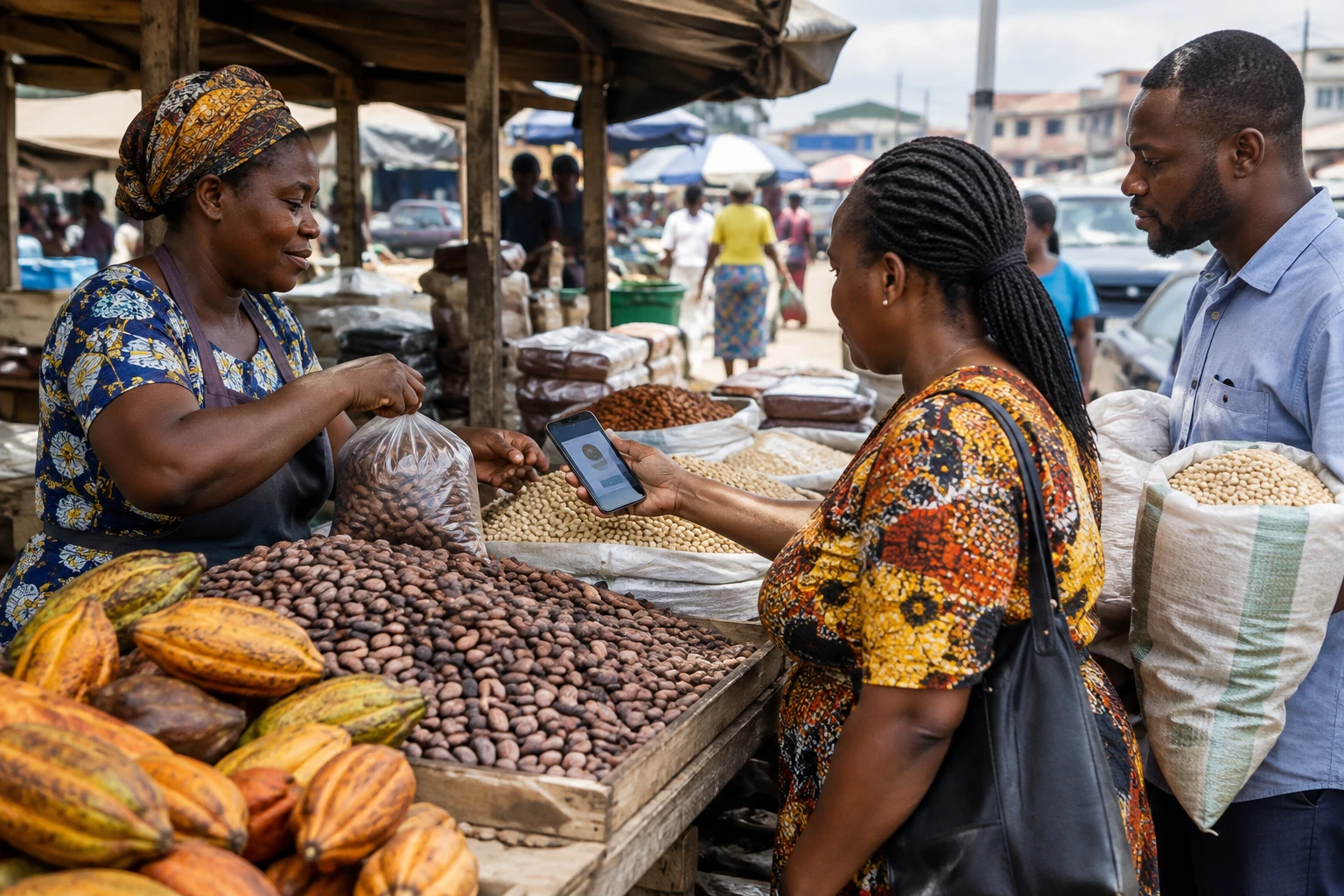
From Ghanaian cocoa and soybeans to Canadian cars and cereals, trade between Accra and Ottawa is already a commercial reality. The question now is whether their new cooperation framework will help Ghana process more of its resources locally, rather than simply expand import and export flows.
A partnership looking beyond trade
On 26 October 2026, in Ottawa, Foreign Ministers Anita Anand and Samuel Okudzeto Ablakwa signed a letter of intent to expand cooperation between Canada and Ghana. Canada’s foreign ministry had announced the visit and planned discussions; Ghanaian media subsequently reported the signing and its main areas of focus.
The document refers to aviation, rail, trade facilitation, education, agribusiness, mining, renewable energy and artificial intelligence. The two countries are also considering discussions on a defence agreement, as well as structured routes for labour mobility and more scholarships. A letter of intent sets a political direction: it is not, by itself, a concluded trade or defence agreement.
The rapprochement comes ahead of the 70th anniversary of diplomatic relations, which the two countries will mark in 2027. It builds on existing ties, particularly in development assistance, education and security. In March 2025, Canada and Ghana also concluded their first air transport agreement.
Trade is growing, but the relationship remains asymmetric
Bilateral merchandise trade reached $752 million in 2025, according to Canadian data. Ghana was then Canada’s eighth-largest trading partner in Africa. Canadian exports to Ghana totalled $427 million, up 35% year on year. Cars and cereals were among the main Canadian products sold in Ghana; cocoa and soybeans were among Ghanaian exports to Canada.
These figures do not, however, tell the whole story of the value of trade to Ghana’s economy. Canadian authorities put Canadian mining assets in Ghana at $710 million in 2025. This presence gives concrete weight to discussions on mining and adding value to raw materials. For Accra, the challenge is to turn more extractive activity into jobs, skills, public revenue and local processing. The letter of intent does not yet specify the projects, investments or safeguards that would make this possible.
How the benefits are shared will be decisive. Exporting companies and investors could benefit from new trade facilitation measures. But the gains for workers, small businesses and producing regions will depend, among other things, on contracts, tax rules, local-content requirements and training on offer. These details remain to be clarified.
Accra, a regional hub and diplomatic platform
Ghana is placing this partnership within a broader strategy of economic diversification and international cooperation. Accra hosts the secretariat of the African Continental Free Trade Area (AfCFTA), which aims to facilitate trade between African countries. Rail development and simpler trade procedures could therefore matter beyond trade with Canada alone, provided infrastructure and rules genuinely facilitate regional commerce.
The regional context is also one of security. As a member of the Economic Community of West African States (ECOWAS), Ghana shares with its neighbours concerns about violent extremism in the Sahel. In Ottawa, the two ministers also discussed Sudan and Haiti, according to Samuel Okudzeto Ablakwa. The Ghanaian minister referred to closer cooperation on these crises, as well as on United Nations reform, climate justice and the global financial architecture. These themes extend Ghana’s multilateral diplomacy, but how they will translate into concrete initiatives remains to be determined.
For Canada, the agreement forms part of its first Africa strategy, launched in March 2025. Ottawa presents trade, security and economic partnerships as priorities in the strategy, while saying it wants to support African-led solutions. The strategy also reflects Canadian interest in diversifying markets and supply chains. Ghana could find opportunities for financing, training and access to technology; it will also need to negotiate terms that serve its industrial goals.
From announcements to results: next steps
The announced areas span different sectors. Labour mobility and scholarships could directly benefit students and workers if specific mechanisms are established. Rail and agribusiness projects, meanwhile, would require funding, timelines and coordination with local stakeholders. Artificial intelligence and renewable energy would also require skills, infrastructure and appropriate regulations. For now, the letter sets out neither a funding allocation nor a public timetable.
The regional impact will therefore depend less on the list of sectors than on what follows from the commitments. Points to watch include whether defence discussions actually begin, the arrangements for mobility and scholarships, and investment and mining-processing projects. As Ghana asserts its role in the AfCFTA and African institutions, this partnership will show whether a bilateral strategy can support priorities set in Accra and generate benefits beyond trade between the two countries alone.
Background sources: Global Affairs Canada’s official announcement of the visit, Ghanaian report on the signing and sectors concerned, details of the commitments reported in Ottawa, Canada-Ghana trade and bilateral relations data and an outline of Canada’s Africa strategy.