
 Algeria
 Egypt
 Libya
 Morocco
 Sudan
 Tunisia
 Benin
 Burkina Faso
 Cabo Verde
 Côte d'Ivoire
 Ghana
 Guinea
 Guinea-Bissau
 Liberia
 Mali
 Mauritania
 Niger
 Nigeria
 Senegal
 Sierra Leone
 The Gambia
 Togo
 Cameroon
 Central African Republic
 Chad
 DR Congo
 Equatorial Guinea
 Gabon
 Republic of the Congo
 São Tomé and Príncipe
 Burundi
 Comoros
 Djibouti
 Eritrea
 Ethiopia
 Kenya
 Madagascar
 Malawi
 Mauritius
 Mozambique
 Rwanda
 Seychelles
 Somalia
 South Sudan
 Tanzania
 Uganda
 Angola
 Botswana
 Eswatini
 Lesotho
 Namibia
 Zambia
 Zimbabwe
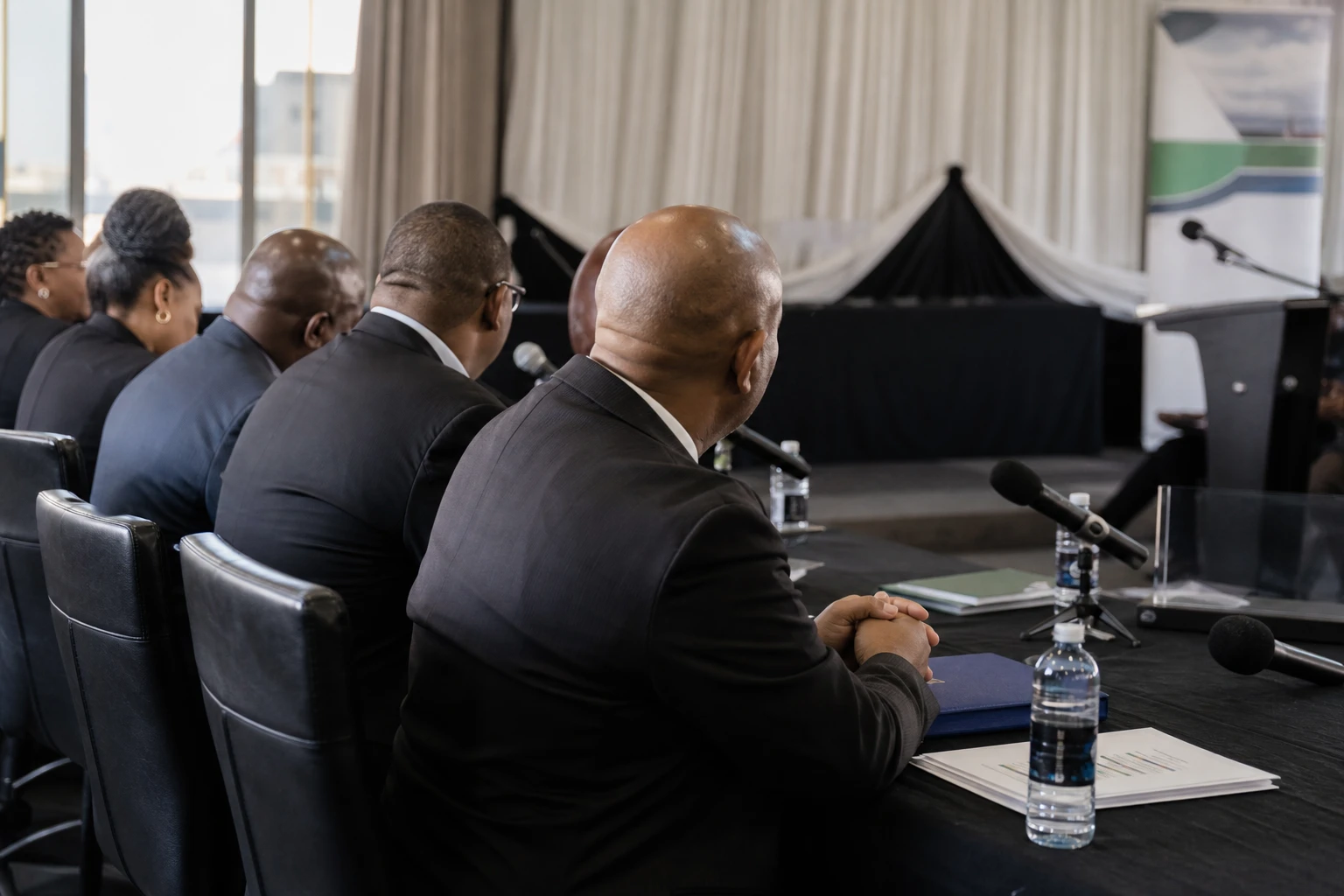
An investigation under pressure in Gauteng
In Gauteng, fear has taken on a new face in a matter of weeks. Eight women have been found dead east of Johannesburg, in a densely populated urban area where workers, students and informal traders move about daily. South African police have now put 400,000 rand, or about 24,400 dollars, on the table for any information that could help arrest those responsible. The measure is less a symbolic gesture than an admission of the gravity of the situation: the investigation has become a major matter of public interest.
The case also reaches Pretoria, where the presidency and the Ministry of Police have taken political control. President Cyril Ramaphosa has ordered that the investigation be given priority, while police say a specialised team is in place and a coordinated response is under way with local forces from the Ekurhuleni Metropolitan Police Department. In South Africa, Gauteng is not merely an administrative province: it is the country’s economic heart and a showcase for state authority. When violence strikes women there, its impact goes far beyond a crime story.
What is known about the cases
South African police say the bodies were discovered at different locations in Ekurhuleni, east of Johannesburg. The victims are women aged between 20 and 38, found over a period of about two months. Authorities say they are examining whether the cases are linked, but are not yet prepared to say that a single perpetrator is responsible. This caution matters: in a sensitive case, rushing to talk of a serial killer can muddy the waters.
A suspect has already been arrested in one of the cases, according to authorities, but investigators are still trying to establish any possible link between the different crime scenes. The first body was discovered on 17 July, followed by reports of other bodies in the weeks that followed, including in Kempton Park, Olifantsfontein and KwaThema. Police have also activated specialised units, including homicide detectives and psychological investigators. In other words, the security apparatus is working on the technical, field and victim-identification aspects of the case.
The public reward shows that police want to broaden their pool of sources. In the neighbourhoods where the victims were found, potential witnesses are often neighbours, drivers, relatives or shopkeepers who see things but do not always speak up. This is where the appeal to the public becomes crucial. The acting police commissioner said that every piece of information could speed up the identification of the victims and the progress of the investigation.
Why this case points to a wider problem
The case is part of a much broader context than Gauteng alone. In South Africa, violence against women remains a structural problem, documented by UN agencies and national institutions. UN Women notes that the country has a high level of femicide, with a reported rate of 5.5 women killed by an intimate partner per 100,000 women between 2020 and 2021. The same dataset shows that about 35.8% of South African women said they had experienced physical or sexual violence during their lifetime. These are not abstract figures: they highlight the immense pressure on the police, the justice system and social services.
The government has, however, put an action framework in place. The country has a National Strategic Plan on Gender-Based Violence and Femicide, covering the period 2020-2030, and a National Council intended to coordinate the public response. But legislation is not enough. The problem lies in investigative capacity, the speed of identifications, the protection of families and trust between residents and police. In areas such as Ekurhuleni, where mobility is high and the informal economy makes daily routines more precarious, any disappearance can quickly turn into a tragedy.
The political response shows that the issue is no longer solely a policing matter. The Commission for Gender Equality has called for an urgent response. The presidency has described it as a national crisis. And the Ministry of Police has pledged to overlook no detail. This language reflects a simple reality: in South Africa, femicide is not a sectoral issue. It is a test of the state, its resources and its credibility in working-class neighbourhoods and major urban centres across Gauteng.
A regional impact across Southern Africa
The case also reaches beyond South Africa’s borders. In the Southern African Development Community, SADC, states face the same challenge: how to protect women in highly mobile urban spaces without underestimating domestic violence, street attacks and criminal networks. The South African case draws attention because the country has stronger institutions than many of its neighbours, yet still struggles to stem gender-based violence. It is precisely this paradox that resonates across the region.
Looking ahead, the key issue will be judicial rather than emotional. It will be important to monitor the identification of the victims, whether a link between the cases is confirmed, how the reward develops and the first court appearances. In Gauteng, where Pretoria is the centre of decision-making and Johannesburg bears the social impact, every development will matter. And across the continent, the investigation will serve as a reminder of an obvious truth: women’s safety is not a subcategory of public safety. It is a direct indicator of the strength of the state.



