Algeria
 Egypt
 Libya
 Morocco
 Sudan
 Tunisia
 Benin
 Burkina Faso
 Cabo Verde
 Côte d'Ivoire
 Ghana
 Guinea
 Guinea-Bissau
 Liberia
 Mali
 Mauritania
 Niger
 Nigeria
 Senegal
 Sierra Leone
 Togo
 Cameroon
 Central African Republic
 Chad
 DR Congo
 Equatorial Guinea
 Gabon
 Republic of the Congo
 São Tomé and Príncipe
 Burundi
 Comoros
 Djibouti
 Eritrea
 Ethiopia
 Kenya
 Madagascar
 Malawi
 Mauritius
 Mozambique
 Rwanda
 Seychelles
 Somalia
 South Sudan
 Tanzania
 Uganda
 Angola
 Botswana
 Eswatini
 Lesotho
 Namibia
 South Africa
 Zambia
 Zimbabwe
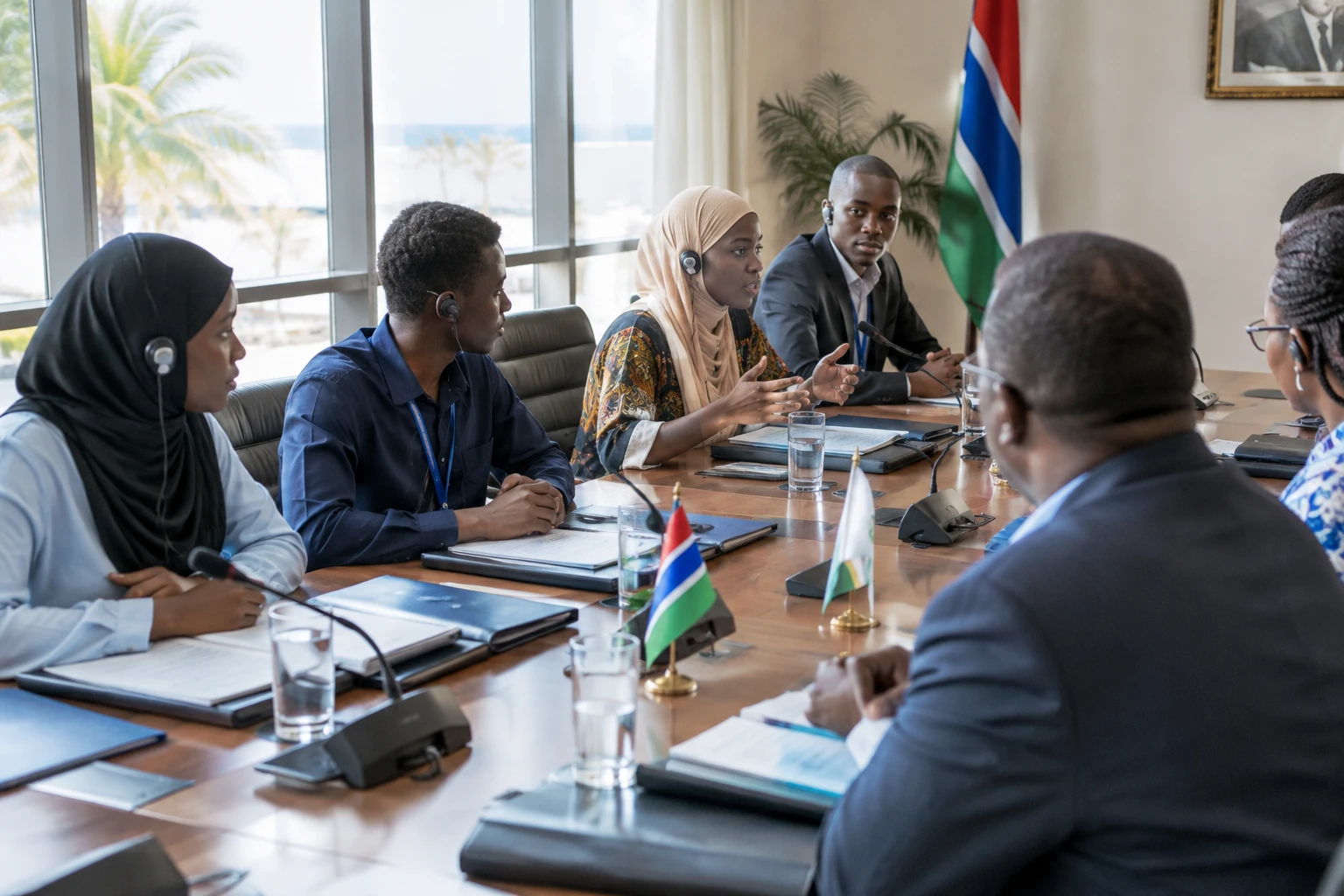
For a Gambian student, attending a lecture can begin long before reaching the lecture hall: first they must find a bus, get to Faraba and rely on essential services that work. On 26 October 2026, hundreds of students demonstrated to demand concrete answers on transport, water, meals and internet access.
A remote campus and journeys that weigh on studies
The protest took place in Kanifing, near Banjul, rather than in the capital itself, according to the pan-African news agency APA. Students are calling for solutions for the Faraba Banta campus, where some of the University of The Gambia’s activities take place. The journey from areas across the urban agglomeration can become long and unpredictable when buses are scarce or fail to run on schedule.
The difficulties are not limited to travel. The student union also cites the closure of the canteen, limited access to drinking water and an internet connection deemed inadequate. These problems have a direct impact on university life: lateness, missed classes or assessments, difficulty studying and long days without access to meals on campus.
The situation is not entirely new. In 2024, the student association had already alerted the authorities to transport to Faraba. In March 2025, it published the results of water tests carried out on campus: some well-water samples showed bacterial contamination, while the tested borehole water met the stated standards. This precedent highlights the importance of regular monitoring and clear guidance, without implying that all water sources on campus are affected.
Public commitments await delivery on the ground
The Gambian Ministry of Higher Education announced several measures on the Saturday before the protest. It said the catering service was due to resume on Monday, additional water dispensers would be installed and the public company Gambia Transport Service Company would deploy all 20 of its buses for student journeys. The ministry also referred to efforts to engage telecoms operators and the use of the GAMEN research and education network to improve connectivity.
These announcements address the main demands, but implementation remains the decisive issue. Student union president Ismaila Fadera disputed the timetable for discussions with the authorities, arguing that talks had taken shape only after the protest was announced. The ministry, for its part, called for dialogue and acknowledged that the demands required coordination and practical solutions.
The students submitted a petition setting deadlines for action and called for their protest to remain peaceful. Demba Bojang, a student, stressed that the demands concerned their wellbeing. The disagreement is therefore also about the approach: the authorities are highlighting the measures announced and dialogue; student representatives are calling for commitments to be followed by verifiable action.
Access to education at stake beyond Banjul
In Faraba, distance makes transport a condition of access to classes. Students living in the Banjul urban area are more reliant on buses; those with their own means of transport or able to buy food and mobile data are less exposed to disruption. The cost is also measured in time and lost learning opportunities, not just expenses.
The response does not rest with the ministry alone. It requires coordination between the University of The Gambia, the ministry, the transport company, water services and telecoms operators. The announcements can be assessed only against simple indicators: bus frequency and punctuality, the actual availability of meals and drinking water, connection stability and student attendance in class.
The issue also resonates across West Africa. ECOWAS, an economic community bringing together West African countries, has included higher education and the mobility of students and teachers in its cooperation framework. But regional mobility remains theoretical if daily journeys to campus, internet access and basic facilities are not ensured.
The protest comes a few weeks after demonstrations over power cuts in The Gambia, amid a political climate shaped by the presidential election scheduled for 5 December 2026. President Adama Barrow is seeking a third term. These separate events do not prove a direct link, but they have put public services and responses to everyday concerns at the centre of national attention.
The next steps will depend less on statements than on the implementation of the announced measures. For students, the test will be immediate: being able to get to class on time, drink safe water, eat and access the digital resources they need. For the authorities, the challenge is to turn a one-off protest into a lasting improvement in how the campus operates.