Algeria
 Egypt
 Libya
 Morocco
 Sudan
 Tunisia
 Benin
 Burkina Faso
 Cabo Verde
 Côte d'Ivoire
 Ghana
 Guinea
 Guinea-Bissau
 Liberia
 Mali
 Mauritania
 Niger
 Nigeria
 Senegal
 Sierra Leone
 Togo
 Cameroon
 Central African Republic
 Chad
 DR Congo
 Equatorial Guinea
 Gabon
 Republic of the Congo
 São Tomé and Príncipe
 Burundi
 Comoros
 Djibouti
 Eritrea
 Ethiopia
 Kenya
 Madagascar
 Malawi
 Mauritius
 Mozambique
 Rwanda
 Seychelles
 Somalia
 South Sudan
 Tanzania
 Uganda
 Angola
 Botswana
 Eswatini
 Lesotho
 Namibia
 South Africa
 Zambia
 Zimbabwe
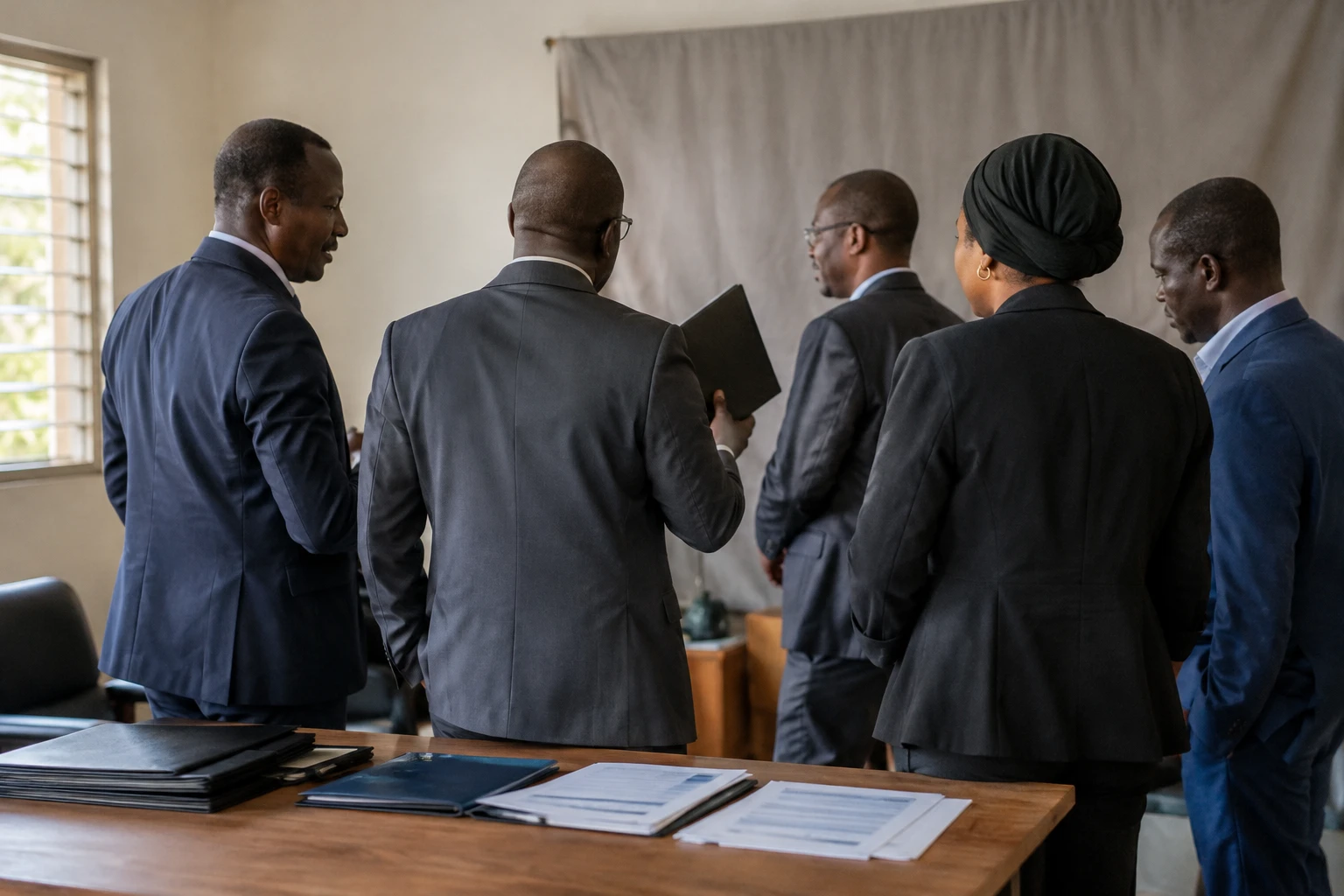
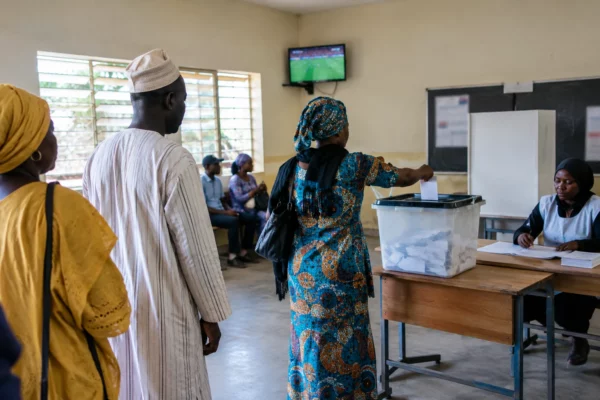
In Banjul, the stakes in the 5 December presidential election are not simply a matter of how many names have been announced. The Independent Electoral Commission (IEC) still has to verify the nomination papers before publishing the official list. Confusing the submission of a candidacy with its approval would give voters a false picture of the election.
A list still under review
The Gambia is preparing to elect its president in less than a month. The IEC’s timetable sets the vote for 5 December 2026. But as of 12 November, the commission had not confirmed a final list of five candidates.
The nomination process closed on 11 November, after a period for nominations that opened on 3 November. West African radio station WADR reports that 18 aspirants took part in the process and that only four had submitted all the required documents by then. That figure describes the status of the files, not the number of candidacies ultimately accepted.
Incumbent President Adama Barrow, opposition leader Ousainou Darboe and Talib Ahmed Bensouda are among those who submitted their papers, according to Gambian media outlet The Voice. Other names have also been reported. However, submitting papers does not guarantee that the IEC will accept each candidacy: the commission must review the documents and announce its decisions.
Voters will therefore have to wait for the announcement to learn who will be on the final ballot. The IEC, the body responsible for organising elections, said in its official timetable that the nomination period ran until 14 November. Its subsequent communications and any deadlines for corrections should be followed to establish the exact administrative closing date.
Barrow’s third term at the centre of debate
Adama Barrow has been in power since 2017, following his electoral victory in December 2016 over Yahya Jammeh, who had ruled the country for 22 years. The election ushered in a political transition backed by diplomatic and regional pressure, notably from ECOWAS, the Economic Community of West African States.
Barrow is seeking a third term. The constitution currently in force places no limit on the number of presidential terms. A constitutional reform that would have included a two-term limit failed in the National Assembly in 2020, as it did not secure the required majority. The question of political alternation therefore remains a political and institutional one, even in the absence of a constitutional bar on another candidacy.
The situation also brings back Barrow’s initial pledge not to remain in power beyond a transitional period. The debate now concerns the scope of that commitment, the rules of the contest and the ability of institutions to ensure a credible election. Attributions of intent to political actors, however, are no substitute for verifiable actions and statements.
A diverse opposition and local concerns
Ousainou Darboe, a leading figure in the United Democratic Party (UDP), presents himself as one of the president’s main challengers. A lawyer and long-time political leader, he represents an organised opposition, but one that must win support beyond its partisan base. His nomination papers, too, remain subject to the electoral process.
Talib Ahmed Bensouda, the former mayor of Kanifing, has attracted the attention of some younger voters and is offering a newer political platform. His local experience gives the campaign a practical dimension: issues such as municipal services, jobs and representation for younger generations may carry as much weight as the major institutional debates.
A government report is said to have implicated him in financial irregularities, according to information circulated in the initial material. His movement has described the accusations as a political manoeuvre. In the absence of documents that would allow the facts and their outcome to be independently established, these allegations cannot be presented as proven. Nor do they, on their own, determine the outcome of the review of his candidacy.
The participation of Isatou Touray and Modou Lamin Sima has also been mentioned. But their inclusion on a final list should not be asserted before the IEC makes its decision. This caution is particularly important for Touray’s candidacy, which is sometimes described as a first for a woman in Gambian presidential history: the exact status of her file must be confirmed by the commission.
An election closely watched in West Africa
For citizens, the contest will be fought over everyday concerns: the cost of living, access to jobs, public services and opportunities for young people. Priorities may differ between Banjul and other localities, as well as between salaried workers and the many people engaged in informal economic activity. The political outcome alone will not show how these pledges will be funded or implemented.
The campaign, scheduled to begin on 16 November, will leave candidates little time to present their platforms once the official list has been established. The next steps to watch are the publication of approved candidacies, the handling of any challenges and the IEC’s arrangements for voting and the count.
The Gambia remains a member of ECOWAS, whose democratic principles and election observation give the vote regional significance. Its recent history is a reminder that political transitions can involve both national institutions and West African partners. But it is first for the IEC to clarify the candidacies, and for Gambian voters to decide on 5 December. Until then, it would be premature to speak of five officially approved candidates.