Algeria
 Egypt
 Libya
 Morocco
 Sudan
 Tunisia
 Benin
 Burkina Faso
 Cabo Verde
 Côte d'Ivoire
 Ghana
 Guinea
 Guinea-Bissau
 Liberia
 Mali
 Mauritania
 Niger
 Nigeria
 Senegal
 Sierra Leone
 Togo
 Cameroon
 Central African Republic
 Chad
 DR Congo
 Equatorial Guinea
 Gabon
 Republic of the Congo
 São Tomé and Príncipe
 Burundi
 Comoros
 Djibouti
 Eritrea
 Ethiopia
 Kenya
 Madagascar
 Malawi
 Mauritius
 Mozambique
 Rwanda
 Seychelles
 Somalia
 South Sudan
 Tanzania
 Uganda
 Angola
 Botswana
 Eswatini
 Lesotho
 Namibia
 South Africa
 Zambia
 Zimbabwe
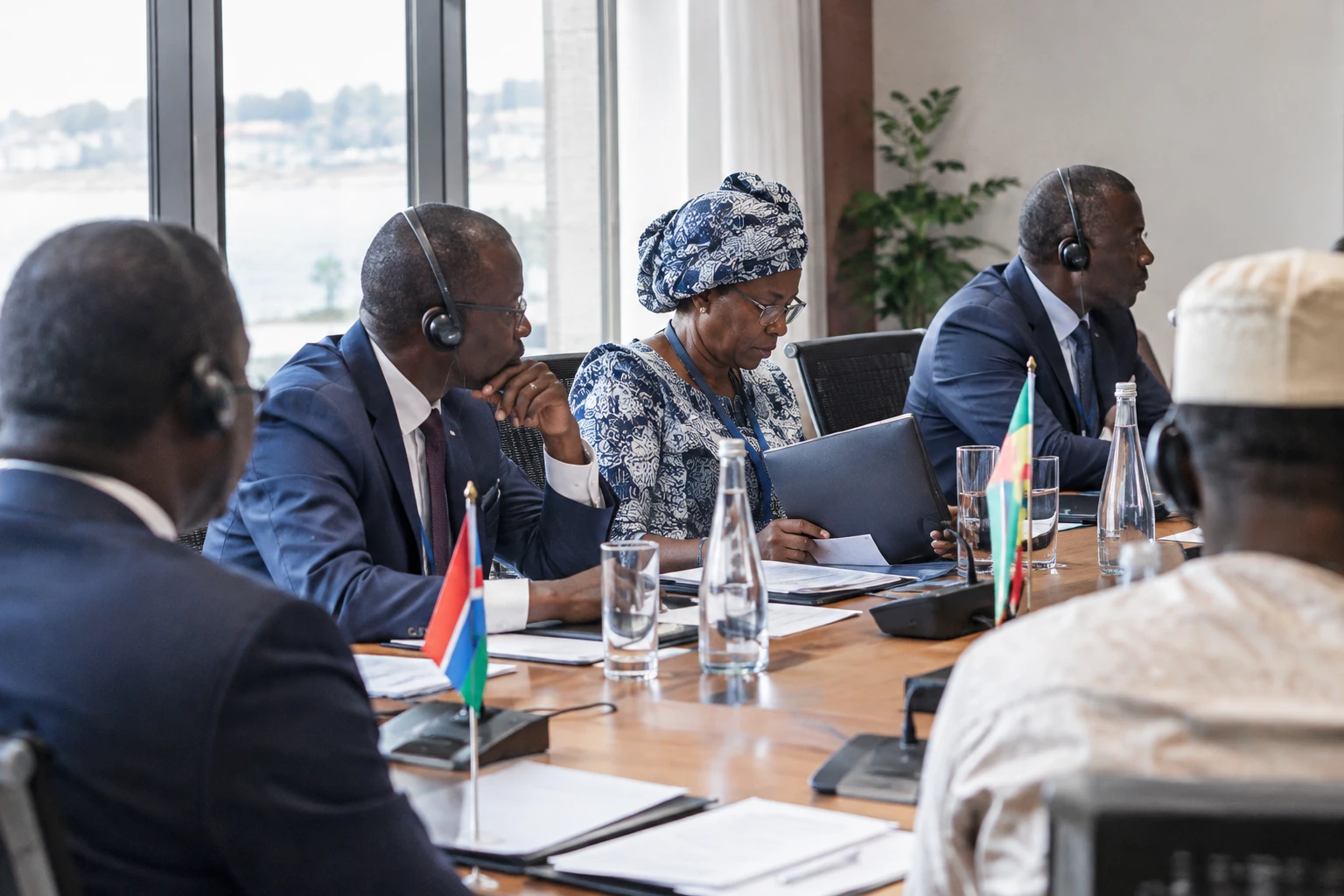
Extending power lines is not enough to guarantee electricity at the socket. In The Gambia, the arrival of new generators in Brikama addresses a more immediate emergency: keeping supply going on a grid that now serves more households but remains fragile.
A much-needed boost for a system under strain
On 5 October 2026, national utility NAWEC received two generators, each with a capacity of 10.5 megawatts. They are due to join the Brikama power station, south of Banjul, and be installed and commissioned before the end of the month, according to the state-owned company. A third unit of the same capacity has been announced, but no arrival date has been specified.
The delivery follows several months of power disruptions. In September, President Adama Barrow acknowledged problems with planning, generation and maintenance. His government also announced a 24 MW unit at Brikama, separate from the three generators referred to by NAWEC. The announcements therefore cover several pieces of equipment and different timelines: they should not be confused, or their capacities added together as if they were already available.
The two newly received machines are not yet generating electricity. Nor does their rated capacity guarantee that they will run continuously. They will need to be installed and connected, and fuel supplies will have to be secured. NAWEC did not disclose the purchase price or financing arrangements in its statement.
Access is expanding, but service quality remains crucial
The Gambia has significantly expanded access to the grid in recent years. In February 2026, NAWEC said the national rate had risen from 73% to 90%, with more than 52,000 additional households connected across 719 communities. The company attributes this progress to programmes supported in particular by ECOWAS, the European Union, the European Investment Bank and the World Bank. The figure describes access, not the continuity of supply: a connected household can still experience outages.
This distinction matters in everyday life. Interruptions affect households, but also shops, workshops and services that rely on electrical equipment. Small businesses may have to absorb the cost of a generator or suspend operations. Healthcare facilities and schools also need a sufficiently stable supply. The impact varies by location: connected urban neighbourhoods do not necessarily face the same constraints as rural communities recently linked to the grid.
As electrification advances, demand on the system is also growing. More electricity must be generated, transported and supported by the maintenance of lines and substations. An additional generator can ease pressure during periods of strain; on its own, it cannot resolve problems with the grid, maintenance or the availability of existing units.
Thermal power offers a stopgap; renewables must take their place
The new machines add to generation that still relies heavily on fossil fuels. The National Energy Compact published under Mission 300 describes a historic dependence on imported diesel and heavy fuel oil. This dependence exposes the country to international price fluctuations and the cost of imports. However, figures for the system are changing: recent documents do not all use the same baseline or scope. The old estimate of about 90 MW of installed capacity should therefore not be presented as a complete current inventory.
Thermal power has an immediate advantage: it can supply electricity when demand rises, provided units are operational and have fuel. But this comes at a cost. An analysis by the International Monetary Fund also highlights the burden of electricity imports, particularly from Senegal, and NAWEC’s financial constraints. Domestic generation, cross-border purchases and available equipment together form an interdependent system.
At the same time, The Gambia is developing renewable options. A 23 MW solar plant began operating in 2024. The government has also announced a 50 MW solar project in Soma. These projects could reduce exposure to imported fuels, but their contribution depends on commissioning, connection to the grid and the system’s ability to integrate variable generation. Solar power therefore does not automatically replace dispatchable sources, especially when storage and infrastructure remain critical.
A Gambian challenge with a regional dimension
The Gambia is a member of ECOWAS, the Economic Community of West African States. Electricity also crosses borders through regional interconnections, including those linked to the Gambia River Basin Development Organization. These exchanges can supplement domestic generation, but they do not remove the need to maintain local power stations and grids. NAWEC says it currently has access to import capacity through the OMVG interconnection; actual availability, however, depends on conditions across the regional system.
Across the continent, the challenge is twofold: connect more people and provide them with reliable service at a sustainable cost. The Gambia has joined Mission 300, an initiative led by the World Bank and the African Development Bank to accelerate access to electricity in sub-Saharan Africa. The Brikama delivery addresses immediate pressure. Progress from here will be measured by whether the units are actually commissioned, how often outages occur and whether the country can diversify its generation without putting further strain on the finances of its public utility.