Algeria
 Egypt
 Libya
 Morocco
 Sudan
 Tunisia
 Benin
 Burkina Faso
 Cabo Verde
 Côte d'Ivoire
 Ghana
 Guinea
 Guinea-Bissau
 Liberia
 Mali
 Mauritania
 Niger
 Nigeria
 Senegal
 Sierra Leone
 The Gambia
 Togo
 Cameroon
 Central African Republic
 Chad
 DR Congo
 Equatorial Guinea
 Republic of the Congo
 São Tomé and Príncipe
 Burundi
 Comoros
 Djibouti
 Eritrea
 Ethiopia
 Kenya
 Madagascar
 Malawi
 Mauritius
 Mozambique
 Rwanda
 Seychelles
 Somalia
 South Sudan
 Tanzania
 Uganda
 Angola
 Botswana
 Eswatini
 Lesotho
 Namibia
 South Africa
 Zambia
 Zimbabwe
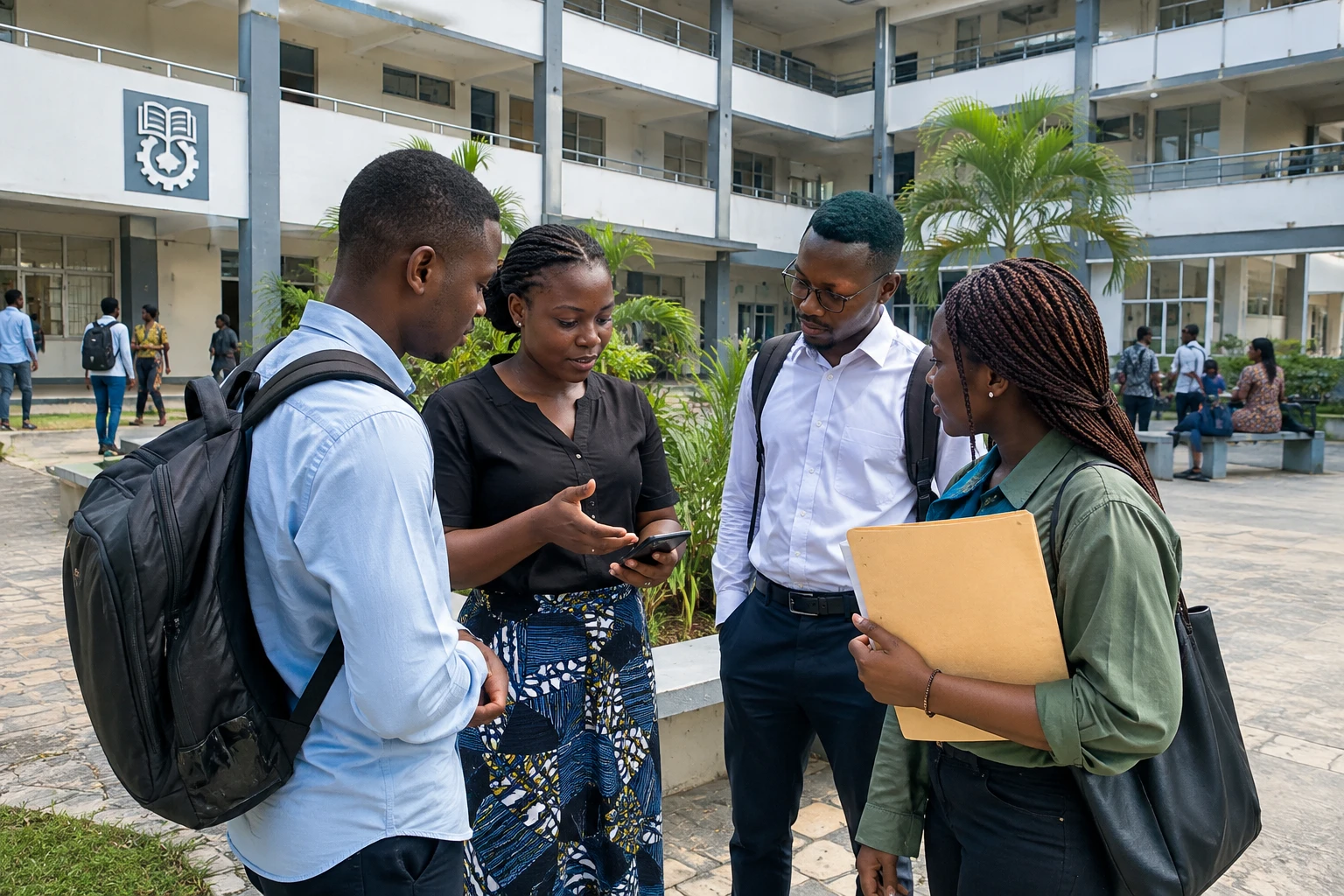
Understanding the fees on a loan, comparing insurance policies or deciding how to save: these choices have tangible consequences for households and small businesses. In Libreville, a fair devoted to financial education aims to bring the public closer to professionals, even as the practical information published about the event remains inconsistent.
Libreville event announced, but details need checking
The Gabonese Association of Bank Users (AGUB) has announced the third edition of the Financial Education Fair (SEFI) for 19 and 20 November 2026, at the amphitheatre of the École normale supérieure de l’enseignement technique (ENSET) in Libreville. Several Gabonese media outlets have reported these dates and this venue. The AGUB presents the event as a forum for raising awareness and promoting exchanges between users, banks, insurers, microfinance institutions and public-sector stakeholders.
One discrepancy remains to be clarified: the official SEFI website still lists 30 October 2026 at the Palais des Congrès Omar Bongo Ondimba, for a one-day event. The difference concerns the date, duration and venue. Reports that the event has been postponed to 19 and 20 November should therefore be treated with caution until the organiser has aligned its public announcements. The official SEFI website and announcements reported by Gabon Media Time do not, at this stage, give the same details.
According to information reported about the November programme, the first day will address financial literacy and inclusion. The second is intended more specifically for small and medium-sized enterprises (SMEs), entrepreneurs and project developers. The announced programme includes conferences, panel discussions, workshops, masterclasses and meetings with financial partners. The organisers are targeting, among others, traders, students, employees and people with little or no access to banking services.
Beyond access to an account, the question of financial choices
A bank account alone does not guarantee meaningful access to financial services. Users must also be able to understand the terms of a loan, the fees associated with a service, the coverage provided by an insurance policy and the options available in the event of a dispute. Financial education can have a direct impact on these everyday decisions.
For a small business, a better understanding of financing options can help with preparing an application or choosing a suitable product. For a household, knowing how to compare offers and identify costs makes it possible to make more informed decisions. But access also depends on factors that education alone cannot resolve: the availability and cost of services, institutions’ requirements and digital connectivity.
The announced programme thus distinguishes between two audiences. Discussions on 19 November will focus on broader issues, including digital payments, savings and consumer protection. The 20 November will be devoted to the needs of entrepreneurs and SMEs. This approach could bring information closer to the realities of working life, provided presentations clearly explain eligibility criteria, fees and the risks of the products on offer.
AGUB president Gildas Ndzengue Mbomba describes financial education as a way to strengthen trust between consumers and institutions, as well as users’ understanding of their rights and responsibilities. This ambition puts customer protection on an equal footing with the promotion of products: an important point in a sector where contractual terms can be difficult for the general public to compare.
A Gabonese issue within a regional framework
Gabon is a member of the Economic and Monetary Community of Central Africa (CEMAC), which comprises six countries that share, among other things, a currency and a central bank. The Bank of Central African States (BEAC) publishes regional financial inclusion statistics, while banking supervision is carried out in part by the Central African Banking Commission (COBAC). These mechanisms give the issue a regional dimension that extends beyond Gabon’s borders.
The fair’s announcement refers to a regional strategy covering 2022-2027, a reference that needs updating. The BEAC has published a CEMAC Regional Financial Inclusion Strategy for 2025-2029. This recent framework confirms that financial inclusion remains a regional undertaking; it does not, on its own, make it possible to measure the fair’s results or progress specifically in Gabon.
The SEFI’s impact will therefore depend less on the number of panels than on their usefulness after the event: clear information, answers to users’ questions and plainly explained options for seeking redress. For Libreville residents and professionals in the capital, the meetings can provide direct contact with sector stakeholders. For people far from services or less connected, the challenge will also be to make this knowledge accessible beyond the venue.
The event forms part of a broader debate in Central Africa: how to widen access to financial services without conflating opening an account with regular use and effective consumer protection. Before travelling, participants should check the final dates and venue with the AGUB, given the conflicting information still displayed publicly.