Algeria
 Egypt
 Libya
 Morocco
 Sudan
 Tunisia
 Benin
 Burkina Faso
 Cabo Verde
 Côte d'Ivoire
 Ghana
 Guinea
 Guinea-Bissau
 Liberia
 Mali
 Mauritania
 Niger
 Nigeria
 Senegal
 Sierra Leone
 The Gambia
 Togo
 Cameroon
 Central African Republic
 Chad
 DR Congo
 Equatorial Guinea
 Republic of the Congo
 São Tomé and Príncipe
 Burundi
 Comoros
 Djibouti
 Eritrea
 Ethiopia
 Kenya
 Madagascar
 Malawi
 Mauritius
 Mozambique
 Rwanda
 Seychelles
 Somalia
 South Sudan
 Tanzania
 Uganda
 Angola
 Botswana
 Eswatini
 Lesotho
 Namibia
 South Africa
 Zambia
 Zimbabwe
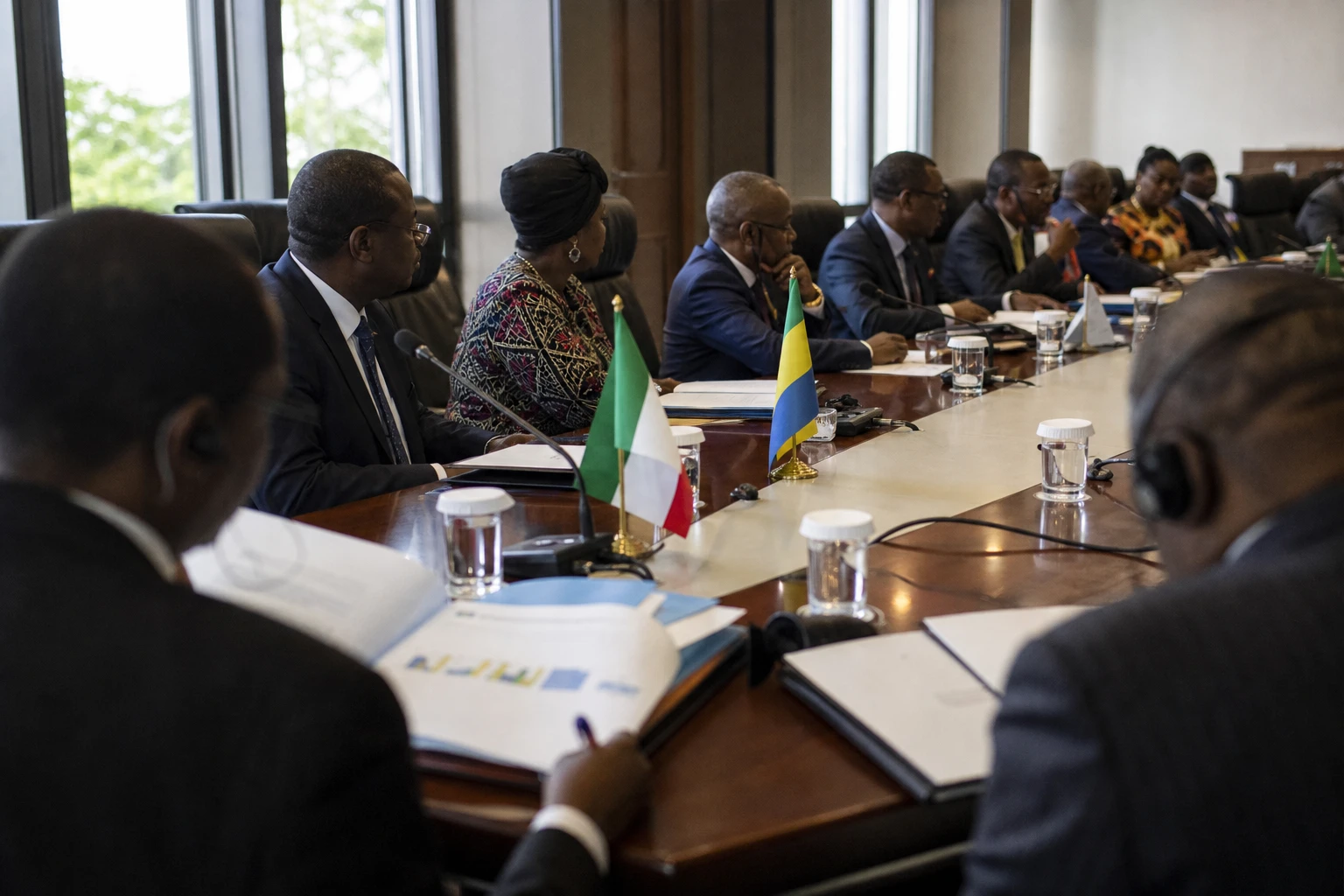
Training professionals at home without severing ties with the world
The debate over scholarships says much more than a simple budget line. In Gabon, it touches on how to train future engineers, doctors, administrators and technicians in a country still seeking the right balance between international openness and the growth of its own universities. On the eve of the 66th anniversary of independence, President Brice Clotaire Oligui Nguema chose to put this issue at the heart of his address to the nation.
This choice comes at a specific political juncture. Since 30 August 2023, Gabon has embarked on institutional renewal, followed by a return to constitutional order after the presidential election on 12 April 2025. The country has also returned to the continental fold, with the lifting of African Union sanctions in April 2025. In this context, Libreville wants to show that it is not merely managing emergencies, but is trying to reorganise its public priorities, particularly in education and training.
What the new scholarship policy changes
In his address, the head of state said the government would no longer fund certain scholarships to European countries, without naming them. He justified the decision by citing rising study costs and a reduction in the aid available in those destinations. The message is clear: Gabon wants to redirect some of its resources towards courses considered closer to national needs.
The president has not closed the door to studying abroad, but he has shifted the centre of gravity. He defended a strategy based on strengthening Gabonese institutions and seeking high-quality courses on the continent. This approach echoes other recent statements, including one to the student diaspora in Ethiopia, where the presidency reiterated that investment in training should support the structural transformation of the national economy.
There is already a precedent. The June 2026 state of the nation address mentioned the suspension of school grants and the continuation of reforms to the skills school. The same text also reported that 1,066 vehicles had been distributed under the Taxi Gab programme, a sign that the executive is highlighting practical responses to youth employment alongside higher education reform.
The budget confirms this direction. The 2026 Finance Act provides 82.3 billion CFA francs for scholarships through the National Scholarship Agency of Gabon, an increase on 2025. At the same time, funding for higher education is also rising. In other words, the state is not withdrawing its support for students; it is seeking to reshape it.
A battle for educational sovereignty, with very practical effects
For Gabonese families, the stakes are immediate. A scholarship abroad often provides access to scarce fields of study, but it is costly for the state and can expose students to higher living expenses, longer courses and, sometimes, an uncertain return. The Gabonese government is addressing this equation through a policy of educational sovereignty: train more people at home, or in African partner countries, to limit the brain drain and better align courses with local needs.
This reasoning is not unique to Central Africa. It reflects a concern shared in several capitals across the continent: how can studies be funded without perpetuating dependence on external university systems? In Gabon’s case, the question is all the more sensitive because Libreville wants to promote its institutions while maintaining links with Africa’s leading universities. The political message is therefore aimed as much at domestic public opinion as at regional partners.
On 17 August, this shift takes on additional symbolic significance. The military parade held on the seafront boulevard in Libreville for the 66th anniversary of independence is a reminder that national ceremonies also serve to set out a political direction. This year, the presence of prominent guests from the Democratic Republic of the Congo and Guinea-Bissau also underscores the place Gabon intends to reclaim in African exchanges, beyond Central Africa.
In the region, the issue is also viewed through an institutional lens. Gabon is a member of CEMAC, the Central African economic community, where skills, student mobility and economic diversification are recurring topics. If Libreville succeeds in strengthening its science and technical programmes, the impact will extend beyond scholarship policy: it will affect employability, public procurement, maritime industries, aerospace, engineering and, more broadly, the country’s ability to retain its talent.
One concern remains. Scholarship reform can have a lasting impact only if local provision keeps pace. Otherwise, it merely shifts the problem. The credibility of the president’s policy will hinge on the quality of universities, the transparency of award criteria and Gabon’s ability to turn its rhetoric about skills into measurable results for its young people.