Algeria
 Egypt
 Libya
 Morocco
 Sudan
 Tunisia
 Benin
 Burkina Faso
 Cabo Verde
 Côte d'Ivoire
 Ghana
 Guinea
 Guinea-Bissau
 Liberia
 Mali
 Mauritania
 Niger
 Nigeria
 Senegal
 Sierra Leone
 The Gambia
 Togo
 Cameroon
 Central African Republic
 Chad
 DR Congo
 Equatorial Guinea
 Republic of the Congo
 São Tomé and Príncipe
 Burundi
 Comoros
 Djibouti
 Eritrea
 Ethiopia
 Kenya
 Madagascar
 Malawi
 Mauritius
 Mozambique
 Rwanda
 Seychelles
 Somalia
 South Sudan
 Tanzania
 Uganda
 Angola
 Botswana
 Eswatini
 Lesotho
 Namibia
 South Africa
 Zambia
 Zimbabwe
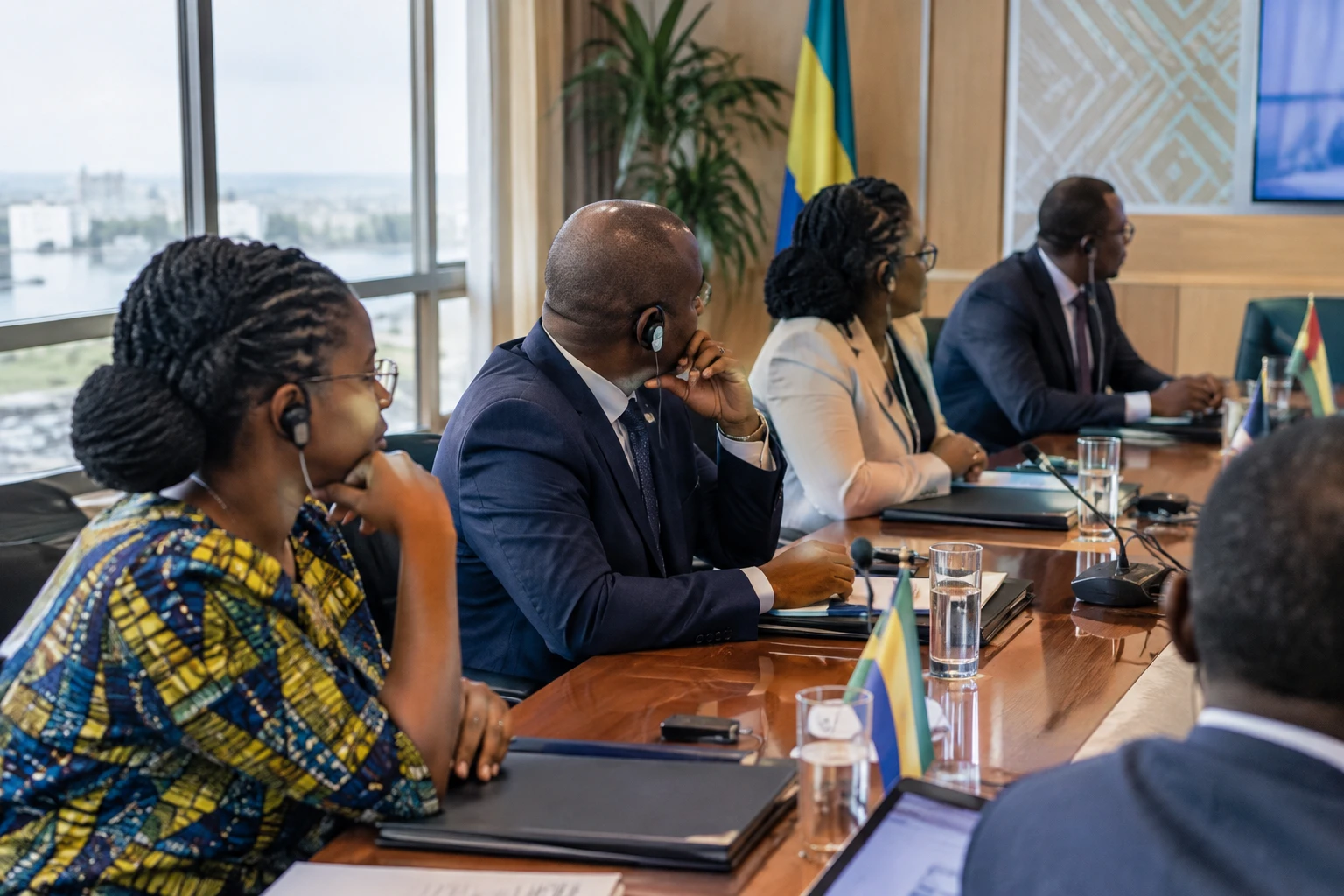
In Gabon, the change at the head of national education comes as staff difficulties converge with those experienced by pupils. The new minister will therefore have to address a very practical question: how can the start of the school year be more than an administrative opening when classrooms lack equipment and young people’s protection remains uneven?
A ministry facing immediate expectations
The reshuffle announced on Sunday 11 October 2026 by President Brice Clotaire Oligui Nguema puts Jacqueline Ilogue Bignoumba in charge of national education and civic instruction. She leaves the Ministry of Labour, Full Employment and Social Dialogue. She succeeds Camélia Ntoutoume-Leclercq, who had led the sector since March 2022, with an interruption in 2025. The composition of the new government was reported by several Gabonese media outlets, including Gabonreview and Direct Infos Gabon.
The new minister’s career combines government experience with the private sector. Before taking on the labour portfolio, she worked for several years in the oil industry and chaired the Gabonese Oil Union from 2013. That experience does not determine the choices she will make in education. But she is now responsible for a public service with daily challenges: teacher employment, the running of schools and learning conditions.
Union demands voiced in Libreville on 10 October provide an initial measure of expectations. The National Education Teachers’ Trade Union Federation (FESEENA) cited a lack of teaching materials, deteriorating infrastructure, overcrowded classes and delays in processing career matters. These demands, reported by MediaExpress, concern both working conditions and the resources needed to teach.
Health and safety: the figures behind school life
The challenges are not limited to staff or buildings. The Council of Ministers on 8 October took note of the results of a national survey on health in schools. Launched in October 2024 by the education and health ministries, with support from UNESCO and the World Health Organization (WHO), it examines pupils’ health behaviours and the services available in schools.
The statement, reported by 7 Jours Info and reproduced by Journal du Gabon, says that 29.5% of pupils experience food insecurity at home. It also reports that 17.9% say they have experienced violence or bullying at school, and 9.9% cyberbullying. Fewer than a third of schools are said to have a formal health-care mechanism. These figures are attributed to the survey presented to the Council of Ministers; on their own, they do not constitute a comprehensive assessment of every school or province.
The statement also points to difficulties with drinking water, sanitation and hygiene facilities. For pupils, these shortcomings directly affect health, safety and the ability to attend classes in good conditions. They call for a co-ordinated response from the education and health sectors and the agencies responsible for infrastructure, rather than action limited to school management alone.
From announced programme to resources actually available
The government has approved the inclusion of the national “École ZEN” sanitation programme in the budget planning for the 2026-2030 National Growth and Development Plan. Its inclusion offers a prospect, but does not yet specify the funding to be mobilised, implementation dates or the schools concerned. Monitoring will therefore need to distinguish the budget announcement from work actually undertaken and its distribution between Libreville and the other provinces.
This matters all the more because needs vary across regions. In the capital, pupil numbers can put classrooms and equipment under pressure. In provincial towns and more remote areas, the availability of teachers, particularly in some subjects, also affects regular access to lessons. On 14 October, the Gabonese Press Agency reported a shortage of science teachers at secondary schools in Mouila. This local finding does not measure the situation across the whole country, but it is a reminder that national responses will need to take provincial realities into account.
Career matters are just as tangible. Pending administrative files and processing delays affect staff day to day, while crowded classes and insufficient materials affect pupils and teachers alike. Resolving employment files is no substitute for building or equipping schools; conversely, new infrastructure is not enough if posts remain unfilled and teams are not stabilised.
A school year to monitor beyond Libreville
Gabon belongs to the Economic and Monetary Community of Central Africa (CEMAC), which brings together six Central African countries. The organisation also deals with regional co-operation on education and research, although the management of Gabonese schools is primarily the responsibility of the national authorities. At regional level, skills, vocational training and school health are shared concerns, but Gabon’s results cannot be generalised to other member states.
For Jacqueline Ilogue Bignoumba, the first indicators will be decisions on union demands, the regularisation of employment situations and the funding of “École ZEN”. It will also be important to see how the school survey’s findings translate into health and protection services accessible to pupils. It is at this stage — with budgets specified, a timetable published and verifiable action in schools — that the ministerial change can be assessed beyond the political announcement.