Algeria
 Egypt
 Libya
 Morocco
 Sudan
 Tunisia
 Benin
 Burkina Faso
 Cabo Verde
 Côte d'Ivoire
 Ghana
 Guinea
 Guinea-Bissau
 Liberia
 Mali
 Mauritania
 Niger
 Nigeria
 Senegal
 Sierra Leone
 The Gambia
 Togo
 Cameroon
 Central African Republic
 Chad
 DR Congo
 Equatorial Guinea
 Republic of the Congo
 São Tomé and Príncipe
 Burundi
 Comoros
 Djibouti
 Eritrea
 Ethiopia
 Kenya
 Madagascar
 Malawi
 Mauritius
 Mozambique
 Rwanda
 Seychelles
 Somalia
 South Sudan
 Tanzania
 Uganda
 Angola
 Botswana
 Eswatini
 Lesotho
 Namibia
 South Africa
 Zambia
 Zimbabwe
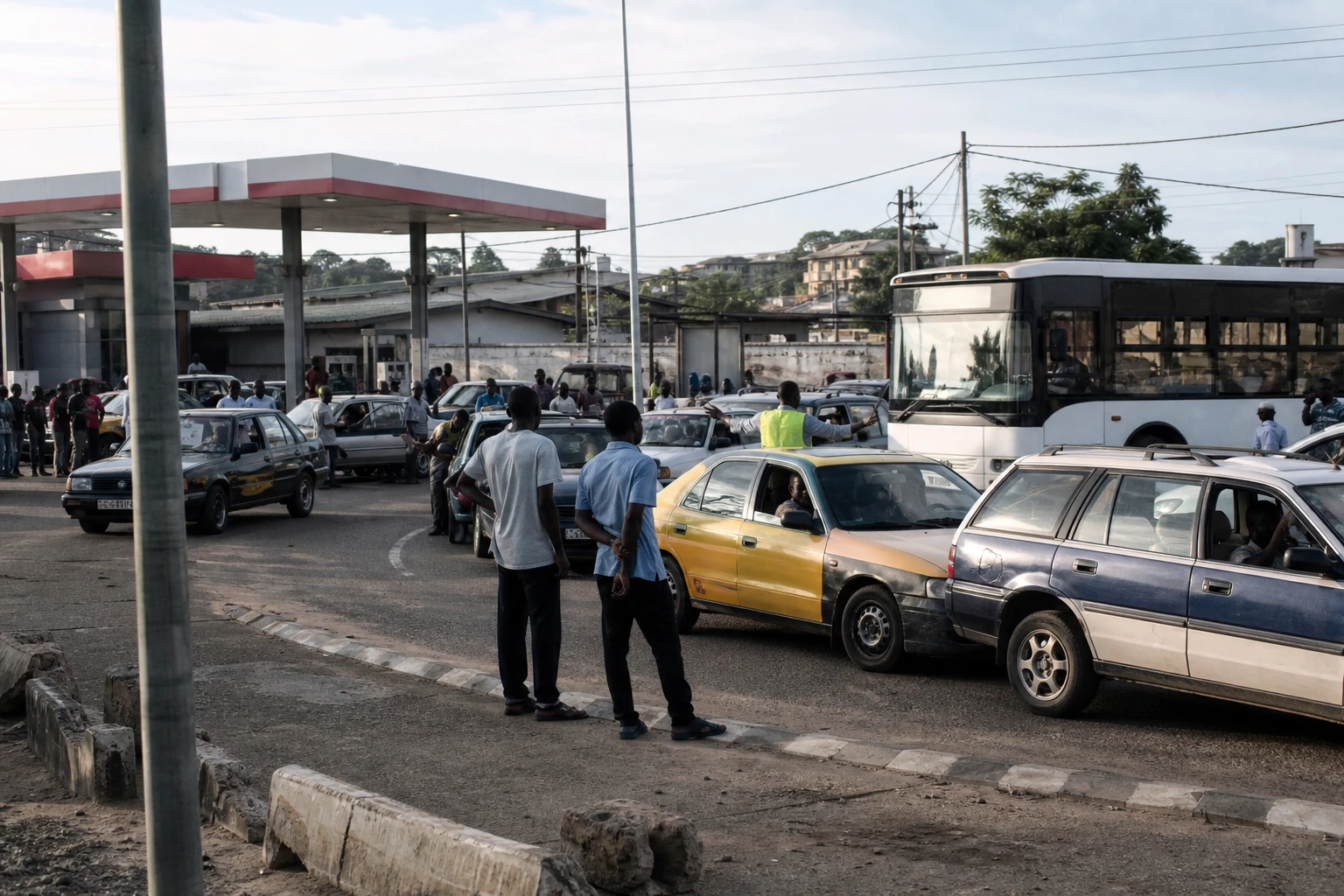
In Libreville, filling up has become a test of patience. For several days, motorists have been arriving before dawn, while taxi drivers try to keep working despite limits imposed at the pumps. A vessel arriving at Owendo port has brought some initial relief, but it has not yet resolved all the weaknesses in the supply chain.
Tension visible across Greater Libreville
The shortage mainly affects diesel, used by taxis, transport vehicles, businesses and some diesel-powered equipment. Queues began forming in the early morning at several stations in Libreville, Akanda and Owendo.
Some customers waited for several hours to get a few litres. Containers were lined up in front of pumps to hold places in the queue. At several outlets, the volumes distributed were temporarily rationed. Customers reported limits of up to 15 litres per person.
The situation is particularly difficult for taxi drivers. Their income depends directly on the number of fares they complete each day. When fuel is scarce, they must choose between waiting at a station, buying at a higher price when fuel becomes available, or cutting back on their work.
Households are also affected. Commuting becomes more difficult. Small traders, delivery workers and artisans can lose an entire day’s work. In a capital where economic activity is concentrated largely in Greater Libreville, a disruption confined to service stations quickly affects transport and services.
A long-awaited shipment to ease the squeeze
Gabon’s Ministry of Petroleum and Gas has acknowledged temporary supply pressure at some stations in Greater Libreville. In its statement, it said falling stocks held by distributors had led to management and rationing measures.
The volumes still available at the facilities of the Société gabonaise d’entreposage des produits pétroliers, or SGEPP, were made available to distributors to maintain some deliveries ahead of the arrival of a new shipment.
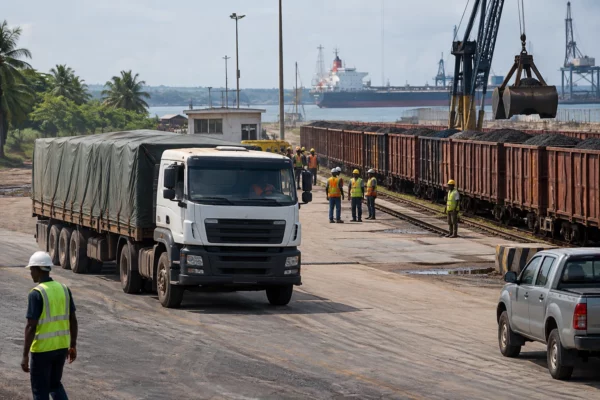
A vessel carrying about 30,000 cubic metres of fuel docked at Owendo port on the night of Saturday 3 to Sunday 4 October 2026, according to information published by Gabonactu. Unloading and the filling of tanker trucks then began to replenish service stations.
The ministry has announced a gradual return to normal from Sunday 4 October 2026. Distribution is first due to cover Libreville and neighbouring municipalities, before extending to other areas. This timetable depends, however, on how quickly the trucks are filled and delivered to the various outlets.
Gabon 24 reports that the authorities had expected the vessel to arrive on the evening of Saturday 3 October. The official statement does not describe the situation as a system-wide breakdown, but as a temporary decline in stocks held by distributors.
The problem lies in the chain, not just at the pump
Gabon produces oil, but that does not automatically guarantee a permanent supply of diesel at service stations. The country also depends on processing, storage, imports of refined products and distribution by road.
Several steps must run without interruption between a vessel’s arrival and fuel reaching a service station. The product must be unloaded and stored, allocated among operators, transported by truck and then delivered to stations. A shipping delay or poor coordination between these players can therefore quickly create pressure, even when fuel is already on its way.
There is a precedent. In July 2024, the Gabonese daily L’Union attributed a shortage to a delay in a vessel’s arrival and handling, as well as difficulties distributing supplies to service stations. This precedent does not establish that the causes were the same in October 2026. It does, however, show that logistics remain a weak point in the system.
The question of reserve stocks is therefore back at the centre of the debate. Gabon has storage infrastructure, but capacity alone is not enough. It is also necessary to know the volumes actually available, how they are distributed geographically and how long it takes to mobilise them.
The concentration of demand in Greater Libreville heightens this vulnerability. A disruption in the capital can become highly visible within hours. Further inland, distances and road conditions can then slow the distribution of fuel, even after stocks have been restored in the port area.
An economic and regional issue for Central Africa
Fuel affects more than motorists. It is essential to the transport of goods, business activity, public-sector travel and the operation of some generators. A prolonged shortage can therefore have a knock-on effect on prices and access to services.
For the Gabonese authorities, the immediate task is to restore deliveries without triggering a fresh rush to service stations. Distribution will also need to be monitored in inland towns, to ensure that the return to normal is not confined to the capital and its surroundings.
At regional level, the episode highlights the limits of an approach based solely on crude oil production. Within the Economic and Monetary Community of Central Africa, CEMAC, several countries remain vulnerable to pressures on refining, imports, storage and the transport of petroleum products.
Gabon will now need to monitor three points. The first is how quickly service stations are replenished. The second is the availability of diesel in towns far from Libreville. The third concerns the creation of reserves capable of absorbing a shipping delay or logistical disruption.
The vessel’s arrival has eased the immediate pressure. It has not closed the issue. For Gabonese people, the real measure will be a lasting return to regular supplies, with no queues at dawn and no rationing at the pumps.