Algeria
 Egypt
 Libya
 Morocco
 Sudan
 Tunisia
 Benin
 Burkina Faso
 Cabo Verde
 Côte d'Ivoire
 Ghana
 Guinea
 Guinea-Bissau
 Liberia
 Mali
 Mauritania
 Niger
 Nigeria
 Senegal
 Sierra Leone
 The Gambia
 Togo
 Cameroon
 Central African Republic
 Chad
 DR Congo
 Equatorial Guinea
 Republic of the Congo
 São Tomé and Príncipe
 Burundi
 Comoros
 Djibouti
 Eritrea
 Ethiopia
 Kenya
 Madagascar
 Malawi
 Mauritius
 Mozambique
 Rwanda
 Seychelles
 Somalia
 South Sudan
 Tanzania
 Uganda
 Angola
 Botswana
 Eswatini
 Lesotho
 Namibia
 South Africa
 Zambia
 Zimbabwe
A figure that changes the picture, not the burden itself
In Gabon, public debt is more than just an accounting line. It determines the state’s room for manoeuvre, borrowing costs and ability to fund roads, energy, salaries and public services. When Libreville announces a ratio of 68.91% of GDP, the message is clear: the country is just back below the 70% regional threshold, but financial pressure remains high.
This threshold is no trivial matter. In the Economic and Monetary Community of Central Africa (CEMAC), it serves as a benchmark for fiscal convergence. For Gabon, which shares this monetary framework with Cameroon, the Republic of the Congo, Chad, the Central African Republic and Equatorial Guinea, the question is not simply whether debt is falling. It is also how it is measured, and what international creditors will make of it.
The audit launched in Libreville has reshuffled the deck
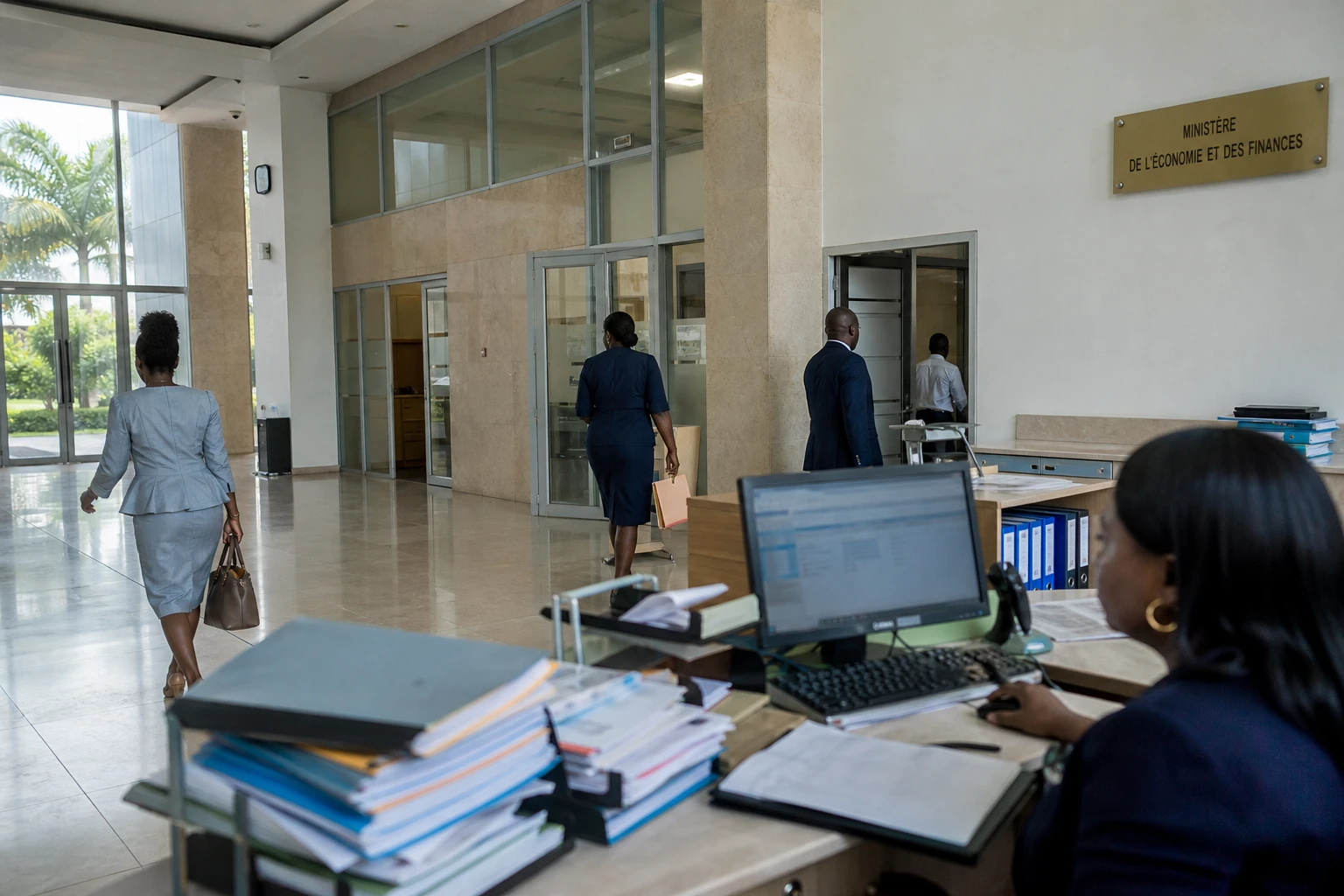
Gabon’s Ministry of the Economy and Finance launched an audit and consolidation of the state’s due liabilities in Libreville on 17 June 2026. The exercise aimed to identify financial commitments actually owed by the administration, after months of debate over possible undeclared debts, duplicate entries and poorly documented liabilities.
In a statement dated 13 September, the authorities subsequently set the consolidated stock of debt and other sums due at 9,524.643 billion CFA francs as at 31 December 2025. The exercise also involved rebasing GDP to 13,822 billion CFA francs. This new calculation mechanically puts the debt ratio at 68.91%. Compared with the initial estimates discussed publicly, the difference exceeds 2,175 billion CFA francs.
The findings were sent to the International Monetary Fund. The IMF confirmed that it had conducted a technical mission in Libreville with the Gabonese authorities, the presidential debt task force, BEAC and financial-sector stakeholders from 25 February to 6 March 2026. The institution has not yet publicly endorsed Gabon’s figure. It will examine it as part of its own work.
What rebasing changes for Gabon’s public finances
The fall in the debt-to-GDP ratio does not mean the situation has suddenly eased. It primarily indicates that the economy has been measured on a broader basis. In other words, the national wealth used in the calculation is higher than before. This mechanically reduces debt’s relative weight.
For Brice Clotaire Oligui Nguema’s government, this statistical correction addresses a specific political and budgetary concern. It supports a more favourable reading of the public accounts’ trajectory at a time when the country is seeking to restore its financial credibility, reopen financing options and reassure partners. In a country where revenue remains sensitive to hydrocarbons, imports and domestic economic activity, every percentage point matters.
But caution is still needed. The statement does not yet break down the shares of domestic debt, external debt, arrears and other liabilities item by item. Without this level of transparency, the new total improves the overall picture without clearing up all the uncertainty about the true composition of the state’s liabilities. That is where the next stage will be decided: in the quality of budget information, not just the final figure.
This episode also reflects a familiar reality across CEMAC. Several states in the sub-region are grappling with strained finances, high financing needs and continued dependence on regional markets. Gabon carries considerable weight within this group. It is one of the most closely watched issuers on BEAC’s public securities market, the zone’s common central bank, making any change in its debt immediately visible to markets and regional institutions.
A regional impact and a test of credibility for what comes next
In Libreville, the stakes therefore go beyond a technical debate. If the IMF accepts a ratio close to 68.91%, Gabon will be able to present a less deteriorated position than initially announced. If it reaches a different assessment, the discussion will shift to the methodology, the scope used and the reliability of the public accounts.
Either way, the central question remains the same: how can the economy be transformed without adding further to an already high debt burden? The government has already highlighted infrastructure, local processing and modernisation of the productive sector projects. These initiatives require stable resources. They also require clear accounts. For Gabonese people, the stakes are tangible: less statistical fog, greater visibility on public spending and on the actual timetable for state payments.
At the continental level, the Gabonese case will attract interest beyond Central Africa. It raises a question facing many African states: how can fiscal consolidation and credible public figures be reconciled with the need to invest in growth? In Libreville and elsewhere, the answer will depend on transparency, fiscal discipline and the ability to make official statistics match economic reality.