Algeria
 Egypt
 Libya
 Morocco
 Sudan
 Tunisia
 Benin
 Burkina Faso
 Cabo Verde
 Côte d'Ivoire
 Ghana
 Guinea
 Guinea-Bissau
 Liberia
 Mali
 Mauritania
 Niger
 Nigeria
 Senegal
 Sierra Leone
 The Gambia
 Togo
 Cameroon
 Central African Republic
 Chad
 DR Congo
 Equatorial Guinea
 Republic of the Congo
 São Tomé and Príncipe
 Burundi
 Comoros
 Djibouti
 Eritrea
 Ethiopia
 Kenya
 Madagascar
 Malawi
 Mauritius
 Mozambique
 Rwanda
 Seychelles
 Somalia
 South Sudan
 Tanzania
 Uganda
 Angola
 Botswana
 Eswatini
 Lesotho
 Namibia
 South Africa
 Zambia
 Zimbabwe
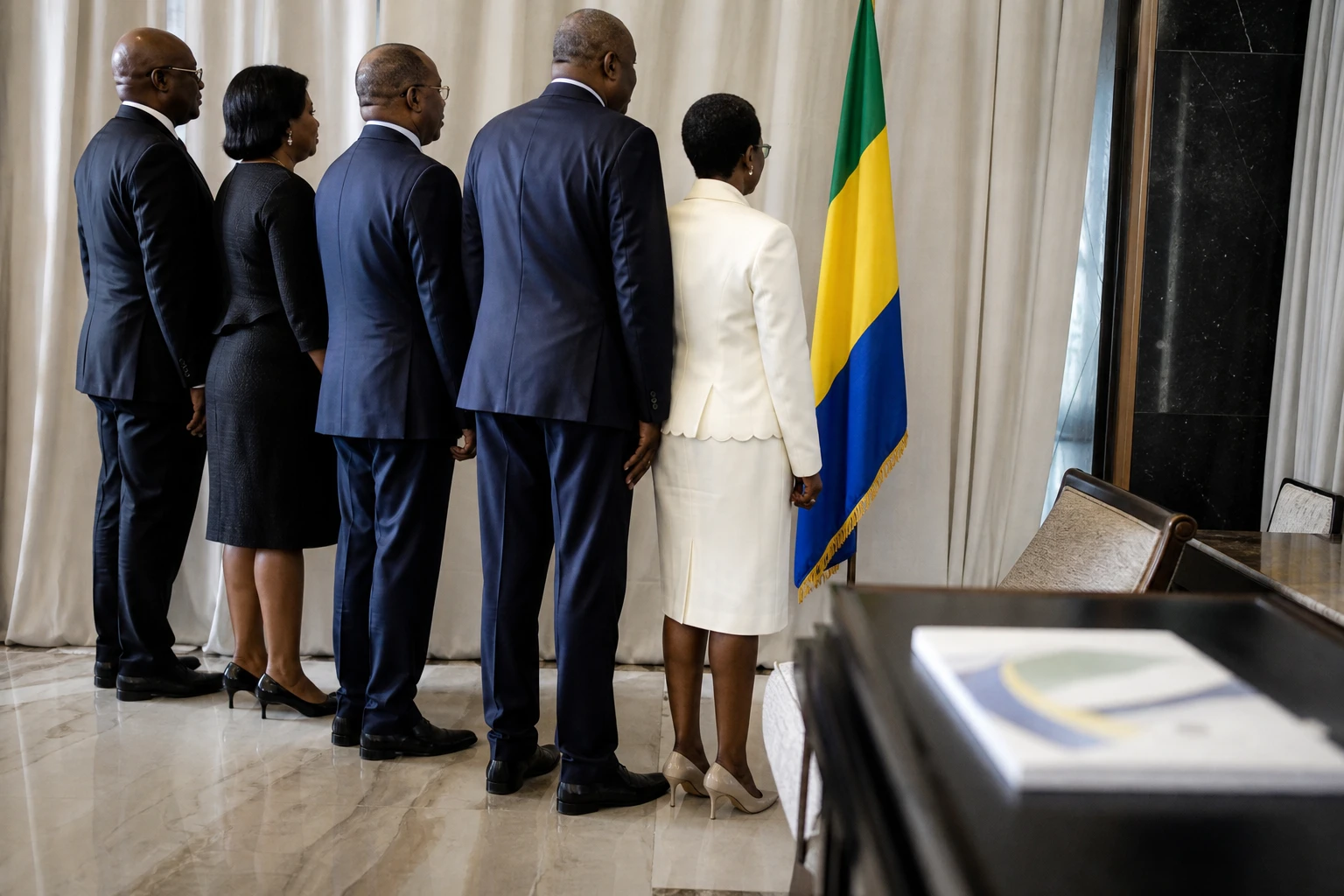
An old liability back at the centre of public debate
In Libreville, the question is no longer just how much the Gabonese state can mobilise for its priorities. It is also about why so much public money remains tied up in old cases, some dating back 20 years, while the country seeks to restore confidence in its finances. As Gabonese people await visible results, the Court of Accounts has brought back to the fore an issue many believed had been buried in the archives.
The case directly affects the credibility of public spending. It comes as the authorities seek to demonstrate stricter governance, in keeping with the institutional refoundation launched since the transition and the start of the Fifth Republic. The financial court has already taken on a more prominent role in this new environment, with modernisation work and a stated determination to strengthen oversight of public accounts.
What the financial court says
The finding is stark: CFAF 1,700 billion, or about €2.59 billion, is reportedly owed to the state in respect of liabilities and fines identified by the Court of Accounts. The euro conversion is indeed equivalent to this amount.
According to information made public, the sums concern around 600 individuals and legal entities. They arise from court rulings that have gone unenforced or have been only partially enforced. Those targeted include public accountants, as well as credit authorising officers — in other words, officials empowered to commit expenditure, such as ministers, mayors and presidents of departmental assemblies. Private companies are also cited when they have received funds without delivering the expected services.
The Court of Accounts has set a one-month deadline to settle the situation, starting on 7 September 2026. After 7 October 2026, the case is to be referred to a criminal judge, with the possibility of referral to the Special Criminal Court. The institution also refers to the principle of personal liability, which requires a debtor to repay from their own assets.
Why this case matters far more than a figure
On paper, the amount is striking. In reality, it says two things above all. First, the Gabonese state is still carrying debts that are difficult to recover because rulings have been issued but have rarely been followed through. Second, the problem is not merely one of accounting. It is institutional. When a financial court ruling is ignored, the entire chain of accountability is undermined.
The issue also weighs on budgetary decisions. Gabon remains engaged in a phase of public finance recovery, with substantial financing needs and continued pressure on the state’s cash flow. Budget documents published by the authorities show a significant financing requirement for 2026, while the presidency stresses the need for rigorous management and accountability, particularly in local administrations.
For households, the question is simple: every CFA franc that is not recovered is a CFA franc missing from public services, roads, schools, hospitals or social protection. For the public officials concerned, the message is even more direct: the period when sanctions remained theoretical appears to be coming to an end. For the companies named, the issue is transparency in public procurement, a sensitive matter in a country where public contracts remain a major driver of economic activity.
A test for new governance in Gabon and the CEMAC region
This case goes beyond Gabon alone. In the CEMAC sub-region, where fiscal discipline is regularly scrutinised, a state’s ability to recover its debts and enforce court rulings sends a signal to financial partners as well as citizens. Gabon is seeking to show that it is no longer content merely to announce reforms: it also wants to address the liabilities that have undermined public trust.
The political implications are immediate. If the announced recovery effort makes real progress, Libreville will be able to present a strong case for a more demanding administration, at a time when the executive is promoting a new management approach. If, by contrast, the deadlines pass without visible follow-up, the country risks reinforcing a persistent impression: that financial justice imposes sanctions but still struggles to turn its rulings into actual repayments.
The next steps will therefore unfold over the coming weeks, up to 7 October 2026. By that date, it will be clear whether this case marks a tangible turning point for Gabon’s public finances or becomes another episode in a long-running dispute between the state and its debtors. In a country seeking to restore sound management, debt recovery is no longer a technical detail: it is a measure of credibility.