Algeria
 Egypt
 Libya
 Morocco
 Sudan
 Tunisia
 Benin
 Burkina Faso
 Cabo Verde
 Ghana
 Guinea
 Guinea-Bissau
 Liberia
 Mali
 Mauritania
 Niger
 Nigeria
 Senegal
 Sierra Leone
 The Gambia
 Togo
 Cameroon
 Central African Republic
 Chad
 DR Congo
 Equatorial Guinea
 Gabon
 Republic of the Congo
 São Tomé and Príncipe
 Burundi
 Comoros
 Djibouti
 Eritrea
 Ethiopia
 Kenya
 Madagascar
 Malawi
 Mauritius
 Mozambique
 Rwanda
 Seychelles
 Somalia
 South Sudan
 Tanzania
 Uganda
 Angola
 Botswana
 Eswatini
 Lesotho
 Namibia
 South Africa
 Zambia
 Zimbabwe
A stage, a country, a signature
When a country sends its heritage on a journey, it is about more than music. It is also about image, diplomacy and the place it occupies in the shared African narrative. For Gabon, the 18th edition of the Anoumabo Urban Music Festival in Abidjan offered just such a showcase: a popular stage, a regional audience and an opportunity to present something beyond figures and official speeches. The choice of guest country of honour was confirmed in Libreville on 23 March 2026 by Gabonese and Ivorian authorities.
One figure almost naturally came to the fore: Pierre Akendengué. Born in Aouta, Gabon, and recognised as a singer, musician and poet, he belongs to a generation of artists who made song a language of memory as much as a performing art. UNESCO praised the depth of his work and his role in safeguarding languages and oral traditions in 2024.
Gabon sees culture as a regional lever
FEMUA, born of an Ivorian initiative that has become one of the continent’s major music events, now serves as a platform for broader cultural policies. The 2026 edition was held in Abidjan from 28 April to 3 May, with a theme focused on artificial intelligence, presented as either a threat or an opportunity for Africa. This framing reflects the festival’s evolution: it is a live entertainment event, but also a space for discussion about changes across Africa.
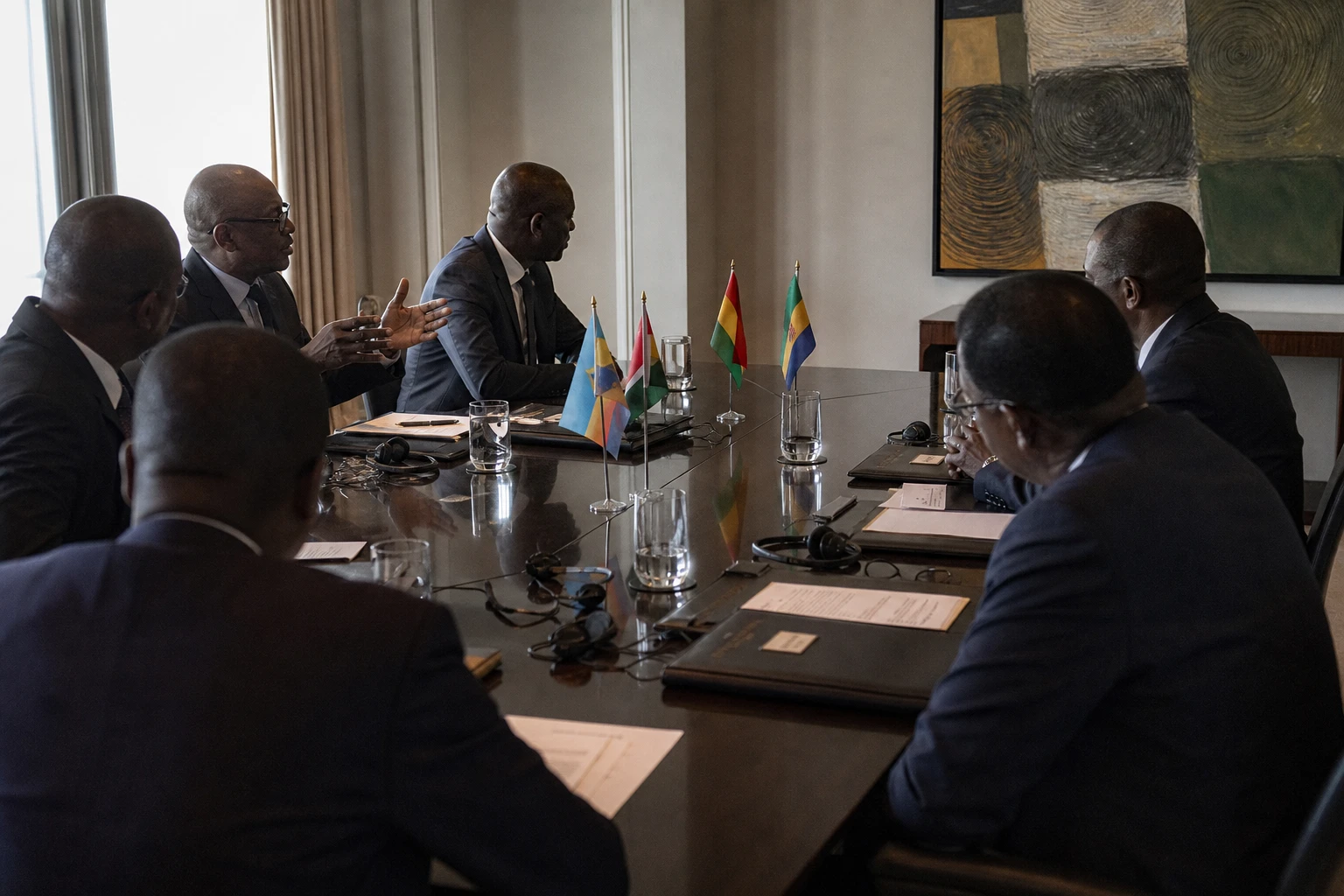
In Libreville, Gabon’s ministry responsible for culture described the country’s participation as an opportunity to promote national heritage, diplomatic exchanges, gastronomy, tourism and the creative industries. The Gabonese pavilion was conceived as a comprehensive showcase, not simply a stand. This approach says something important: in Gabon in 2026, culture is treated as a tool of influence, but also as an economic sector in its own right.
This strategy is part of a regional trajectory. Gabon belongs to CEMAC, the Economic and Monetary Community of Central Africa, where states are seeking to diversify the channels of integration beyond monetary and trade issues alone. In this context, cultural exchanges with Côte d’Ivoire also matter: they create movement for artists, audiences, ideas and opportunities.
Akendengué, living memory and artistic compass
The choice of Pierre Akendengué as the star turn for the Gabonese delegation was no coincidence. His career alone tells part of the country’s cultural history. According to Music In Africa, he was born on 25 April 1943 in Aouta, studied in France from 1964, and went on to build a body of work marked by poetry, reflection and commitment. UNESCO, for its part, describes him as an artist whose influence extends beyond linguistic and cultural boundaries.
This international recognition helps explain his place in Abidjan. Akendengué is not just a name in the Gabonese repertoire. He represents a way of singing about Africa from Gabon, with its languages, rhythms, social tensions and spiritual heritage. His work has often combined philosophy, political awareness and a deep attachment to oral cultures. That is precisely what makes him a valuable touchstone at a festival where identity and modernity are discussed in equal measure.
The Gabonese context gives his presence particular resonance. From Libreville, the authorities have sought to make this participation a signal of the country’s cultural reach, at a time when Gabon, led by Brice Clotaire Oligui Nguema, is showing a desire to reposition its cultural policies within public diplomacy. The official message stresses culture as a vehicle for sovereignty and international recognition.
What this showcase changes in practice
For Gabonese artists, the impact is immediate. A stage such as FEMUA opens doors that the usual circuits often keep closed: exposure beyond national borders, professional contacts, access to other markets, and dialogue with festival programmers and media across the continent. Gabon’s ministry has also stressed the aim of generating artistic, diplomatic and economic benefits.
For the cultural economy, the stakes go beyond prestige. Music, tourism, crafts and gastronomy travel together. When Libreville presents itself in Abidjan, it is also a way to promote the country as a destination and a place of creativity. This matters to major institutions, but also to small value chains: technicians, visual artists, dressmakers, restaurateurs, communications professionals, transport operators and young entrepreneurs.
For the public, finally, the impact is symbolic but real. On a continent where African news is still too often filtered through political or security emergencies, seeing Gabon presented through its music, memory and artists changes perceptions. It is a reminder that a country is also told through its voices, not only its crises. The choice of Akendengué serves that purpose: to make a cultural continuity heard, rather than create a fleeting event.
A reach extending beyond Abidjan
FEMUA 2026 was a full-scale test of Gabonese cultural diplomacy. If the initiative succeeds, Libreville will be able to use it as a model for other regional settings, in Central Africa and beyond. If it remains a one-off, its impact on the country’s image will quickly fade. That is the challenge: to turn a prestigious invitation into a sustained policy, with partnerships, residencies, tours and better circulation of creative works.
In an African landscape where regional unions are still finding their footing, festivals often play a more tangible role than grand declarations. They bring audiences closer before administrations do. They get artists moving before agreements are signed. In that respect, Gabon’s presence at FEMUA says something useful about the current moment: Africa’s reach is also built through culture, and Libreville has chosen to demonstrate this through a voice that for decades has spoken to the country as much as to the continent.