Algeria
 Egypt
 Libya
 Morocco
 Sudan
 Benin
 Burkina Faso
 Cabo Verde
 Côte d'Ivoire
 Ghana
 Guinea
 Guinea-Bissau
 Liberia
 Mali
 Mauritania
 Niger
 Nigeria
 Senegal
 Sierra Leone
 The Gambia
 Togo
 Cameroon
 Central African Republic
 Chad
 DR Congo
 Equatorial Guinea
 Gabon
 Republic of the Congo
 São Tomé and Príncipe
 Burundi
 Comoros
 Djibouti
 Eritrea
 Ethiopia
 Kenya
 Madagascar
 Malawi
 Mauritius
 Mozambique
 Rwanda
 Seychelles
 Somalia
 South Sudan
 Tanzania
 Uganda
 Angola
 Botswana
 Eswatini
 Lesotho
 Namibia
 South Africa
 Zambia
 Zimbabwe
In Gabès, residents’ patience has run out
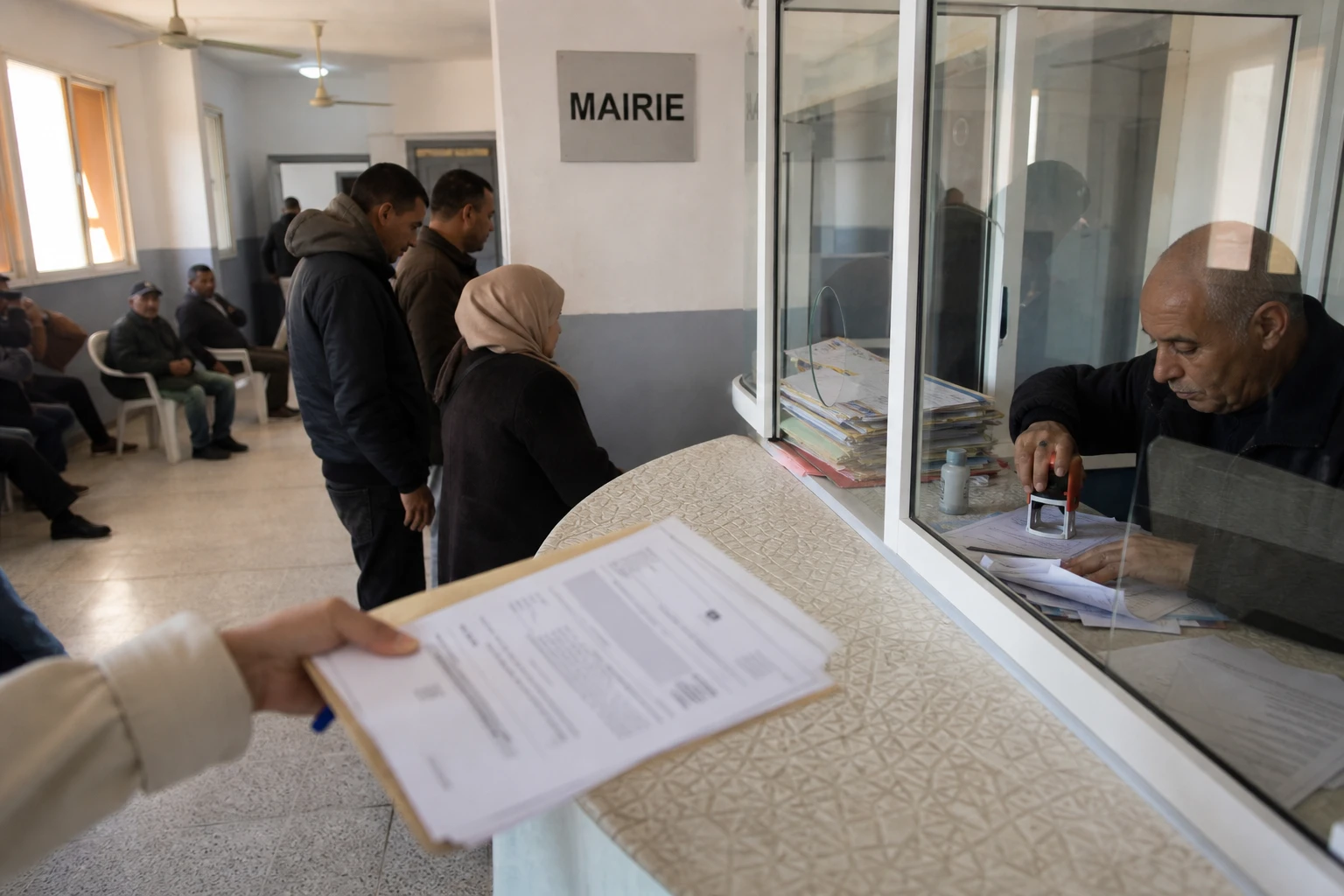
In Chott Salem, in south-eastern Tunisia, many families live with a daily contradiction: working, breathing and raising children just metres from an industrial complex that underpins the local economy but has also fuelled residents’ anger for years. In Gabès, the issue is no longer just pollution. It now touches on dignity, health and the role residents have in the country’s industrial decisions.
This city in the governorate of Gabès carries particular weight in Tunisia’s development. The phosphate basin remains a pillar of exports and the trade balance, while the Tunisian Chemical Group processes phosphate into fertilisers and chemicals. But this model has also concentrated emissions, odours and social tensions around the bay. Citizen activism, meanwhile, has become firmly organised around the Stop Pollution collective, active since 2012.
An industrial, social and legal dispute
The dispute took on a new dimension in 2025 and early 2026. Proceedings seeking an injunction to halt polluting units operated by the Tunisian Chemical Group were postponed several times before the Gabès Court of First Instance rejected the request for suspension on 26 February 2026, on the grounds that the harm had not been demonstrated, according to Tunisian media and reports carried by the TAP news agency. The Stop Pollution collective immediately denounced the ruling as a serious setback for residents.
The decision weighed heavily on the streets of Gabès. Activists saw it as a form of denial of local people’s lived experience. Yet the protest movement has not disappeared. On the contrary, it has continued through rallies, statements and demonstrations, underscoring that the problem is not merely a technical dispute between experts. It is a societal choice: should an ageing industrial facility be repaired at the margins, or should the way the region is exposed to pollution be fundamentally rethought?
Tunisia’s presidency has also turned its attention to the issue again. On 13 January 2026, Kaïs Saïed received the final report of a working group tasked with proposing urgent solutions. He promised technical, financial and structural measures to eliminate sources of pollution, pending a broader national strategy. Then, on 10 August 2026, he made an unannounced visit to Gabès and again called for the causes of pollution to be addressed, rather than just its consequences.
The president has also linked the issue to the fight against corruption and the restoration of public services. This presidential framing responds to a genuine demand for action, but leaves the essential questions unanswered: what timetable, what investment and what industrial priorities? So far, the announcements remain cautious, while residents await clear and verifiable decisions.
What Gabès reveals about Tunisia’s model
The Gabès issue extends far beyond the boundaries of a coastal city. It raises questions about how Tunisia balances health protection, industrial jobs, export revenues and the upkeep of public infrastructure. The mining and phosphate sector remains important to the country, but its macroeconomic weight is not enough to dispel the local question: who bears the environmental cost, and who actually benefits from the value produced? Available data chiefly show a strategic sector that has long been central to exports and the country’s industrial structure.
In practice, the effects are highly unequal. For residents of Chott Salem and neighbourhoods near the complex, pollution means daily constraints, health concerns and a lasting deterioration in their quality of life. For the state, it presents a budgetary and industrial dilemma. For employees and subcontractors, it also creates another uncertainty: abrupt dismantling without a transition plan could shift the problem rather than solve it. This is precisely why the debate in Tunisia has grown broader than simply closing ageing units.
Tunisian specialists also point out that some units are too old to be merely “de-polluted”. Others can be modernised. The technical challenge is real, but it must not be used as a pretext for indefinite delay. Available reports mention several pollution-control projects, including a project to scrub NOx gases that has already been completed and another for ammonia gases that has been stalled since 2018. The work is therefore fragmented, with partial results and a slow pace in the face of the social urgency felt on the ground.
This slowness is fuelling frustration. But it is also fostering a form of civic perseverance. Stop Pollution continues to press for a healthy environment, linking the Gabès crisis to a broader question: what development model does Tunisia want for its industrial regions? In a country where economic decisions remain highly centralised in Tunis, Gabès has become a test — a test of institutional credibility, but also of territorial justice.
A Tunisian issue with Maghreb and Mediterranean reach
The case of Gabès resonates beyond Tunisia. In several countries across the Maghreb and the Mediterranean, industrial regions continue to bear the environmental costs of strategic activities without the benefits being clearly redistributed locally. The Tunisian debate therefore points to a broader continental question: how can industrialisation and economic sovereignty be reconciled with the right to a healthy environment?
What happens next will depend less on slogans than on concrete decisions. Translating the presidential report into operational measures, addressing the condition of the oldest units, allocating resources to pollution control and involving residents in monitoring the issue will all be decisive. In Gabès, the battle is not simply between two camps. It exposes a country still searching for the right balance between industry, public health and civic trust.