Algeria
 Egypt
 Libya
 Morocco
 Sudan
 Tunisia
 Benin
 Burkina Faso
 Cabo Verde
 Côte d'Ivoire
 Ghana
 Guinea
 Guinea-Bissau
 Liberia
 Mali
 Mauritania
 Niger
 Nigeria
 Senegal
 Sierra Leone
 The Gambia
 Togo
 Cameroon
 Central African Republic
 Chad
 DR Congo
 Equatorial Guinea
 Gabon
 Republic of the Congo
 São Tomé and Príncipe
 Burundi
 Comoros
 Djibouti
 Eritrea
 Ethiopia
 Kenya
 Madagascar
 Malawi
 Mauritius
 Mozambique
 Rwanda
 Seychelles
 Somalia
 South Sudan
 Tanzania
 Uganda
 Angola
 Botswana
 Eswatini
 Lesotho
 Namibia
 Zambia
 Zimbabwe
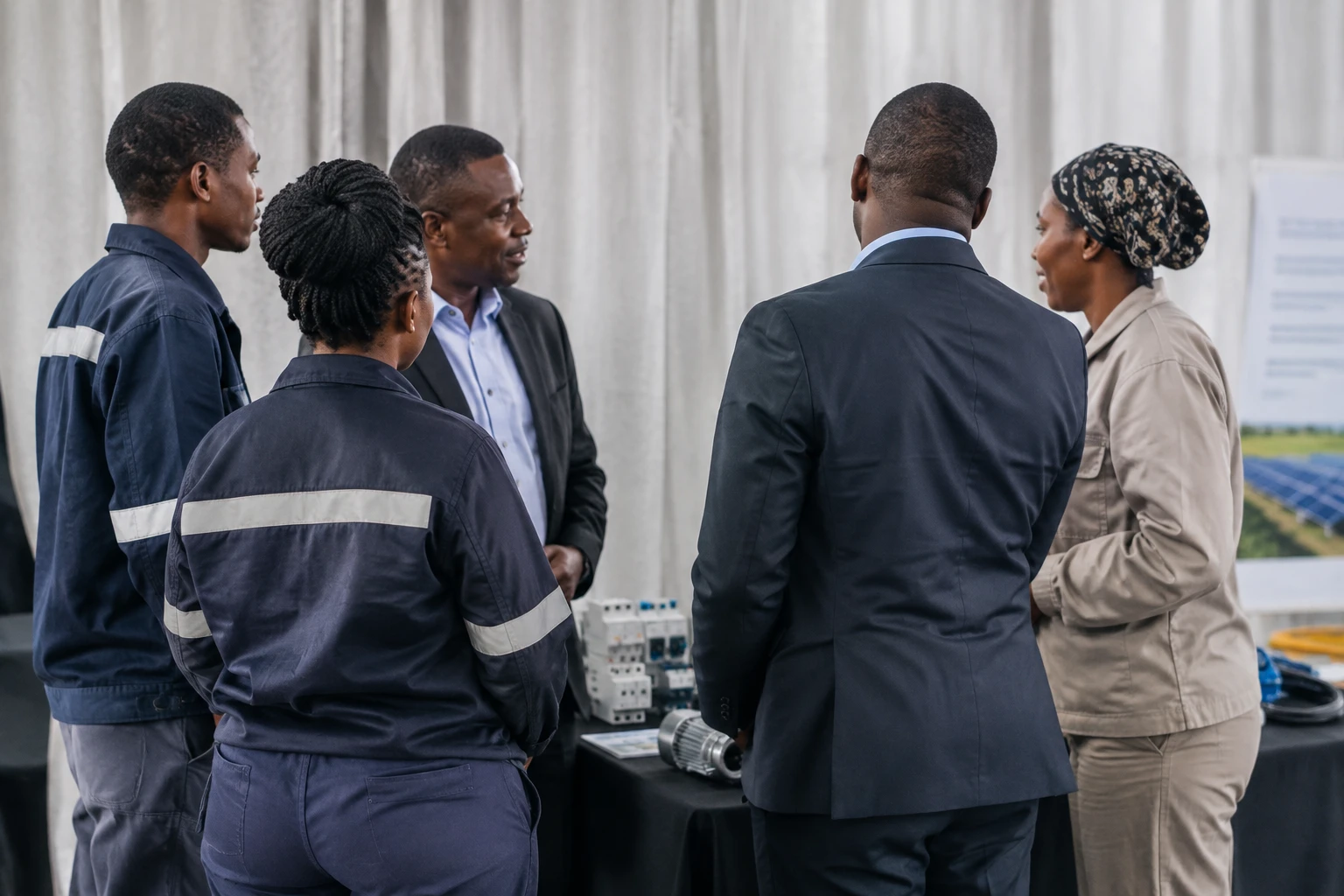
An investment announcement only becomes an industrial revival when factories open, local suppliers win contracts and promised jobs materialise. In the Free State, a province in central South Africa, three projects highlighted on 9 October 2026 offer a way forward — but also a test of implementation.
Three projects, three stages of production
In Phuthaditjhaba, South African President Cyril Ramaphosa presented three initiatives at the launch of the provincial industrial revival programme. They cover renewable energy, electric vehicle assembly and the processing of apples into juice concentrate.
The energy project attributed to the YJC Group is worth about 100 billion rand and could create 6,500 jobs, according to official announcements. Joylong Automotive plans an investment of 5.5 billion rand, 1,500 direct jobs over five years and capacity for up to 8,000 electric vehicles a year. Walk of Life’s apple juice concentrate factory, estimated to cost 330 million rand, aims to provide 100 permanent positions and nearly 600 seasonal jobs.
The itemised figures total about 105.83 billion rand. A national announcement, however, described the initiative as a 120 billion rand programme, without the three projects outlined being sufficient to explain the difference. The total for the projects with stated figures should therefore be distinguished from the larger amount announced for the programme.
The figures announced describe projects and expected capacity, not achievements already secured. Construction schedules, funding actually raised and operating conditions remain decisive.
The local challenge: producing, processing and retaining businesses
The Free State is seeking to stem the departure or closure of businesses amid infrastructure and municipal service difficulties. The Maluti-a-Phofung Special Economic Zone, a designated area developed to attract productive activities, is the main local lever cited. Ramaphosa said it had sites for 65 factories, of which 58% were occupied.
The government has pledged to improve access to electricity and water, roads, the security of industrial sites and administrative processing times. These commitments are essential: without reliable services, investors may delay projects, while businesses already operating in the area face additional costs.
The three activities could also strengthen different value chains. Renewable energy can support electricity supply and related equipment. Vehicle assembly can create opportunities for component manufacturers, logistics companies and maintenance services. Juice processing links apple growers to processing, packaging and distribution, rather than limiting the value created to the sale of raw agricultural products.
This local integration is not automatic, however. It will depend on procurement from South African businesses, the training required and the ability of small businesses to meet the standards and volumes demanded. At the ceremony, 130 people trained in trades such as plumbing, construction and electrical systems were recognised. The link between this training and the projects’ specific needs remains to be established.
An announcement in an economy under pressure
The timing gives these investments particular significance. Statistics South Africa recorded a 1.5% fall in manufacturing output in the second quarter of 2026, the fourth consecutive quarter of decline according to its economic review. The official unemployment rate reached 33.6% over the same period, up from 32.7% in the previous quarter.
Figures published by the statistical agency distinguish between several indicators: they attribute a 1.8% contraction to the manufacturing sector in the quarter’s GDP calculation, while the manufacturing production index fell by 1.5%. These measures are not interchangeable, but both point to difficulties in the sector. For households, the issue is access to lasting jobs; for businesses, it is the ability to produce in an environment where infrastructure and demand remain constraints.
The implications extend beyond the province. As a member of the Southern African Development Community (SADC), South Africa is part of a regional strategy that focuses, in particular, on agro-processing and participation in value chains. If the new facilities source supplies from beyond provincial borders, they could also create opportunities for suppliers in neighbouring countries. But the regional impact will depend on actual contracts and trade, not simply on where the factories are located.
Execution will be the next measure
The president also stressed the need to include local businesses in the supply of components, materials and packaging, as well as in transport and maintenance. The province has announced follow-ups at 30, 60 and 90 days to identify obstacles. These deadlines will show whether promises to improve services lead to operational decisions.
For people in South Africa’s Free State, the central questions will be the quality and duration of the jobs, and whether local workers can access them. For the authorities, the challenge is to turn investment announcements into productive capacity without neglecting the infrastructure and suppliers that make it viable. It is also at this level, through measurable results, that the provincial revival can contribute to SADC’s industrial ambitions.