Algeria
 Egypt
 Libya
 Morocco
 Sudan
 Tunisia
 Benin
 Burkina Faso
 Cabo Verde
 Côte d'Ivoire
 Ghana
 Guinea
 Guinea-Bissau
 Liberia
 Mauritania
 Niger
 Nigeria
 Senegal
 Sierra Leone
 The Gambia
 Togo
 Cameroon
 Central African Republic
 Chad
 DR Congo
 Equatorial Guinea
 Gabon
 Republic of the Congo
 São Tomé and Príncipe
 Burundi
 Comoros
 Djibouti
 Eritrea
 Ethiopia
 Kenya
 Madagascar
 Malawi
 Mauritius
 Mozambique
 Rwanda
 Seychelles
 Somalia
 South Sudan
 Tanzania
 Uganda
 Angola
 Botswana
 Eswatini
 Lesotho
 Namibia
 South Africa
 Zambia
 Zimbabwe
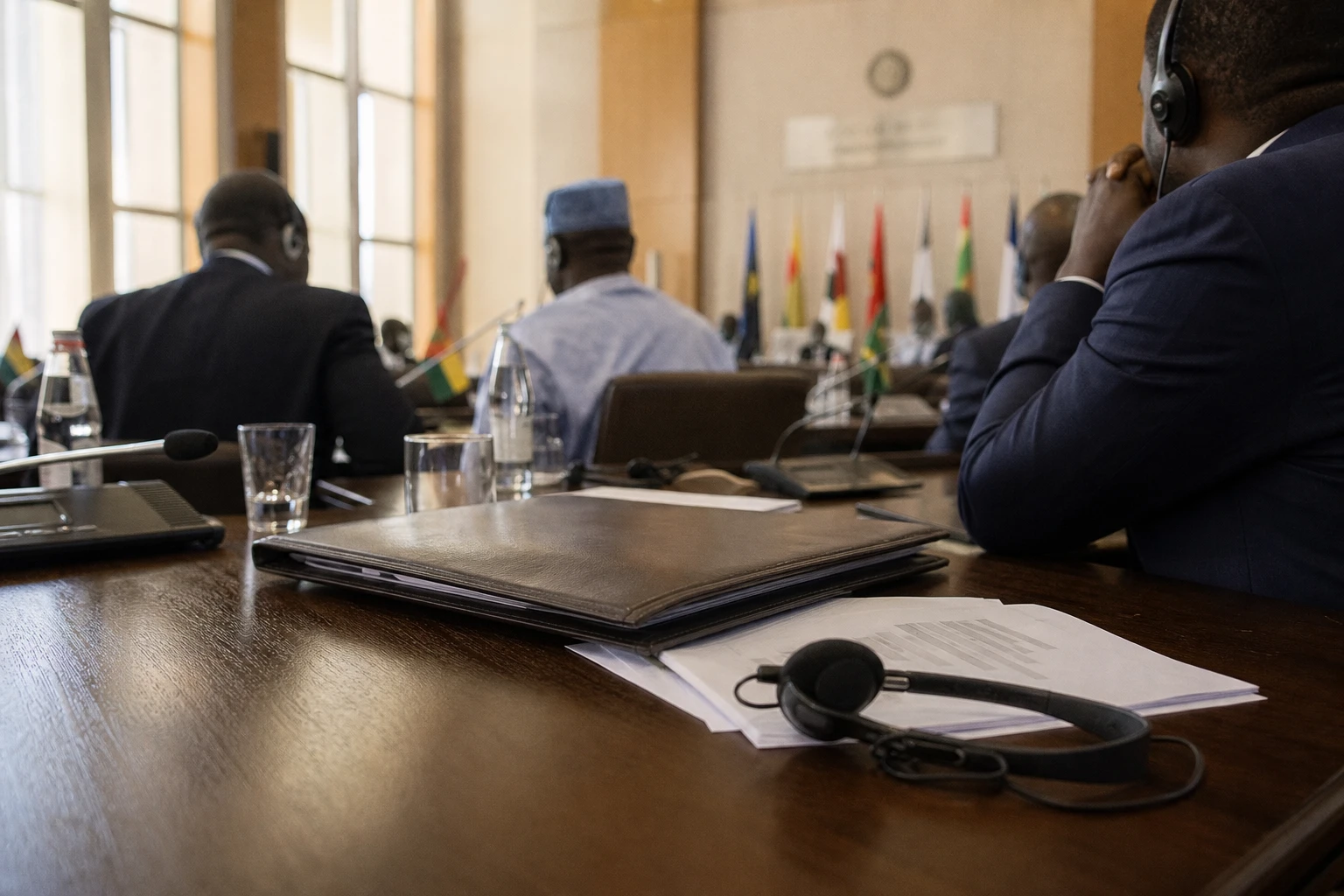
In Kidal, the balance of power now depends as much on control of the ground as on the Malian forces’ ability to maintain a lasting presence there. The Azawad Liberation Front (FLA) says it has begun withdrawing from the city after several days of air and ground operations by the Malian army.
A city at the heart of northern Mali’s crisis
Kidal occupies a strategic position in Mali’s far north. The city lies on routes linking the country’s Saharan areas to Algeria. It is also a political symbol for Tuareg movements calling for autonomy, or even independence, for Azawad, the name these groups give to Mali’s northern territories.
The region remains marked by the failure of the 2015 peace agreement signed by Bamako and several armed movements in the north. After that process broke down, the Malian authorities announced the end of the agreement in January 2024. Since then, clashes have intensified between the army, separatist groups and jihadist organisations.
Mali has also moved away from the Economic Community of West African States (ECOWAS), a regional organisation tasked, among other things, with political and security cooperation. Along with Burkina Faso and Niger, Bamako created the Alliance of Sahel States. This regional realignment has reduced the mechanisms for dialogue between the Malian authorities and their West African neighbours.
FLA announces withdrawal under pressure
In a statement circulated on Tuesday, the FLA referred to a “controlled withdrawal” from Kidal. The movement says the decision comes after an intensification of Malian army air strikes, backed by Russian Africa Corps personnel.
The FLA is a coalition of Tuareg and Arab armed movements that emerged from the reorganisation of the former separatist structures in the north. It fights Malian forces, but has also carried out coordinated operations with the Group for the Support of Islam and Muslims (JNIM), an Al-Qaeda-affiliated organisation in the Sahel.
Available information does not yet make it possible to establish with certainty the scale of the fighting around Kidal or the number of casualties. The FLA’s announced withdrawal does not necessarily mean the end of its presence in the region. It could also involve moving its fighters towards outlying routes or rural areas.
Open-source reports indicate that the Malian army may have launched an operation combining ground and air assets. However, the actual presence of government forces in central Kidal and the nature of the deployment established after the withdrawal have yet to be officially confirmed.
The precedent of November 2023 looms over events
The city had already changed hands in November 2023. The Malian army, backed at the time by the Wagner Group, retook Kidal after several years of state absence. Bamako presented the recapture as a major step towards restoring national sovereignty.
That victory nevertheless left several questions unanswered. The military presence was not accompanied by a political settlement with local communities. The humanitarian and economic situation remained fragile. Travel was difficult, while trade between Kidal and the country’s other regions remained heavily dependent on the security situation.
In April 2026, the FLA and JNIM launched a coordinated offensive in several regions of Mali. The attacks targeted military positions and urban centres. Kidal then returned to the control of the armed coalition, according to several consistent sources. The episode was also marked by the death of Mali’s Defence Minister, Sadio Camara, in an attack in Kati, near Bamako.
The Malian government has not publicly acknowledged all the information put forward by armed groups. Africa Corps, for its part, confirmed the withdrawal of its personnel from Kidal during the previous offensive, without providing a full casualty toll. This divergence illustrates the intense information battle that accompanies military operations in the north.
A military and political challenge
For the authorities in Bamako, regaining a foothold in Kidal would help reverse the setback suffered in the spring and preserve the narrative of a gradual reconquest of the territory. But holding the city is a different challenge from capturing it. Supply lines are long. Malian forces must also secure roads, airfields and surrounding towns.
For residents, the stakes are more immediate. Each change of control can bring movement restrictions, families fleeing, difficulty accessing healthcare and a halt to commercial activity. Urban populations, nomadic herders and traders along the trans-Saharan routes do not experience the crisis in the same way.
The FLA’s announced withdrawal could also test its understanding with JNIM. The two organisations share a common enemy, but their goals remain different. The FLA advances a territorial and political claim centred on Azawad. JNIM pursues a broader jihadist project and seeks to extend its influence beyond northern Mali.
Their cooperation may therefore remain temporary. It allows both groups to concentrate their forces against the army and its Russian allies. It does not, however, resolve their differences over the administration of territories, local resources and Mali’s political future.
The Sahel watches what happens next
The battle for Kidal extends beyond the city limits. It concerns the future of Mali’s security apparatus and the credibility of Africa Corps, which became Bamako’s main foreign military partner after the departure of French forces and the United Nations mission.
It also concerns Mali’s neighbours. Algeria is closely monitoring developments in northern Mali because of its border and its historic role in mediating between Bamako and armed movements. Mauritania and Niger are also exposed to the repercussions of movements of fighters and civilians.
The next stage will be decisive: it will be necessary to verify whether Malian forces actually regain administrative and military control of Kidal, or whether the FLA retains the ability to operate around the city. The evolution of the alliance with JNIM and the response of the authorities of the Alliance of Sahel States will also need to be monitored.
In the short term, the announced retaking of positions will therefore not be enough to stabilise northern Mali. Without a political agreement, regular access to public services and the securing of roads, Kidal risks remaining disputed territory, where every military advance may be followed by a new retreat.