Algeria
 Egypt
 Libya
 Morocco
 Sudan
 Tunisia
 Benin
 Burkina Faso
 Cabo Verde
 Côte d'Ivoire
 Ghana
 Guinea
 Guinea-Bissau
 Liberia
 Mauritania
 Niger
 Nigeria
 Senegal
 Sierra Leone
 The Gambia
 Togo
 Cameroon
 Central African Republic
 Chad
 DR Congo
 Equatorial Guinea
 Gabon
 Republic of the Congo
 São Tomé and Príncipe
 Burundi
 Comoros
 Djibouti
 Eritrea
 Ethiopia
 Kenya
 Madagascar
 Malawi
 Mauritius
 Mozambique
 Rwanda
 Seychelles
 Somalia
 South Sudan
 Tanzania
 Uganda
 Angola
 Botswana
 Eswatini
 Lesotho
 Namibia
 South Africa
 Zambia
 Zimbabwe
Useful dialogue as routes close
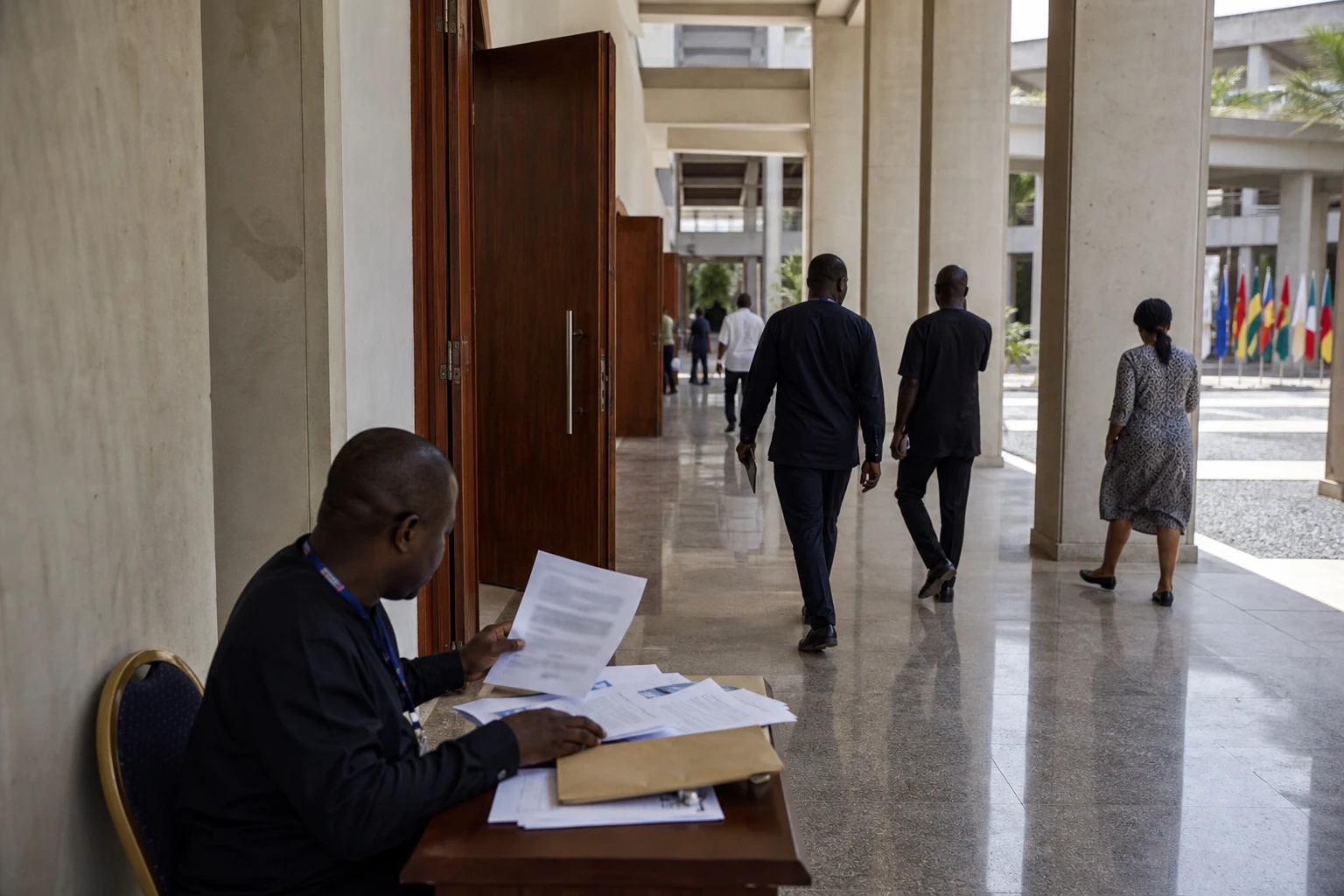
In Bamako, a presidential visit is never merely a gesture of protocol. It says something broader: the place Mali wants to reclaim among its neighbours, as the security of roads, supplies to the capital and the movement of goods remain fragile. In this context, welcoming Senegalese President Bassirou Diomaye Faye carries particular significance, because Dakar and Bamako are linked by trade, families, transport and a border that matters to the whole of West Africa.
The visit also comes at a sensitive institutional moment. Since the ECOWAS summit in Freetown on 19 July 2026, Bassirou Diomaye Faye has chaired the Conference of Heads of State and Government of the West African organisation. Senegal therefore has an added responsibility in its exchanges with Bamako, at a time when Mali, Burkina Faso and Niger have distanced themselves from ECOWAS and are advancing their own Sahelian framework.
In Bamako, security and the economy are intertwined
On 28 July 2026, Bassirou Diomaye Faye was received in Bamako by Mali’s transitional leader, General Assimi Goïta. Several West African media outlets reported that this was his first visit to the Malian capital since taking office as head of ECOWAS. The talks focused mainly on the fight against terrorism, but the equation is broader: in Mali, security and the economy are deteriorating together, and every attack immediately affects prices, roads and confidence.
The preceding weeks have shown the scale of the pressure on the Malian authorities. In early July, coordinated attacks targeted several localities across the country, from the north to the centre, prompting statements of deep concern from the African Union and the African Commission on Human and Peoples’ Rights. In late April, a series of assaults had already struck Bamako, Kati, Mopti, Sévaré, Gao and Kidal, a reminder that the capital is no longer protected by geographical distance alone.
Added to this is a war of attrition against supplies. Amnesty International reported in May that Bamako was under pressure, with prices rising for essential goods. Agence France-Presse and Reuters, for their part, reported convoys being blocked and trucks attacked as part of a strategy aimed at choking the capital. This situation affects urban households, transport operators, traders and the informal economy first; they absorb the shock before anyone else.
Senegal talks security, but also neighbourly ties
For Dakar, the visit is more than a security signal. Senegal and Mali share major trade corridors. Senegal’s 2050 masterplan also identifies a Dakar-Bamako axis as central to future regional investment, proof that bilateral relations go beyond diplomacy of the moment. When Bamako falters, the smooth flow of West African trade is also weakened, from ports to the Sahel’s inland markets.
In May 2026, Senegal had already said that its co-operation with Mali was based on intelligence sharing and joint patrols. This approach is consistent with the geography: the Senegal-Mali border is a focal point for security, mobility and trafficking concerns. It is also political: direct dialogue with Bamako allows Dakar to keep a channel open with the Malian authorities, even as relations between ECOWAS and AES, the Alliance of Sahel States, remain tense.
At the same time, Mali is seeking economic levers to overcome its fragility. The World Bank says its 2026-2031 partnership framework aims to strengthen resilience and private-sector employment to help the country move beyond fragility. The IMF had already noted in 2025 that Mali’s economy remained exposed to insecurity, dwindling external financing, climate shocks and market disruptions. In other words, the fight against terrorism is inseparable from the return of investment, the movement of goods and youth employment.
What the visit says about the moment in the Sahel
The significance of the meeting therefore extends beyond the Bamako-Dakar axis. It sheds light on a moment when West Africa is experimenting with several forms of co-operation in parallel: ECOWAS, still central to regional integration, and the Confederation of Sahel States, led by Bamako, Ouagadougou and Niamey. Senegal, meanwhile, is seeking to act as a bridge. This position could help reduce misunderstandings, but it will not overcome deep-rooted divisions if security on the ground continues to deteriorate.
For Mali, the immediate challenge is clear: prevent the capital from being permanently strangled by fear, supply disruptions and political uncertainty. For Senegal, the stakes are just as tangible: preserve a stable neighbourhood, secure trade and show that an ECOWAS presidency can also translate into action on the ground, beyond declarations. The test is regional, but first and foremost practical: how much room remains to talk, co-ordinate and protect people before armed power struggles take over completely?