Algeria
 Egypt
 Libya
 Morocco
 Sudan
 Tunisia
 Benin
 Burkina Faso
 Cabo Verde
 Côte d'Ivoire
 Ghana
 Guinea
 Guinea-Bissau
 Liberia
 Mali
 Mauritania
 Niger
 Nigeria
 Senegal
 Sierra Leone
 The Gambia
 Togo
 Cameroon
 Central African Republic
 Chad
 DR Congo
 Equatorial Guinea
 Gabon
 Republic of the Congo
 São Tomé and Príncipe
 Burundi
 Comoros
 Djibouti
 Ethiopia
 Kenya
 Madagascar
 Malawi
 Mauritius
 Mozambique
 Rwanda
 Seychelles
 Somalia
 South Sudan
 Tanzania
 Uganda
 Angola
 Botswana
 Eswatini
 Lesotho
 Namibia
 South Africa
 Zambia
 Zimbabwe
In Zalambessa, every troop movement has implications beyond control of a border post. The town in Tigray, in northern Ethiopia, lies on a strategic route towards Eritrea. Its control is in question as fighting has resumed between federal forces and Tigrayan groups, reviving the risk of a clash between neighbouring states.
A border at the heart of renewed fighting
On 13 October 2026, Ethiopian government troops reached Zalambessa, according to six sources cited by Reuters, including people in contact with residents and a conflict specialist. But their presence is not enough to establish who controlled the town immediately before their arrival, or whether Eritrean or Tigrayan fighters were still there.
The conflict-monitoring group ACLED reported that Eritrean soldiers, previously deployed along the Zalambessa-Fatsi axis, had withdrawn towards Eritrea through Zalambessa on 12 October. Witnesses also reported Ethiopian military vehicles advancing from Adigrat. These accounts shed light on the advance, without resolving all uncertainty about the forces in the area.
This caution matters. On 8 October, the Associated Press said that officials allied with the Ethiopian government and ACLED had reported Eritrean incursions into Tigray. The agency said it had been unable to verify these accounts independently. Asmara and Addis Ababa accuse each other of fuelling instability, while claims about military movements remain difficult to confirm on the ground.
Clashes resumed on 23 September, according to reports in the international press. The Tigray People’s Liberation Front, or TPLF, is once again engaged in fighting with federal forces and their allies. The army and pro-government forces have retaken several towns, including Mekelle, the regional capital, following the announced withdrawal of groups opposed to the government.
Ethiopian-Eritrean relations under renewed strain
Zalambessa bears the scars of a contested border. The 1998-2000 war between Ethiopia and Eritrea left a deep mark on the region. In 2018, the two countries restored relations after years of confrontation. But their rapprochement did not resolve the political and security tensions affecting the Horn of Africa.
Another precedent weighs on the situation: the 2020-2022 Tigray war. At the time, Eritrean forces fought alongside the Ethiopian federal army against the TPLF. The agreement signed in Pretoria, South Africa, ended the main fighting between the Ethiopian parties, without Eritrea among its signatories. Renewed hostilities therefore threaten an already fragile balance.
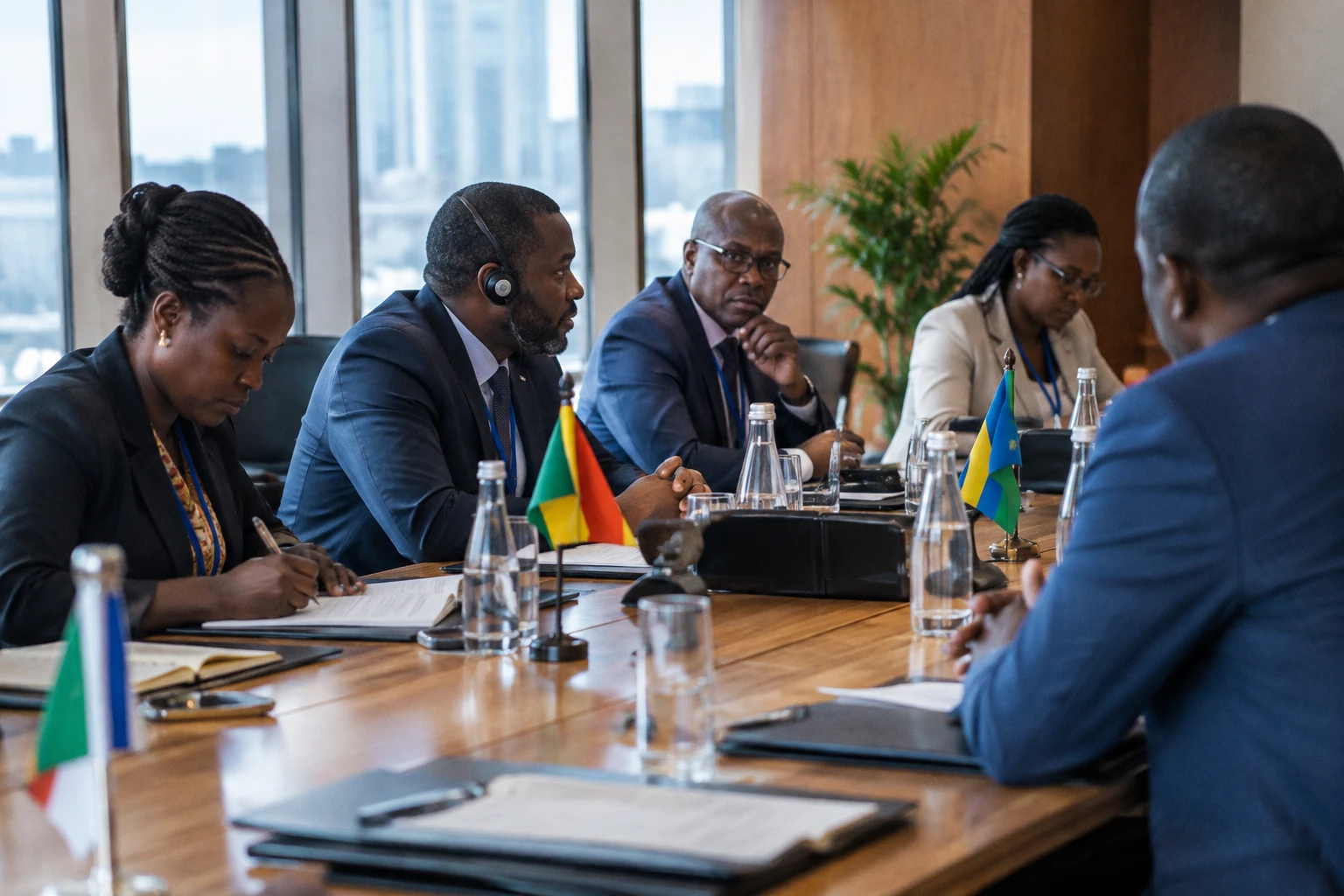
Current accusations are being traded. Addis Ababa says Eritrea is supporting its adversaries and has sent soldiers into Ethiopian territory. Asmara has rejected earlier accusations of backing the TPLF. In this context, troop movements near the border could fuel escalation, but they do not, by themselves, prove an intention to attack the neighbouring country.
The question of Ethiopia’s access to the Red Sea is also contributing to tensions. As a landlocked country, Ethiopia depends on routes through neighbouring states to reach ports. Prime Minister Abiy Ahmed has argued that the country needs maritime access. This ambition is fuelling regional concerns, but does not justify concluding that the advance towards Zalambessa signals an offensive in Eritrea.
Security and services remain at stake for residents
For Tigray’s residents, the frontline is no abstraction. Changes in control can disrupt travel, supplies and access to services. The AP reported that residents of Mekelle spoke of closed banks, food shortages and difficulties obtaining medical care. These accounts describe concrete pressures, but do not amount to a comprehensive assessment of the situation across the region.
The consequences also vary according to location and livelihood. Residents of towns close to the fighting may face movement restrictions and disruptions to services. In rural areas, insecurity makes it harder to travel to markets and health centres. Traders, farmers and informal-sector workers depend heavily on roads that can become impassable or dangerous.
In Addis Ababa, the government must manage national security, relations with Asmara and opposition in the north at the same time. For Tigray’s regional authorities, control of territory and political representation remain central concerns. The population, meanwhile, needs reliable information and regular humanitarian access, regardless of the military situation.
Implications for the Horn of Africa
The situation also concerns the Intergovernmental Authority on Development, IGAD, the regional organisation for East Africa, which is tasked in particular with promoting co-operation and stability. A confrontation between Ethiopia and Eritrea would have repercussions beyond Tigray, in a region where borders, political alliances and trade routes are closely connected.
For the African Union, whose headquarters are in Addis Ababa, the immediate priority is to ensure that mutual accusations and military advances do not shut the door on diplomacy. The Pretoria agreement shows that a political solution is possible, but its implementation remains crucial to civilian security and reconciliation in Tigray.
The next developments to watch are clear: who actually controls Zalambessa, whether Eritrean forces have withdrawn from Ethiopian territory, and whether channels of dialogue remain open. For now, several sources have reported the arrival of federal troops in the town, while the presence and intentions of other forces in the area have not been fully established.
Sources consulted: Reuters report on Ethiopian forces’ arrival in Zalambessa, Associated Press on reports of Eritrean incursions, ACLED timeline of military movements in Tigray, Associated Press on the recapture of Mekelle and the peace agreement, IGAD document on relations between Ethiopia and Eritrea.