Algeria
 Egypt
 Libya
 Morocco
 Sudan
 Tunisia
 Benin
 Burkina Faso
 Cabo Verde
 Côte d'Ivoire
 Ghana
 Guinea
 Guinea-Bissau
 Liberia
 Mali
 Mauritania
 Niger
 Nigeria
 Senegal
 Sierra Leone
 The Gambia
 Togo
 Cameroon
 Central African Republic
 Chad
 DR Congo
 Equatorial Guinea
 Gabon
 Republic of the Congo
 São Tomé and Príncipe
 Burundi
 Comoros
 Djibouti
 Eritrea
 Kenya
 Madagascar
 Malawi
 Mauritius
 Mozambique
 Rwanda
 Seychelles
 Somalia
 South Sudan
 Tanzania
 Uganda
 Angola
 Botswana
 Eswatini
 Lesotho
 Namibia
 South Africa
 Zambia
 Zimbabwe
A mining project that goes beyond the announcement
At Tulu Kapi, in western Ethiopia, the question is no longer just when the first ounce of gold will come out of the ground. The real question is broader: can this site become a credible engine of revenue, jobs and infrastructure in a region where mining promises have often outpaced delivery? The project is being closely watched in Addis Ababa, as gold is playing an increasingly important role in the country’s foreign-exchange balance. The National Bank of Ethiopia notes that gold exports are authorised under its supervision and that record deliveries have recently helped support foreign-exchange reserves.
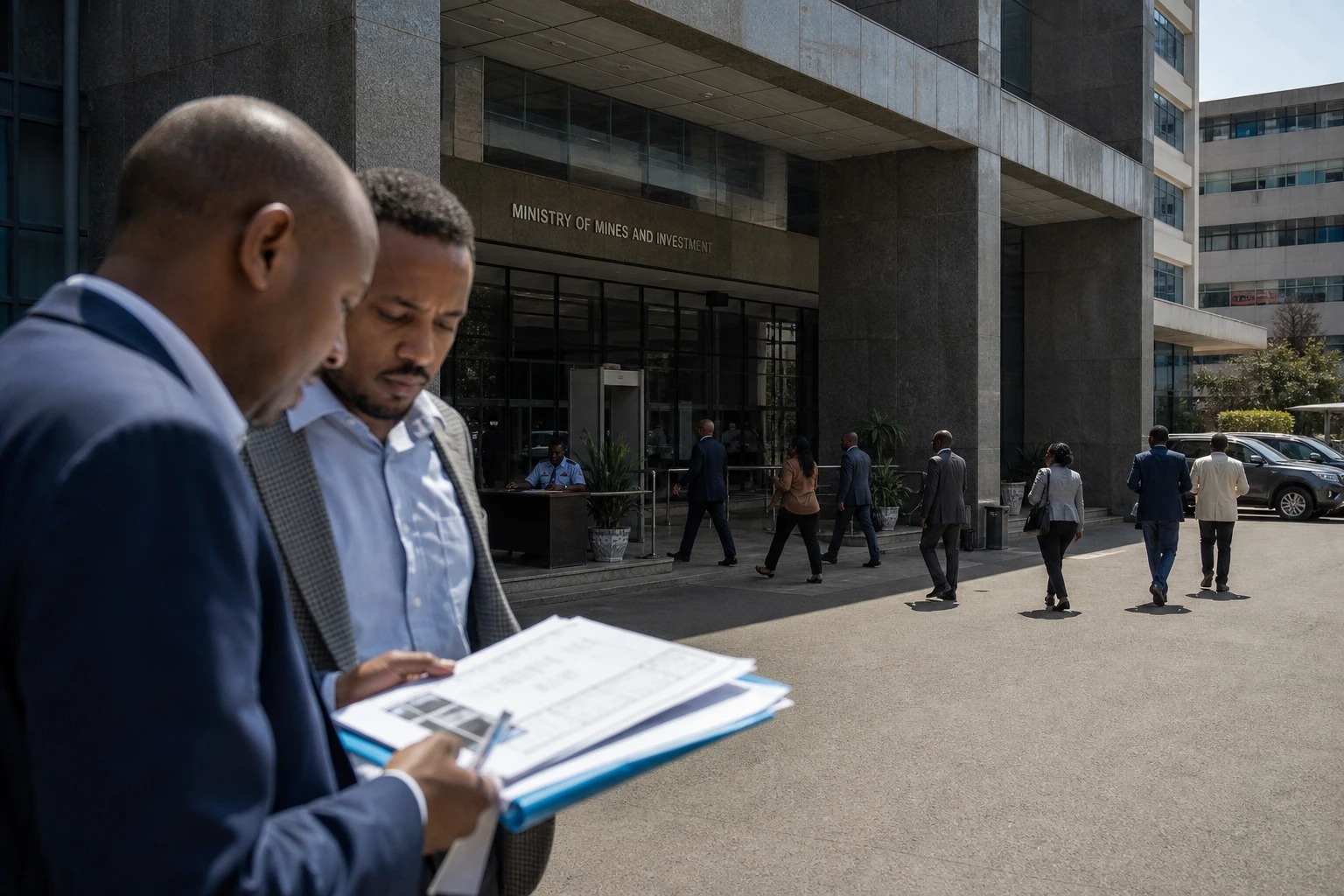
Ethiopia is seeking to attract more capital into the extractive sector. At the Invest in Ethiopia 2026 forum, the authorities again presented mining as a strategic sector, alongside energy, agro-industry and manufacturing. At the same time, the Ministry of Mines reported more than $3.5 billion in revenue over the first eight months of 2026, signalling strong pressure to turn mining promises into tangible flows.
What KEFI is proposing, and what remains to be proved
KEFI Gold and Copper presented an expanded version of its plan for Tulu Kapi on 27 August 2026. The company wants to add an underground mine to the open pit already planned. Under its updated plan, the project could produce about 1.2 million ounces of gold over eight years, with average output forecast at around 180,000 ounces a year. The underground phase would initially be based on a preliminary economic assessment, or PEA, a useful level of study but not yet enough to reach a definitive conclusion on a deposit’s viability.
The timetable remains the sensitive point. The group says it aims to complete engineering for the underground mine in the fourth quarter of 2027, then begin digging the access ramp from mid-2028. Underground mining would not start until 2029. This sequence first depends on the success of the open-pit phase, whose start of production has already been postponed several times. KEFI says it has finalised financing agreements and a $400 million mining contract signed in June 2026 with BCM Group, but execution risk remains high.
The new plan also sets out specific requirements: $8.09 million in additional capital and maximum cash of about $10.5 million to be raised for the underground phase. The company says it intends to fund this stage from cash flows expected from the open-pit mine, directly tying the second phase to the success of the first. This is a conventional financing structure for projects developed in stages, but it leaves little room for manoeuvre if costs overrun or delays mount.
In western Ethiopia, local benefits are decisive
The site is in the Genji area, in the heart of Oromia, west of Addis Ababa. This geography matters. In this part of the country, a mining project is measured not only in ounces of gold, but also in roads, housing, energy, water and local jobs. Ethiopia’s ENA news agency reported in February 2026 that Prime Minister Abiy Ahmed had presented Tulu Kapi as a model of responsible investment, capable of delivering national growth and benefits for communities. Addis Standard, for its part, reported that construction was officially launched on 18 February 2026, in the presence of federal and regional authorities.
The social context nevertheless remains a central issue. The project has required discussions on resettlement, compensation and access to land. This is crucial in Ethiopia, where major projects can quickly run up against local land-use practices if consultation is delayed or benefits appear concentrated at the top. KEFI says it is working under agreements with the Ethiopian state and in line with environmental and social standards aligned with the principles of the International Finance Corporation and the Equator Principles. This does not eliminate social risk, but at least establishes a public frame of reference.
For residents, the stakes are very tangible. A well-run mining project can create direct and indirect jobs, stimulate local trade and provide work for transporters, subcontractors and service providers. Conversely, a delayed project ties up land, raises expectations and sometimes leaves communities in uncertainty for years. Tulu Kapi’s history is a reminder that a mining project is not just about geology. It is also about trust, timing and the sharing of value.
An Ethiopian and regional perspective
The project extends beyond Oromia. In Addis Ababa, the government is seeking to make mining a pillar of economic reform and private capital inflows. The signals to investors are clear: Ethiopia wants capital-intensive projects, but also greater local integration. In this context, Tulu Kapi is a test. If it progresses on the announced timetable, it will bolster the view that a major mining project can finally move from announcement to production. If it stalls again, it will fuel doubts about the country’s ability to turn its resources into sustainable revenue.
The regional significance is also clear. Ethiopia is a member of IGAD, the East African organisation that includes Djibouti, Kenya, Somalia, South Sudan, Sudan, Uganda, Eritrea and Ethiopia. In this region, minerals, logistics routes, energy and border stability are interconnected. A project such as Tulu Kapi is therefore part of a wider setting: an East Africa seeking to turn its natural resources into value chains without repeating the old patterns of exporting raw materials.
This is also why Tulu Kapi is attracting interest beyond Ethiopia. The project comes at a time when several African states are seeking to capture more mining rents, strengthen local processing and secure foreign-exchange earnings. On a continent where gold often acts as a macroeconomic buffer, Ethiopia’s case will be closely watched: not only for the size of the deposit, but for the country’s ability to enforce a process, a timetable and measurable benefits.