Algeria
 Egypt
 Libya
 Morocco
 Sudan
 Tunisia
 Benin
 Burkina Faso
 Cabo Verde
 Côte d'Ivoire
 Ghana
 Guinea
 Guinea-Bissau
 Liberia
 Mali
 Mauritania
 Niger
 Nigeria
 Senegal
 Sierra Leone
 The Gambia
 Togo
 Cameroon
 Central African Republic
 Chad
 DR Congo
 Equatorial Guinea
 Gabon
 Republic of the Congo
 São Tomé and Príncipe
 Burundi
 Comoros
 Djibouti
 Eritrea
 Kenya
 Madagascar
 Malawi
 Mauritius
 Mozambique
 Rwanda
 Seychelles
 Somalia
 South Sudan
 Tanzania
 Uganda
 Angola
 Botswana
 Eswatini
 Lesotho
 Namibia
 South Africa
 Zambia
 Zimbabwe
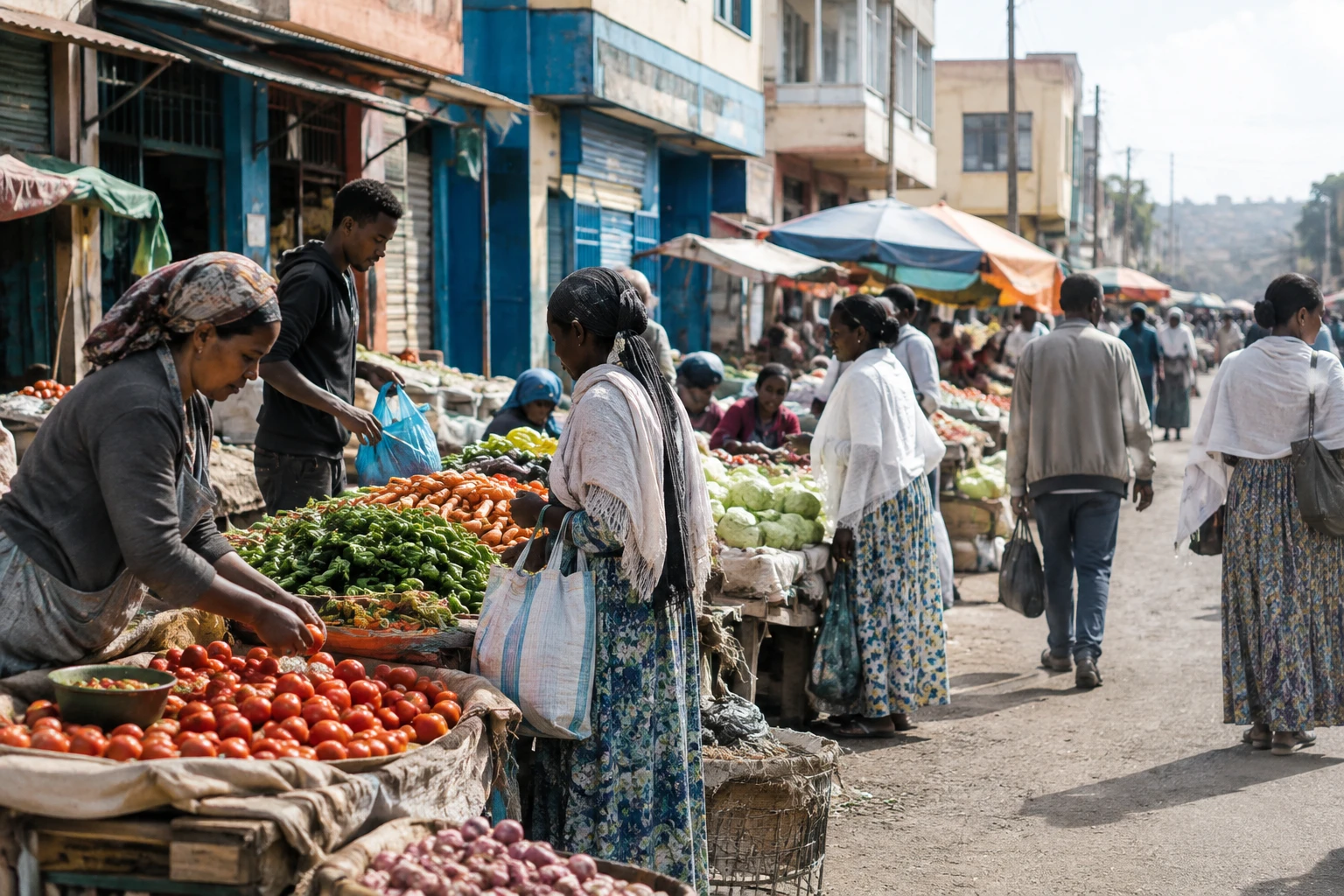
In Mekele, markets have reopened after Tigrayan forces withdrew. But the resumption of activity in the regional capital does not mean the fighting is over. In the countryside of northern Ethiopia, every claim of victory runs up against a central question: who really controls the ground, and at what cost to residents?
A recaptured capital, but fighting continues
On 22 October 2026, Debretsion Gebremichael, leader of the Tigray People’s Liberation Front (TPLF), said Tigrayan forces were continuing to fight and achieving tactical successes. The statement, reported from an address broadcast locally, reflects the movement’s position. On its own, it cannot confirm shifts in the front lines or the scale of the gains being claimed.
One point is corroborated: forces allied with the federal government entered Mekele on 4 October, following the TPLF’s announced withdrawal. The Associated Press reports the takeover and says clashes then continued as forces sought to gain ground in the region. The regional capital has therefore changed hands, without this establishing uniform federal control over Tigray.
On 16 October, the Ethiopian government announced the establishment of a six-month interim administration in the region. The same report says hundreds of former combatants were registering for a programme to return to civilian life. These steps are taking place alongside the resumption of hostilities: they prove neither that the fighting has ended nor that there has been general disarmament.
The TPLF has also claimed that several hundred federal soldiers were neutralised in recent clashes. No independent tally identified so far confirms this figure. It must therefore remain attributed to the movement and cannot be presented as an established count.
Peace accord under strain from political tensions
Large-scale fighting resumed on 22 September, amid tensions between the federal authorities and the TPLF. The first reported clashes involved Tigray, Amhara and Afar. The parties gave opposing accounts of how hostilities began. The Intergovernmental Authority on Development (IGAD), an East African regional organisation, called for de-escalation and reported renewed fighting and disruptions to air links.
The renewed fighting is putting pressure on the cessation of hostilities agreement signed in Pretoria on 2 November 2022, under African Union mediation. The agreement halted the two-year war between the federal government and the TPLF. In March 2025, the African Union was still calling on the parties to honour their commitments. The latest developments highlight the gap between signing an agreement and achieving a lasting resolution to the political and security issues surrounding it.
The dispute is rooted in a longer political history. The TPLF dominated Ethiopia’s ruling coalition for nearly three decades before Abiy Ahmed became prime minister in 2018. Tensions escalated sharply in 2020, after national elections were postponed during the pandemic. The TPLF challenged the federal decision and held regional elections. On 4 November 2020, the government launched an offensive in Tigray, accusing local forces of attacking a federal base. The TPLF disputed the government’s account.
The 2020-2022 war involved federal forces, Tigrayan forces and Eritrean forces, as well as fighters from other regions. Its human toll remains difficult to establish precisely. Estimates vary widely and should not be repeated as a verified tally without clearly established methodology and independent sources. Population displacement and humanitarian needs, however, have left a lasting mark on the region.
Civilians face an uncertain front line
For residents, the resumption of fighting first means uncertainty over travel, services and access to livelihoods. Mekele is home to government offices, markets and regional services. Rural areas, meanwhile, may be affected by clashes and movement restrictions without having the same access to information or aid. The consequences therefore differ depending on whether people live in the regional capital or in a remote locality.
The return of markets in Mekele, reported on 6 October, is a tangible sign that activity is resuming. It is not, however, enough to measure the security of supplies, continuity of healthcare or freedom of movement across the rest of Tigray. The 2020-2022 conflict showed how fighting, displacement and service disruptions can reinforce one another. It would be premature to conclude that the current situation will produce the same toll, but the risks to civilians warrant particular vigilance.
Military messaging also complicates efforts to understand the situation. A claim of victory may serve to maintain the morale of forces and supporters, while the federal authorities highlight the recapture of territory. Without independent access to the areas concerned, such announcements must be distinguished from confirmed facts. Monitoring population displacement, essential services and humanitarian access will provide more concrete indications than statements from the parties alone.
Stakes for the Horn of Africa
The crisis extends beyond rivalry between Addis Ababa and the TPLF. Tigray borders Eritrea, with which Ethiopia is experiencing renewed tensions. On 8 October, Ethiopia’s foreign minister accused Eritrean troops of advancing up to 60 kilometres into Ethiopian territory and appealed to the UN Security Council. Al Jazeera reported the accusation; it does not amount to independent confirmation of the presence of those forces. Tensions between the two countries nevertheless add a regional risk to an already unstable situation.
IGAD and the African Union are directly concerned. For the regional organisation, the immediate priority is de-escalation in areas where clashes could spill across administrative boundaries and disrupt movement. For the African Union, whose mediation led to the Pretoria accord, the challenge is also to preserve a credible political framework when peace commitments are called into question.
What happens next will depend in particular on the course of fighting outside Mekele, the interim administration’s ability to function and whether dialogue between the parties resumes. As long as military claims remain difficult to verify and tensions with Eritrea persist, the capture of the regional capital cannot be interpreted as an end to the conflict. For Ethiopians in Tigray, the immediate concern remains security and the continuity of daily life.
The Associated Press report on government-allied forces entering Mekele ; details of the interim administration in Tigray ; IGAD’s call for de-escalation ; the African Union statement on the cessation of hostilities agreement ; an update on regional tensions and the situation in Tigray ; monitoring of events and statements in Tigray.