Algeria
 Egypt
 Libya
 Morocco
 Sudan
 Tunisia
 Benin
 Burkina Faso
 Cabo Verde
 Côte d'Ivoire
 Ghana
 Guinea
 Guinea-Bissau
 Liberia
 Mali
 Mauritania
 Niger
 Nigeria
 Senegal
 Sierra Leone
 The Gambia
 Togo
 Cameroon
 Central African Republic
 Chad
 DR Congo
 Equatorial Guinea
 Gabon
 Republic of the Congo
 São Tomé and Príncipe
 Burundi
 Comoros
 Djibouti
 Eritrea
 Ethiopia
 Kenya
 Madagascar
 Malawi
 Mauritius
 Mozambique
 Rwanda
 Seychelles
 Somalia
 South Sudan
 Tanzania
 Uganda
 Angola
 Botswana
 Lesotho
 Namibia
 South Africa
 Zambia
 Zimbabwe
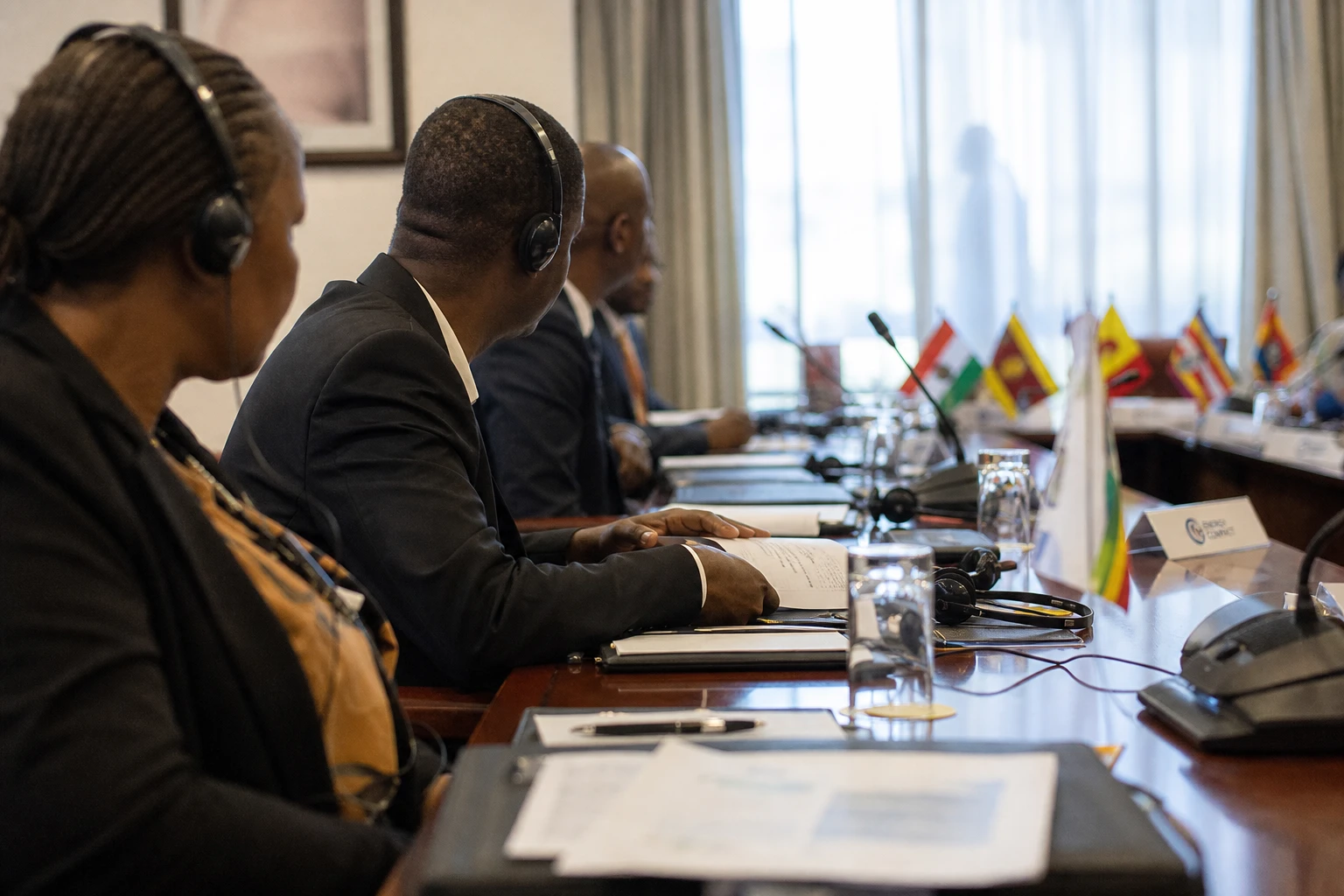
In Mbabane, energy costs remain central to sovereignty
In a country the size of Eswatini, every megawatt counts. When a new solar plant moves from paper to reality, the stakes go beyond electricity generation alone: they concern energy costs, security of supply and the role left to private players in a market still heavily dependent on imports.
Eswatini is a landlocked country in southern Africa and a founding member of SADC, the Southern African Development Community. Its administrative capital is Mbabane, while Lobamba is home to the royal and legislative seat. This institutional geography matters, because energy policy is shaped in ministerial offices, by the regulator and in the areas where projects are to be built.
The country has long faced a simple constraint: it consumes more than it produces. ESERA, the regulatory authority, says the growth of independent power producers is intended to address this dependence. The framework was not improvised. It dates back to decisions taken in 2018 to organise the procurement of new capacity through tenders, in line with the Energy Master Plan and the Short-Term Generation Expansion Plan.
Nsoko, another building block in the 75 MW solar programme
The project launched at Nsoko is set to add 10 MW to the national grid. It is being developed by InnoVent under the supervision of the regulator, ESERA. The site is part of the national 75 MW photovoltaic solar programme awarded to independent power producers. According to ESERA, this tranche includes several sites, including Tsamela, Nsoko, Ndzevane, Bhalekane and Ngwenya.
The timetable has already begun to take shape elsewhere. On 8 December 2025, ESERA confirmed the launch of the 20 MW Tsamela solar project, described as the first construction project in the 75 MW programme. The same statement said the next capacity additions include InnoVent’s 10 MW project at Nsoko, Voltalia’s 15 MW project at Ndzevane, and two 15 MW projects for Sturdee Energy at Bhalekane and Ngwenya. This sequence shows that Eswatini is no longer talking only about intentions, but about a pipeline of projects.
On 6 August, the Nsoko project entered the construction phase, according to information published by sector authorities. The announced investment is around 200 million emalangeni, the country’s currency, equivalent to about $10.9 million at the implicit exchange rate reflected in available financial documents. The plant is expected to generate nearly 26 GWh a year, enough to supply the equivalent of more than 20,000 people, according to the regulator.
The construction work is also expected to generate immediate local benefits. ESERA has cited more than 80 jobs during construction and 10 permanent positions for operations. Projects of this kind do more than change the electricity mix. They provide work for subcontractors, transport operators, installers and a maintenance chain that often remains invisible in broader discussions about the energy transition.
Cutting imports, without illusions about the scale of the challenge
The real issue, however, remains dependence on external supplies. In its 2025 annual report, the Eswatini Electricity Company says it imported 1,084.0 GWh in the 2024/25 financial year, compared with 289 GWh generated domestically by its own power plants. The total cost of imported electricity purchases, including transmission, reached 1.93 billion emalangeni. These figures show the system’s fragility better than any slogan about energy autonomy.
Nsoko’s solar power will not, on its own, resolve an imbalance on this scale. But it can ease pressure on imports, particularly during daylight hours, when photovoltaic output coincides with peak sunshine. In a country where supply still depends heavily on regional exchanges, every locally generated megawatt reduces exposure to neighbouring prices, grid pressures and contractual risks. This is an economic gain before it is a political symbol.
Eswatini’s strategy also rests on an institutional choice: to make room for independent power producers while retaining public oversight of the framework. ESERA says this approach is intended to encourage private participation and competition, and to integrate renewables into the national mix. In short, the state is not building everything on its own, but it retains control of the market’s architecture.
This approach has different effects for different players. For households, the aim is a more stable supply, with fewer power cuts and less exposure to costs passed on to consumers. For industrial firms and traders, it raises hopes of more reliable electricity, which is essential in a country where power costs affect competitiveness. For the state, it offers a means of strengthening sovereignty without forgoing private capital, often necessary in small markets.
A local milestone, but a regional signal
The Nsoko project extends beyond Eswatini’s borders because it forms part of a broader regional trend. Across southern Africa, several countries are seeking to secure their electricity supply through solar, hydropower or biomass projects, often under long-term contracts with private producers. SADC is also promoting regional cooperation and integration, while member states seek to better connect local generation, interconnectors and wholesale markets.
For Mbabane, the message is clear: the energy transition is about more than installing panels. It involves decisions on tariffs, power purchase guarantees, the local share of financing and the confidence extended to investors. The launch of Nsoko shows that Eswatini is moving forward in small steps, but with a now discernible strategy: build domestic capacity to loosen the grip of imports and, in the medium term, secure the kingdom’s economy.
What happens next will depend on how quickly the other sites in the 75 MW programme are delivered and brought into operation. That is where the difference will be made between a promising announcement and lasting change to Eswatini’s electricity system.