Algeria
 Egypt
 Libya
 Morocco
 Sudan
 Tunisia
 Benin
 Burkina Faso
 Cabo Verde
 Côte d'Ivoire
 Ghana
 Guinea
 Guinea-Bissau
 Liberia
 Mali
 Mauritania
 Niger
 Nigeria
 Senegal
 Sierra Leone
 The Gambia
 Togo
 Cameroon
 Central African Republic
 Chad
 DR Congo
 Equatorial Guinea
 Gabon
 Republic of the Congo
 São Tomé and Príncipe
 Burundi
 Comoros
 Djibouti
 Eritrea
 Ethiopia
 Kenya
 Madagascar
 Malawi
 Mauritius
 Mozambique
 Rwanda
 Seychelles
 Somalia
 South Sudan
 Tanzania
 Uganda
 Angola
 Botswana
 Lesotho
 Namibia
 South Africa
 Zambia
 Zimbabwe
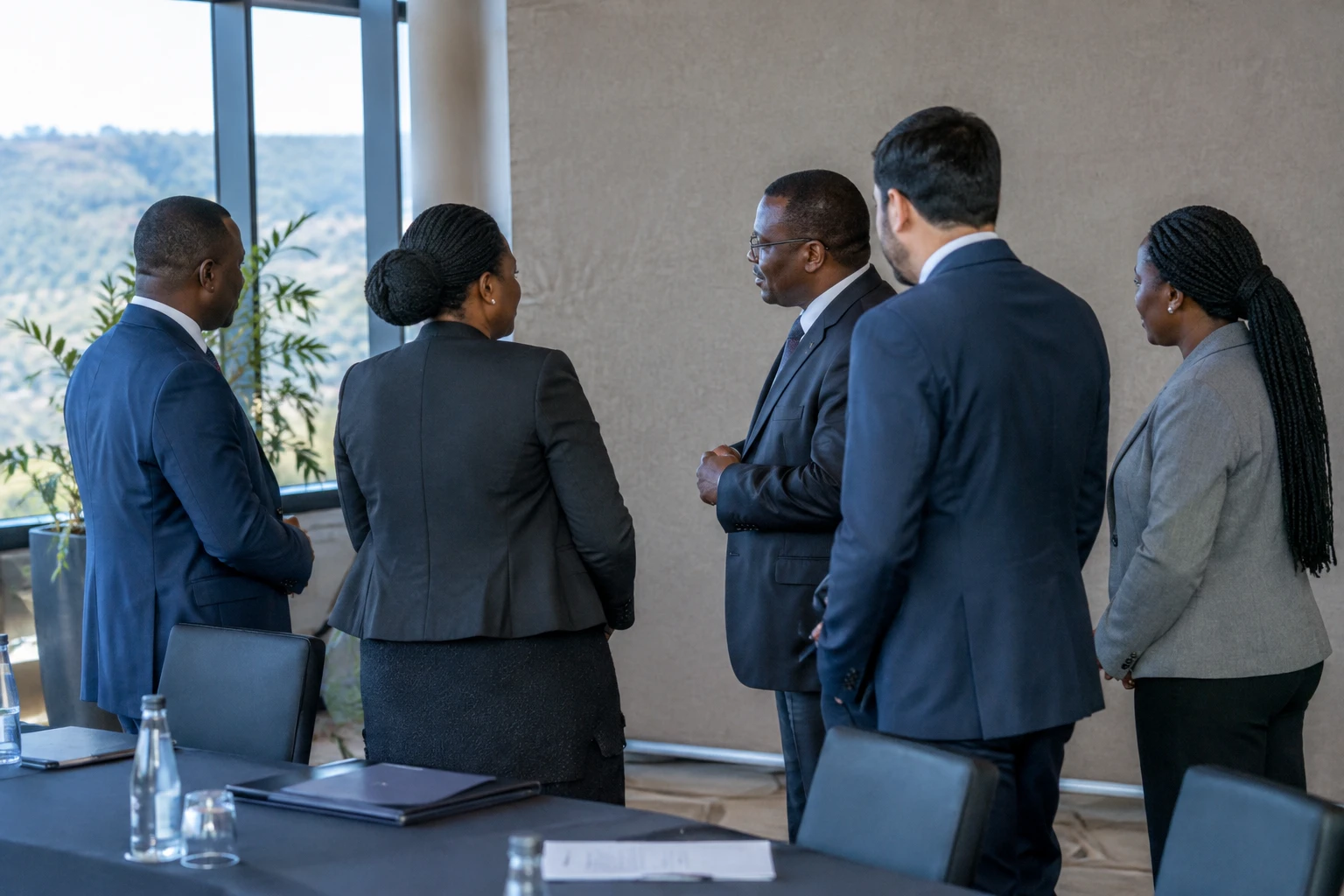
In Eswatini, a $100m investment pledge is drawing attention. But its significance will not be measured by the announced sum: it will depend on which projects actually get under way, the jobs they create and the benefits they bring beyond the kingdom’s tourist sites.
An investor known on the shores of the Caspian
On 7 November, in Ezulwini, King Mswati III received Emin Agalarov, an Azerbaijani singer and businessman. Agalarov pledged to invest about $100m in production units in Eswatini, according to reports published by the Swazi daily Times of Eswatini and Azerbaijani media outlet Report.az. The figure cited is 1.65 billion lilangeni.
The announcements available do not specify what products would be made, where the factories would be located or the funding timetable. At this stage, therefore, this is a pledge, not an investment already made. The king himself recalled at the meeting that some major projects announced in the past had not come to fruition, local media reported.
Agalarov is notably associated with Sea Breeze, a large tourism and real estate development on Azerbaijan’s Caspian Sea coast. He has also led activities within the Crocus real estate group, founded by his father, Aras Agalarov. According to the Swazi daily, his visit to Eswatini also saw the laying of a foundation stone for a 60-luxury-villa project, presented under the Sky Breeze brand. This development is separate from the industrial pledge.
Ties forged during a visit to Azerbaijan
The relationship forms part of a diplomatic sequence that began in May 2026. Mswati III travelled to Baku for the United Nations World Urban Forum. The Azerbaijani presidency confirms a meeting between President Ilham Aliyev and the Eswatini delegation. Local media also reported that the king visited Sea Breeze, accompanied by Agalarov.
According to statements reported after his return, Mswati III asked his government to identify land that could host Azerbaijani industrialists. The move reflects a strategy to attract capital through direct contacts at the highest level. It does not, however, guarantee that a site will be selected, permits secured or projects delivered.
The economic context helps explain the interest in the pledge. Landlocked between South Africa and Mozambique, Eswatini has an economy in which services, manufacturing and agriculture, particularly sugar, play a role. The country is seeking to broaden its productive base and attract businesses able to sell into neighbouring markets.
A major pledge against a backdrop of uneven flows
Data attributed to the United Nations Conference on Trade and Development show that net inward foreign direct investment has fluctuated sharply. After reaching $134m in 2024, it is estimated at about $45m in 2025. The figures were reported by Swazi media outlet Times of Eswatini, based on UNCTAD’s World Investment Report 2026. A $100m pledge would therefore be substantial compared with the previous year’s flows, but the two figures are not directly comparable: one is an announced commitment, the other an annual statistical measure of realised flows.
The authorities already offer incentives. The Eswatini Investment Promotion Authority says an eligible company in certain sectors, including manufacturing, can benefit from a reduced tax rate of 10% for ten years. The government also held its first national investment conference in May 2025. These measures are aimed at both domestic and foreign investors.
The decisive question will be how the benefits are distributed. Factories can create jobs and develop skills, but their impact will depend on procurement from local suppliers, working conditions, training and access to infrastructure. The benefits will differ for businesses based near urban centres, rural producers and small informal enterprises. The public information available does not yet allow these aspects to be assessed for Agalarov’s projects.
A question of credibility for the kingdom and the region
The search for investors is taking place within a political system in which power is heavily concentrated around the monarchy. The constitution gives the king the power to appoint the prime minister. Parliamentary elections are held under the tinkhundla system, in which candidates stand without party labels. This institutional framework forms part of the context in which investors assess public decisions and the stability of the rules.
Regionally, Eswatini is a member of the Southern African Development Community (SADC), which brings together states committed to economic co-operation and regional integration. Its proximity to South Africa, its main neighbouring industrial and commercial hub, and access to southern African markets may influence the choice of a production site. But the project’s regional significance will depend on its ability to manufacture locally and integrate into supply chains, rather than remain a property or tourism announcement.
The next steps are concrete: identify sites, specify the sectors concerned, publish a timetable and confirm the financing. For Eswatini, the challenge is not simply to attract a foreign figure to Mbabane or Ezulwini. It is to turn a much-noticed pledge into a verifiable investment, with measurable benefits for the national economy.