Algeria
 Egypt
 Libya
 Morocco
 Sudan
 Tunisia
 Benin
 Burkina Faso
 Cabo Verde
 Côte d'Ivoire
 Ghana
 Guinea
 Guinea-Bissau
 Liberia
 Mali
 Mauritania
 Niger
 Nigeria
 Senegal
 Sierra Leone
 The Gambia
 Cameroon
 Central African Republic
 Chad
 DR Congo
 Equatorial Guinea
 Gabon
 Republic of the Congo
 São Tomé and Príncipe
 Burundi
 Comoros
 Djibouti
 Eritrea
 Ethiopia
 Kenya
 Madagascar
 Malawi
 Mauritius
 Mozambique
 Rwanda
 Seychelles
 Somalia
 South Sudan
 Tanzania
 Uganda
 Angola
 Botswana
 Eswatini
 Lesotho
 Namibia
 South Africa
 Zambia
 Zimbabwe
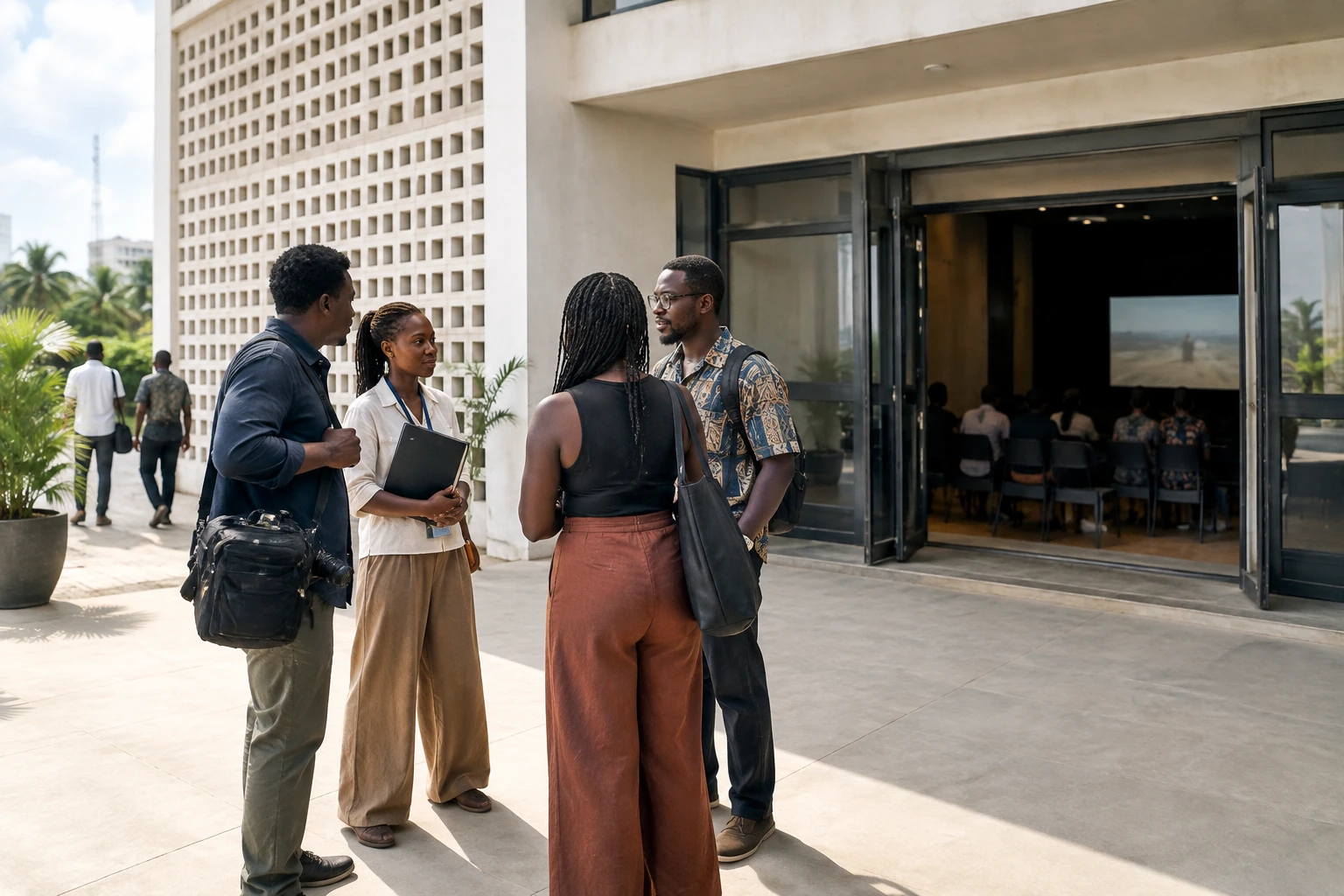
In Lomé, cinema is not just about what happens on screen. From 2 to 11 November 2026, the 13th edition of the Émergence Festival is focusing on what enables films to exist beyond their creation: training, professional networking and links between producers.
This focus matters to Togolese and West African filmmakers seeking partners, technical skills and opportunities to reach audiences. But cooperation with Europe can become a lasting asset only if professionals from the continent retain a role in artistic and economic decisions.
In Lomé, a festival looking beyond screenings
The festival is part of a cultural landscape where local initiatives sit alongside regional and international networks. For Togolese creators, exchanges with professionals from other West African countries can open the door to nearby collaborations. The European partnership provides another bridge, but does not replace these regional ties.
The 13th edition is dedicated to Africa-Europe film encounters in Togo. It has received the “Festival Nomade” label as part of the Togo Créatif programme and is partnering with the Off-Courts festival in Trouville, Normandy. The format is based on co-production between a Togolese festival and a French partner to put together the edition. Togotopnews reports that the official launch took place in Lomé on 23 October.
The programme includes screenings, workshops, masterclasses and professional networking. Organisers say it will feature about 38 works, including short and feature films, documentaries, fiction and animation. This figure refers to the entire selection, not 38 short films plus five feature films, as some initial presentations might have suggested. L’Opinion confirms the approximate number and the variety of formats.
Training, developing projects and building connections
Some of the work takes place before the screenings. Workshops are set to cover acting, scriptwriting and short-film production. A laboratory will support 18 producers and writer-directors in developing feature-film projects, with African and European mentors. The aim is to advance projects, not just give them a showcase for a few days. Kooya News describes the training and professional networking programme.
This approach addresses a practical challenge: making a film depends on a range of professions, from screenwriting to production and distribution. Training can strengthen skills and networks, but it does not guarantee funding, distribution or regular pay. For a workshop to lead to a career, there must also be production resources, clear contracts, protection of rights and channels able to circulate the work.
The arrangement is presented as a co-production between festivals. That does not automatically mean that the selected films are co-produced by African and European companies. The distinction matters: institutional cooperation can facilitate exchanges, but the sharing of budgets, rights and decision-making power must be assessed project by project.
Making cooperation last
Hosting professionals and training activities could strengthen Lomé’s place in film exchanges across the sub-region. The benefits are not limited to directors. Technicians, screenwriters, producers, actors and distribution organisations could also gain from new collaborations, provided they continue after the festival.
The regional dimension matters in a sector where national markets are not always large enough to recoup the cost of a film. Links between West African countries can help films reach wider audiences and teams share expertise. ECOWAS, the West African regional integration organisation, provides a broader framework, but this festival is not part of a Community programme: the announced partnership brings together Émergence, Off-Courts and Togo Créatif.
Cooperation with European institutions can bring resources and professional experience. It must also leave Togolese and African stakeholders with a decisive role in setting priorities. The challenge is not simply to attract guests to Lomé, but to enable local professionals to negotiate balanced partnerships and retain the ability to take the initiative.
What happens after the festival
The programme, which runs until 11 November, will give visibility to works from Africa and its diaspora. But its success will also be measured later: will the supported projects find partners? Will links between African teams endure? Will the films circulate beyond their first screenings?
For Togo, this edition offers a space for work and representation in a sector where cultural cooperation crosses borders. Its continental reach will depend less on the number of announced meetings than on what follows: completed films, lasting collaborations and circulation that extends beyond a single annual event.