Algeria
 Egypt
 Libya
 Morocco
 Sudan
 Tunisia
 Benin
 Burkina Faso
 Cabo Verde
 Côte d'Ivoire
 Ghana
 Guinea
 Liberia
 Mali
 Mauritania
 Niger
 Nigeria
 Senegal
 Sierra Leone
 The Gambia
 Togo
 Cameroon
 Central African Republic
 Chad
 DR Congo
 Equatorial Guinea
 Gabon
 Republic of the Congo
 São Tomé and Príncipe
 Burundi
 Comoros
 Djibouti
 Eritrea
 Ethiopia
 Kenya
 Madagascar
 Malawi
 Mauritius
 Mozambique
 Rwanda
 Seychelles
 Somalia
 South Sudan
 Tanzania
 Uganda
 Angola
 Botswana
 Eswatini
 Lesotho
 Namibia
 South Africa
 Zambia
 Zimbabwe
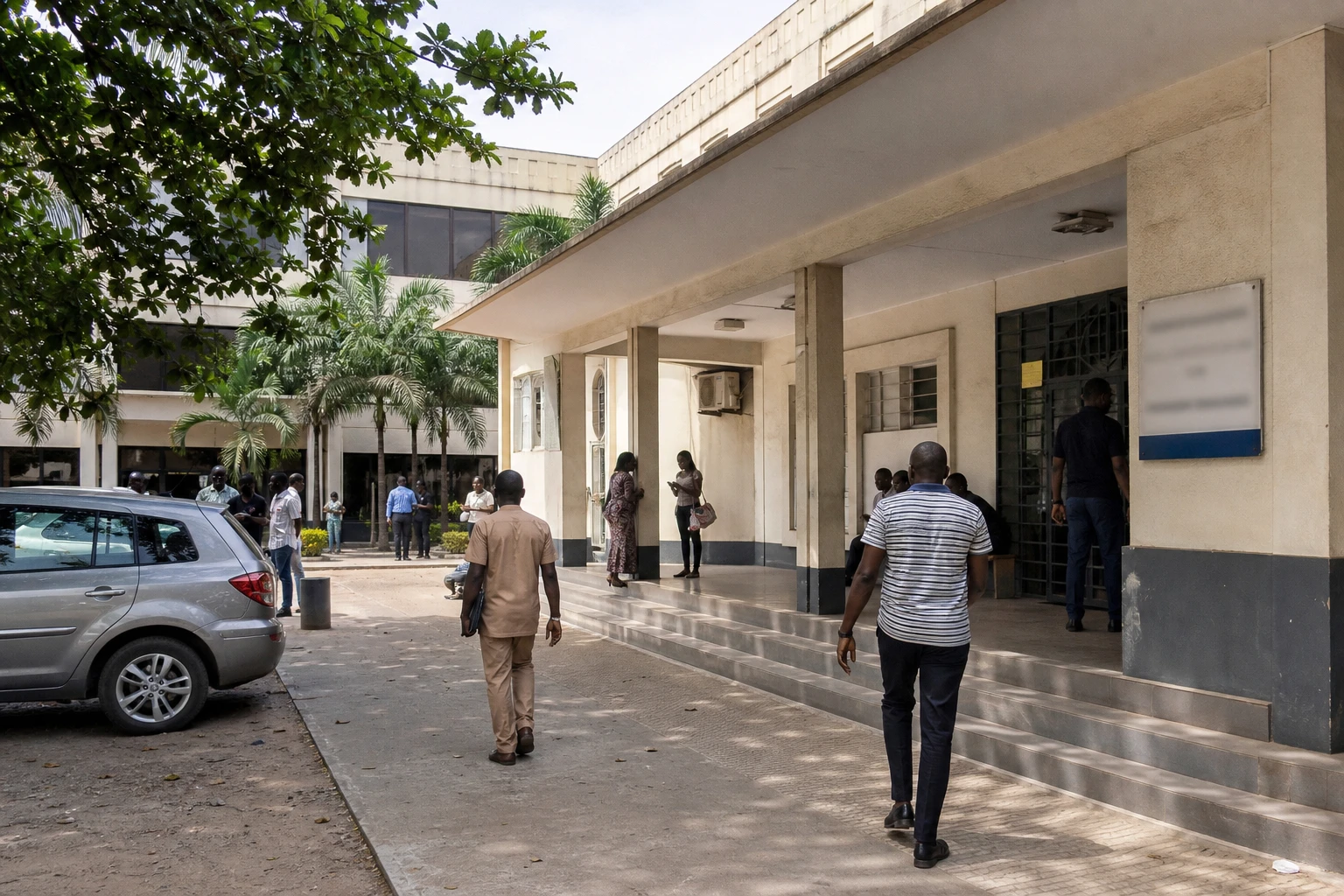
In Bissau, the next presidential election is being prepared against a profoundly reshaped political backdrop. The announcement that Umaro Sissoco Embaló will return adds fresh uncertainty to a military transition that says it intends to hold elections on 6 December 2026.
The former president of Guinea-Bissau said on Monday 28 September 2026 that he would stand in the next presidential election. According to available information, he plans to return to Guinea-Bissau on 4 October. This prospect comes less than a year after the coup that halted the November 2025 electoral process.
A return to a country under military control
On 26 November 2025, military officers announced that they had taken control of Guinea-Bissau’s institutions. The intervention came three days after the presidential and parliamentary elections, before the official results had been announced.
The military authorities said they had acted to prevent a plan to manipulate the election results. They have not, however, made detailed evidence to support these allegations public. Umaro Sissoco Embaló and opposition figures, for their part, have offered opposing interpretations of the crisis.
An African Union observation mission had noted, before the election, an atmosphere marked by tensions between the government and the opposition. It also reported disagreements over the electoral timetable, the earlier dissolution of Parliament and restrictions on political space. The African observation mission’s preliminary report is one of the key documents on this context.
Since the civilian government was overthrown, General Horta N’Tam has led the transition. A National Transitional Council has been set up, while institutions established under the previous constitutional order have been suspended or reorganised.
The former president’s announced candidacy
“Yes, I will be a candidate,” Umaro Sissoco Embaló said, according to information published on 28 September. The announcement does not yet amount to legal approval. Candidacies will have to be examined by the relevant institutions, within an electoral framework that is itself still being developed.
Fernando Vaz, spokesperson for the transitional government, said every Guinean citizen had the constitutional right to stand for office. He also referred to the possibility of the former head of state returning soon. This position suggests that, at this stage, the junta does not intend officially to rule out his candidacy.
The announced return is nevertheless likely to test the strength of the political guarantees promised by the military. The former president has been living outside the country since his removal from office. His arrival in Bissau could prompt a major mobilisation by his supporters, but also revive disputes over the November 2025 election.
The central question will therefore be his status. Will he be able to return freely, resume political activities and submit an application on the same terms as other candidates? The authorities have not yet set out the measures governing his return or the precise rules for the future electoral contest.
PAIGC fears an uneven contest
The African Party for the Independence of Guinea and Cape Verde, or PAIGC, is one of Guinea-Bissau’s main political forces. Its leader, Domingos Simões Pereira, has voiced concern over the announcement that Embaló will return.
The opposition figure believes the suspension of political activities has created an unfavourable environment for other parties. In his view, the former president’s candidacy could benefit from a timetable and institutional arrangements designed primarily to facilitate his return to power. This is the opposition’s political analysis and is not, at this stage, an established fact.
The PAIGC will nevertheless have to contend with a new reality. Umaro Sissoco Embaló dissolved the Parliament elected in 2023 in December of that year, following a security crisis that the government described as an attempted coup. The opposition rejected that justification and denounced the decision as unconstitutional.
This sequence of events has severely weakened institutional checks. It also explains why the former president’s return goes beyond his personal political trajectory. It raises the question of restoring a balance between the presidency, the government, Parliament and the armed forces.
A new constitution at the heart of the power struggle
On 30 August 2026, the military transition held a constitutional referendum aimed at changing how the institutions operate. The proposal strengthens the president’s powers and reduces Parliament’s political weight, according to several consistent analyses. The Africa Center for Strategic Studies argues that the reform further concentrates executive authority.
The transitional authorities present the reform as a step towards a return to civilian rule. Its critics see it instead as a framework that could restrict political competition and make parliamentary oversight of the next president more difficult.
The announced referendum result must still be assessed in light of the conditions under which it was organised, turnout and recognition by political actors. In a country where electoral processes have been interrupted while results were being announced, the credibility of each stage will be crucial.
ECOWAS faces a delicate transition
The crisis in Guinea-Bissau extends beyond its national borders. Guinea-Bissau is a member of the Economic Community of West African States, ECOWAS, which brings together countries in the region and regularly intervenes in constitutional crises.
After the November 2025 coup, ECOWAS and the African Union suspended Guinea-Bissau. The West African organisation has since stepped up efforts to secure a short, inclusive transition leading to a return to constitutional order. The African Press Agency has reported on regional pressure over the electoral timetable.
The presidential and parliamentary elections scheduled for 6 December 2026 will therefore be watched as a regional test. ECOWAS will have to assess, in particular, whether the process is open, parties have access to the media, campaigning is free and the electoral administration is neutral.
For the people of Guinea-Bissau, the stakes go beyond the return of a former president. They concern the possibility of voting in a recognised framework, learning the results and seeing institutions function after the election. The coming weeks will show whether Umaro Sissoco Embaló’s announced candidacy opens up genuine competition or further intensifies the confrontation between the army, the opposition and supporters of the former government.