
 Algeria
 Egypt
 Libya
 Morocco
 Sudan
 Tunisia
 Benin
 Burkina Faso
 Cabo Verde
 Côte d'Ivoire
 Ghana
 Guinea
 Guinea-Bissau
 Liberia
 Mali
 Mauritania
 Niger
 Nigeria
 Senegal
 Sierra Leone
 The Gambia
 Togo
 Cameroon
 Central African Republic
 Chad
 DR Congo
 Equatorial Guinea
 Gabon
 Republic of the Congo
 São Tomé and Príncipe
 Burundi
 Comoros
 Djibouti
 Eritrea
 Ethiopia
 Kenya
 Madagascar
 Malawi
 Mauritius
 Mozambique
 Rwanda
 Seychelles
 Somalia
 South Sudan
 Tanzania
 Uganda
 Angola
 Botswana
 Eswatini
 Lesotho
 Namibia
 Zambia
 Zimbabwe
In Ekurhuleni, east of Johannesburg, families are seeking answers as investigators continue to determine whether several murders of women are part of the same series. The discovery of an eleventh body on Sunday 27 September 2026 has heightened concern in this densely urbanised municipality in Gauteng province.
Cases compared, but not yet linked
The body was found in open ground in Springs by a security company on patrol. South African police said the discovery brought to eleven the number of women’s bodies found in the area since mid-July.
Some of the locations are only a few kilometres apart. Several victims were found in open spaces, near roads, railway lines or residential areas. This geographical proximity has fuelled fears that one or more perpetrators may be operating in a similar manner.
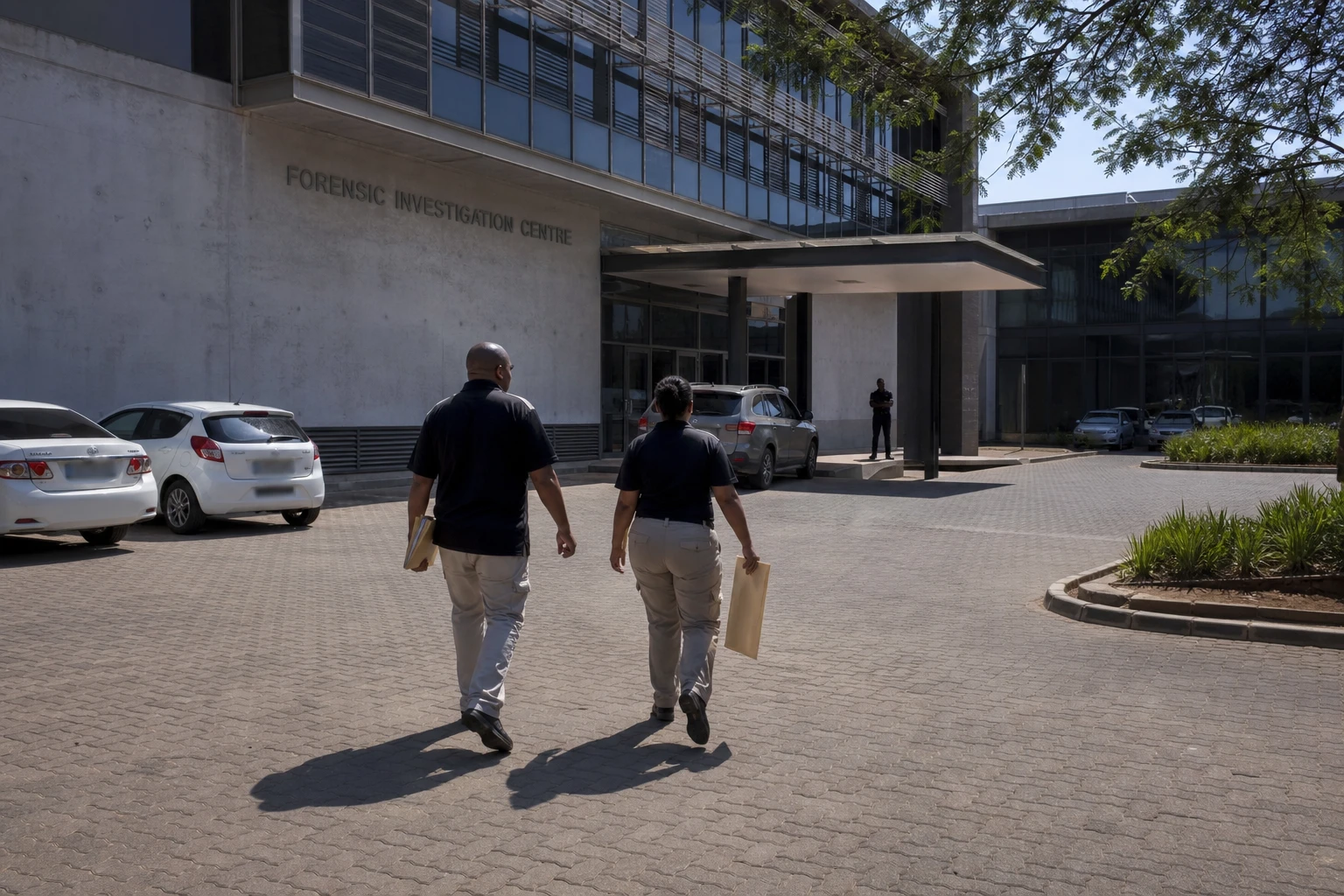
Even so, police have not yet spoken of a serial killer. Investigators are examining each case separately. They are comparing forensic results, timelines, locations where bodies were left and the victims’ profiles. At this stage, no public evidence establishes a definitive link between the cases.
A specialised multidisciplinary team has been deployed. It brings together investigators from several units and is tasked with speeding up the identification of victims, the examination of evidence and the search for suspects. The authorities have also urged residents to share any useful information, particularly about the victims’ movements before they went missing.
Pressure mounts on the authorities
The series of discoveries comes in a country where violence against women remains a national crisis. The term “femicide” refers to the killing of a woman because she is a woman, or in a context marked by gender-based violence. In South Africa, however, these crimes occur in varied circumstances: domestic violence, sexual assault, robbery, settling of scores or opportunistic attacks.
This diversity means the eleven deaths should not automatically be attributed to the same motive. It does not, however, remove the institutions’ responsibility when a succession of cases reveals shortcomings in prevention, the reporting of disappearances or judicial follow-up.
Civil society organisations are calling for swift results. Their concern is as much about the perpetrators’ identities as the police’s ability to explain similarities between the cases. For the families, the immediate priority is also the official identification of the victims and the return of their remains.
According to information released by the authorities, arrests or detentions have already been made in several separate cases. Those facing charges have not, however, been presented as responsible for all the murders. The cases must proceed through the courts, with evidence examined one case at a time.
Another case in Tembisa
On Monday 28 September, another woman was found dead in Tembisa, in the same wider Ekurhuleni area. Police have not linked her to the previous cases. The 23-year-old victim was reportedly shot dead in the street as she was going to work, according to reports carried by the South African press.
Investigators suspect a former partner in this case. He was reportedly later found dead in his vehicle. At this stage, the circumstances of this case therefore differ from those involving bodies found in open ground. It nevertheless illustrates the range of violence to which women can be exposed, both in the home and in public places.
Tembisa and Springs are both in Ekurhuleni, a metropolitan area that includes industrial zones, residential neighbourhoods, townships and peri-urban areas. This geography complicates searches, especially when families report a disappearance late or when daily journeys cross several police jurisdictions.
The challenge goes beyond the criminal investigation
For women residents, insecurity is not limited to the possible presence of a murderer. It is also measured in journeys to work, access to transport, street lighting, the speed of emergency response and trust in police stations. Popular neighbourhoods and outlying areas often bear the cumulative weight of these vulnerabilities.
Women who travel early in the morning, informal economy workers and women living alone are not exposed in the same way. Families with resources can turn to private security services. Others depend entirely on the police and neighbourhood networks.
The expected response is therefore not limited to arresting a suspect. It involves preserving crime scenes, the quality of autopsies, the sharing of information between services, support for relatives and follow-up on previous reports of violence. It also requires victims to be identified without reducing their stories to their deaths.
A signal for southern Africa
The case resonates beyond Gauteng. South Africa plays a central role in the Southern African Development Community, SADC, which brings together several states in the region and cooperates on issues including security, governance and human rights.
Regional movement of people, labour mobility and criminal networks make rapid exchanges between services necessary. But the priority remains national: establishing the facts, identifying the victims and ensuring that a media hypothesis does not take the place of judicial work.
The next steps will be to determine whether forensic examinations can link some of the cases, whether further arrests are made and whether the courts obtain sufficient evidence to bring strong prosecutions. For Ekurhuleni’s families, these developments are not merely a matter of public communication. They will determine whether this series of deaths finally leads to verifiable answers.



