Algeria
 Egypt
 Libya
 Morocco
 Sudan
 Tunisia
 Benin
 Burkina Faso
 Cabo Verde
 Côte d'Ivoire
 Ghana
 Guinea
 Guinea-Bissau
 Liberia
 Mali
 Mauritania
 Niger
 Nigeria
 Senegal
 Sierra Leone
 The Gambia
 Togo
 Cameroon
 Central African Republic
 Chad
 DR Congo
 Equatorial Guinea
 Gabon
 Republic of the Congo
 São Tomé and Príncipe
 Burundi
 Comoros
 Djibouti
 Eritrea
 Ethiopia
 Kenya
 Madagascar
 Malawi
 Mauritius
 Mozambique
 Rwanda
 Seychelles
 Somalia
 South Sudan
 Tanzania
 Uganda
 Angola
 Botswana
 Eswatini
 Lesotho
 Namibia
 Zambia
 Zimbabwe
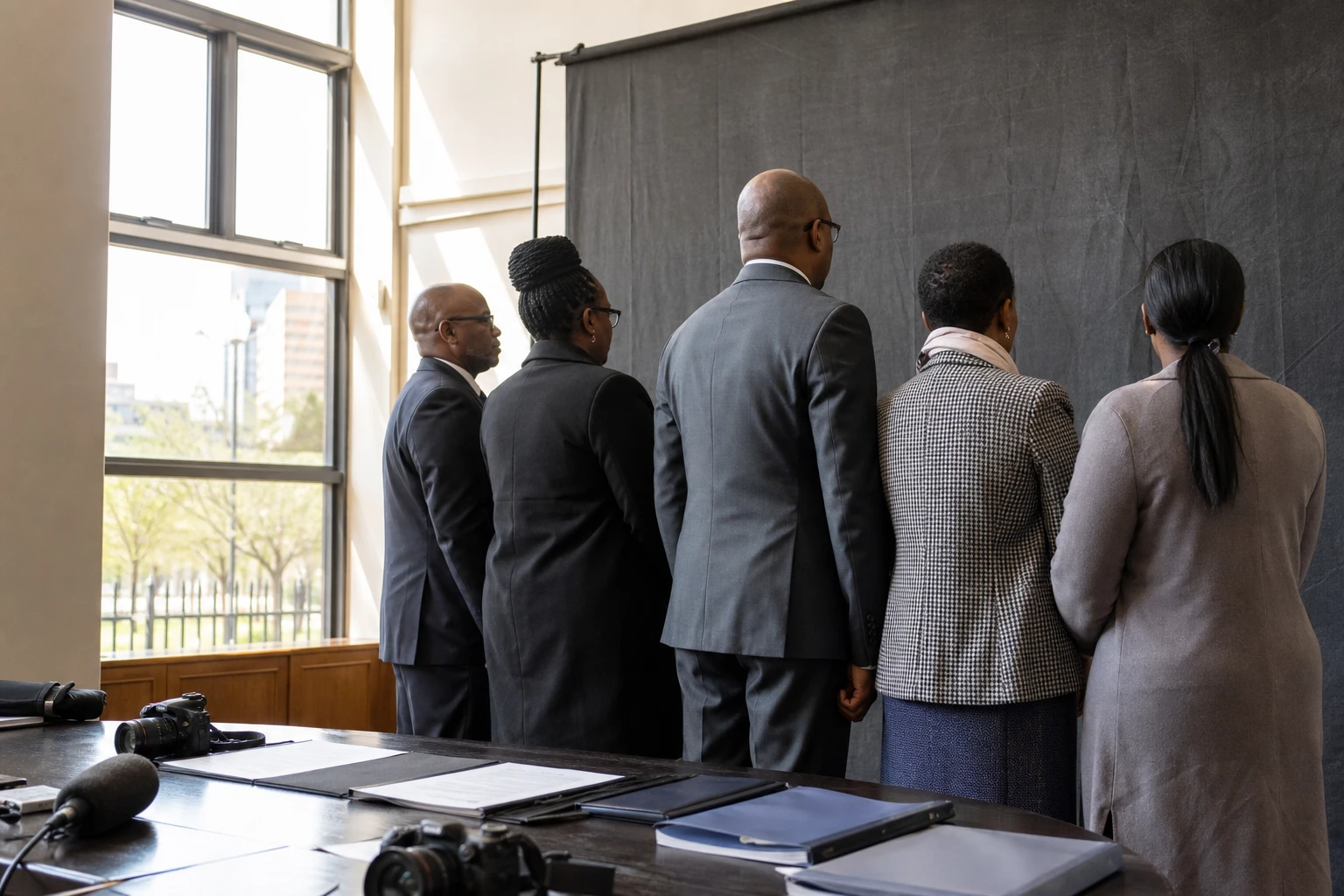
In Ekurhuleni, fear no longer comes only from crime figures. It has taken hold in daily journeys, poorly lit spaces and neighbourhoods where families are still waiting for answers. The discovery of 11 women’s bodies since July 2026 has reignited a central question in South Africa : how can women be protected before violence becomes another criminal case ?
Investigation widened in eastern Johannesburg
President Cyril Ramaphosa announced a series of measures to strengthen women’s safety on Tuesday 29 September 2026. His intervention came after the discovery of the eleventh body in the Ekurhuleni municipality, east of Johannesburg, in Gauteng province.
The first bodies were found in July and August, within an area of about seven kilometres. Further discoveries followed in September. Several of the victims are believed to have been in their twenties or thirties. Some were reportedly found undressed or partly clothed. Possible signs of sexual assault were also reported in several cases.
South African police have not, however, established a definitive link between all the cases. The president stressed this point : at this stage, there is no evidence to say that a single perpetrator or the same group was responsible for all the murders.
A specialised multidisciplinary team is now coordinating the investigations. It brings together the police, criminal investigation services and local authorities, among others. Four people were in custody, according to information provided at the time of the president’s address, but the investigations have not yet linked them to all the deaths.
This judicial caution is important. In a case this sensitive, the sequence of discoveries may fuel the theory of a serial killer. It is not enough to confirm it. Each death must therefore be examined separately, while investigators look for possible similarities in locations, methods and the victims’ movements.
Measures targeting high-risk areas
Cyril Ramaphosa has asked all South African municipalities to carry out an audit of women’s safety within 60 days. The review must identify areas where travel presents an increased risk.
Authorities will have to check street lighting, the presence of abandoned buildings, the maintenance of overgrown spaces, the safety of parks and the monitoring of transport hubs. Routes travelled on foot, railway stations, bus stops and commercial areas must also be assessed.
This approach shifts part of the debate. Safety does not depend solely on the number of patrols or arrests. It also relies on urban planning, the speed of emergency response, the presence of officers in neighbourhoods and a victim’s ability to get help without delay.
Ekurhuleni’s municipalities are under particular scrutiny. The metropolitan area includes heavily urbanised sectors, industrial zones, townships and outlying areas. Risks therefore vary between neighbourhoods. A woman returning late from a job in the formal economy, a street vendor working in the informal sector or a young resident dependent on public transport do not face the same obstacles.
The government also wants to step up the fight against alcohol-related violence. The measure targets venues, retail outlets and situations in which excessive drinking worsens conflicts or facilitates assaults. It will, however, need to be accompanied by effective inspections and local monitoring. Without additional resources, a national directive risks remaining little more than a declaration.
Reopen cases and speed up proceedings
The president has also asked the police and the National Prosecuting Authority to review, within 90 days, unresolved cases involving murders, attempted murders, rapes and other gender-based violence.
This instruction addresses a longstanding weakness in the system. Families are not only asking for a suspect to be arrested. They want to know where the investigation stalled, what evidence was collected and why some cases remain unresolved for years.
The head of state acknowledged that the measures taken so far had not produced sufficient results. His statement echoes criticism from women’s rights organisations and South African MPs. They are calling for measurable results, better support for survivors and a less slow-moving justice system.
The public response must also avoid another pitfall : reducing victims to a series of anonymous bodies. Behind every case is a family, a job, loved ones and a story. Identifying the victims, informing their families and providing psychological support must remain central to the institutional response.
A national crisis beyond Ekurhuleni
The Ekurhuleni murders are part of a wider crisis of violence against women and children in South Africa. The country already has national plans and specialised structures. The problem often lies in implementation : insufficient coordination, uneven investigations, overstretched services and limited protection in areas far from urban centres.
The situation varies by area. In major cities, women may be at risk on public transport, in public spaces or around workplaces. In rural areas, the distance from police stations, courts and medical services makes access to protection more difficult. Differences between provinces further compound this inequality.
The case also concerns the Southern African Development Community, SADC, which brings countries in the region together through political and economic cooperation. Population movements, transport networks and cross-border exchanges make closer police cooperation necessary. Gender-based violence does not stop at the administrative boundaries of a municipality or a state.
For Pretoria, the challenge therefore goes beyond managing a series of crimes. It must show that commitments to tackle gender-based violence can bring visible change to streets, transport, police stations and courts.
The next steps will be decisive : the results of the investigation into the 11 deaths, the identification of victims who remain unknown, the appearance of suspects in court, the publication of municipal audits and the effective reopening of older cases. The credibility of South Africa’s response will be measured less by announcements than by the state’s ability to turn these measures into everyday protection.