
 Algeria
 Libya
 Morocco
 Sudan
 Tunisia
 Benin
 Burkina Faso
 Cabo Verde
 Côte d'Ivoire
 Ghana
 Guinea
 Guinea-Bissau
 Liberia
 Mali
 Mauritania
 Niger
 Nigeria
 Senegal
 Sierra Leone
 The Gambia
 Togo
 Cameroon
 Central African Republic
 Chad
 DR Congo
 Equatorial Guinea
 Gabon
 Republic of the Congo
 São Tomé and Príncipe
 Burundi
 Comoros
 Djibouti
 Eritrea
 Ethiopia
 Kenya
 Madagascar
 Malawi
 Mauritius
 Mozambique
 Rwanda
 Seychelles
 Somalia
 South Sudan
 Tanzania
 Uganda
 Angola
 Botswana
 Eswatini
 Lesotho
 Namibia
 South Africa
 Zambia
 Zimbabwe
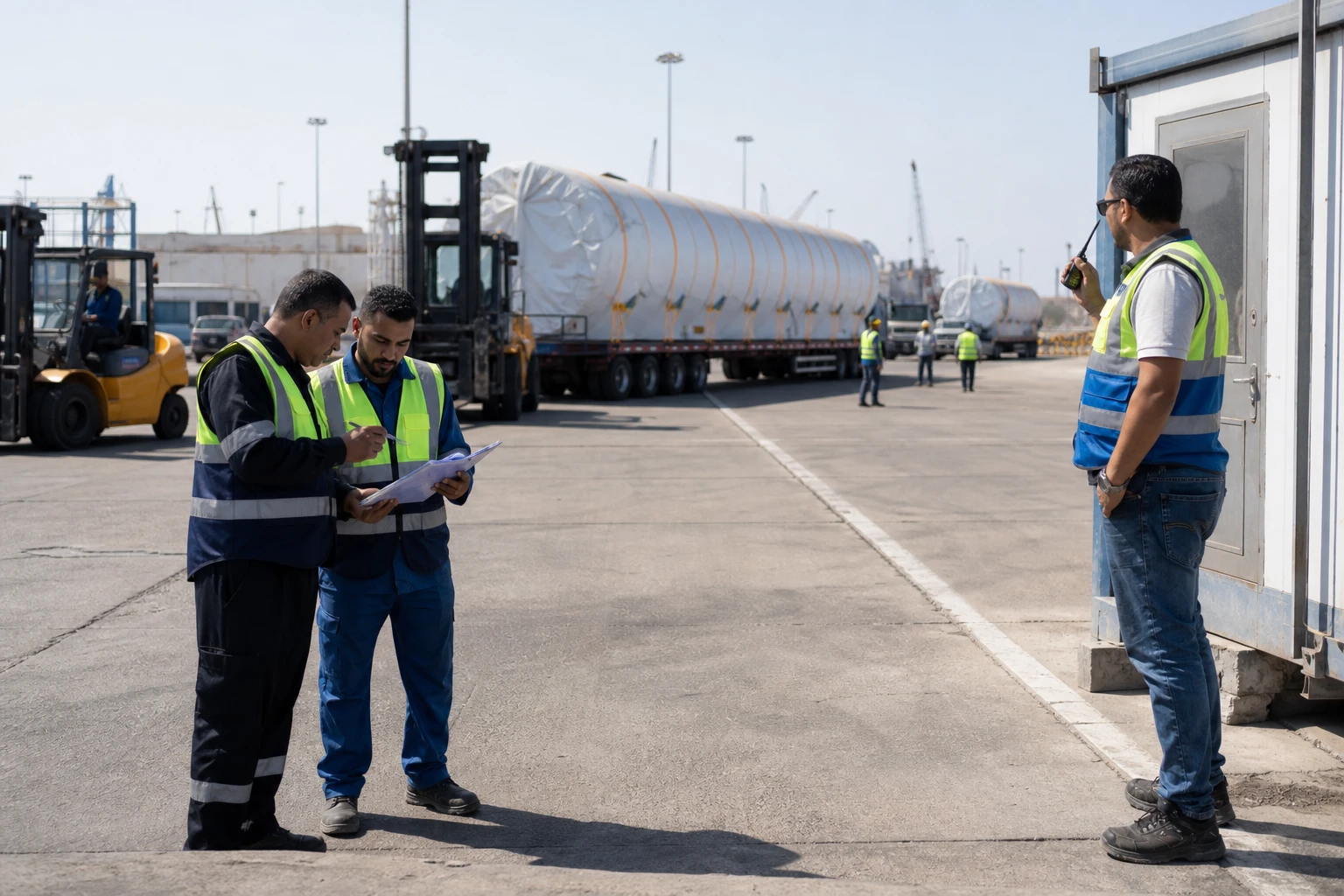
Gulf of Suez wind becomes an industrial calculation
In Egypt, the electricity transition is no longer just strategic rhetoric. It is now reflected in long-term contracts, precise tariffs and construction work under way at sites with 30 years of wind power experience. At Zafarana, on the Red Sea coast, a new 869 MW project is set to join an energy landscape in which the state is seeking to secure grid supplies while reducing the burden of gas on electricity generation.
This shift is part of a broader national trajectory. Cairo wants to raise the share of renewables in the electricity mix to 45% by 2028, according to recent official communications cited by the presidency and the Ministry of Electricity. At the same time, Egypt is consolidating its role as a regional energy hub in North Africa, at the intersection of investment from the Gulf and Europe and activity by industrial players in the sector.
A 20-year contract, a low price and a signal to the market
At the end of July 2026, the Egyptian Electricity Transmission Company signed a power purchase agreement with Voltalia for the future Zafarana wind farm. According to information published by Asharq Business and carried by several specialist outlets, electricity will be purchased for 20 years at a rate of 2.4 cents per kilowatt-hour, or $24 per megawatt-hour. The project was approved by the Egyptian government in June 2026.
The economic model is ambitious. Investment is estimated at about $800 million. Commercial operations are scheduled to begin in 2028. By then, the wind farm will strengthen an area that is already strategic for Egyptian wind power, where the steady winds of the Gulf of Suez have made the country’s eastern coast one of the continent’s main renewable energy corridors.
Voltalia is not entering uncharted territory. In 2024, the group had already signed an agreement with Egypt’s Ministry of Electricity to repower the Zafarana wind farms, using a hybrid wind and solar solution with a total capacity of 3 GW, with an initial phase targeted for 2028. Repowering involves replacing or modernising older facilities to generate more power on the same land, with improved technical performance.
Why Egypt is accelerating now
The context explains the urgency. Egypt’s electricity system remains heavily reliant on natural gas. Domestic production has come under pressure in recent years, prompting Cairo to increase fuel purchases and improve its management of peak demand. In June 2026, the ministries of electricity and petroleum also presented a joint plan to secure supplies over the summer, the period of peak demand.
In this context, solar and wind power have a clear advantage: they require no fuel to generate electricity. This is one of the turning points in Egyptian energy policy. The country is not simply seeking to green its image. It wants to reduce its exposure to volatile fuel import costs, stabilise the grid and free up capacity for industry and urban households, often the first to be affected when demand exceeds available supply.
The Zafarana project also comes as other major developments confirm this momentum. In February 2026, Scatec announced the commercial launch of the first phase of Obelisk, a 1.1 GW solar complex coupled with 100 MW/200 MWh of batteries. ACWA Power, meanwhile, is developing a 1.1 GW wind project at Ras Ghareb, also on the Red Sea. Together, these projects show that Egypt is no longer simply testing renewables: it is scaling them up industrially.
What a price of $24 per megawatt-hour changes
The tariff announced for Zafarana matters as much as the installed capacity. At $24 per megawatt-hour, the project falls within a range that makes renewables easier to finance, particularly as investors closely scrutinise purchase guarantees, regulatory stability and the quality of the transmission network. It is not just a commercial figure. It is an indicator of the maturity of the Egyptian market.
For the state, the benefits are twofold. On the one hand, it secures new capacity without increasing the fuel bill. On the other, it sends a message to industrial players and lenders: large renewable energy projects can find a clear contractual framework in Egypt. For consumers, the effect on bills is not immediate. But in the medium term, more diverse generation could ease pressure on the grid and reduce dependence on energy imports that weigh on public finances.
For local communities, the impact is more nuanced. The most visible benefits are often concentrated near industrial sites, service ports and logistics routes. In the case of the Red Sea, they come through construction jobs, maintenance contracts and grid connection infrastructure. Rural areas and small communities outside the direct grid, however, do not automatically see an equivalent benefit. This is one of the familiar gaps associated with major energy projects: national capacity increases quickly, but local redistribution depends on grid connections and project governance.
Significance beyond Egypt
Across Africa, the Zafarana deal illustrates a trend worth watching. The continent’s governments are no longer negotiating only for kilowatts. They are negotiating for models: long-term contracts, storage, solar-wind hybridisation, participation by public and private players, and integration with national grids. With its recent major projects, Egypt shows that a market can move towards more structured arrangements without waiting for a complete institutional revolution.
This momentum also has regional resonance. North Africa is seeking to align its energy policies more closely with climate goals, as well as the needs of industrial competitiveness. For Cairo, the question is no longer simply how to generate more power. It must also integrate this new capacity, strengthen grid stability and prepare for the next stage: more storage, greater flexibility and, no doubt, more electricity exchanges across Africa and the Mediterranean. That is where the real significance of the deal will be decided.



