Algeria
 Libya
 Morocco
 Sudan
 Tunisia
 Benin
 Burkina Faso
 Cabo Verde
 Côte d'Ivoire
 Ghana
 Guinea
 Guinea-Bissau
 Liberia
 Mali
 Mauritania
 Niger
 Nigeria
 Senegal
 Sierra Leone
 The Gambia
 Togo
 Cameroon
 Central African Republic
 Chad
 DR Congo
 Equatorial Guinea
 Gabon
 Republic of the Congo
 São Tomé and Príncipe
 Burundi
 Comoros
 Djibouti
 Eritrea
 Ethiopia
 Kenya
 Madagascar
 Malawi
 Mauritius
 Mozambique
 Rwanda
 Seychelles
 Somalia
 South Sudan
 Tanzania
 Uganda
 Angola
 Botswana
 Eswatini
 Lesotho
 Namibia
 South Africa
 Zambia
 Zimbabwe
A recovery that is holding, but not without trade-offs
When an economy grows by 5.1%, the real question is not only whether it is recovering. It is also what is driving the momentum, and above all what could still derail it. In Egypt, the answer lies in very tangible sectors: factories, trade, digital services, tourism and, once again, the Suez Canal.
This recovery comes in a country that has faced pressure over the past two years from regional tensions, shocks to maritime trade and foreign currency difficulties. Cairo therefore remains in a phase of consolidation. The goal is no longer simply to grow, but to do so with less external dependence and more domestic production.
What the 2025/2026 financial year figures show
At the end of the financial year closed on 30 June 2026, the Egyptian government reported a growth rate of 5.1%, up from 4.4% a year earlier. The official announcement was made on 3 September 2026. The authorities attribute this acceleration to the expansion of non-oil manufacturing, trade and telecommunications, which together accounted for 48% of total growth.
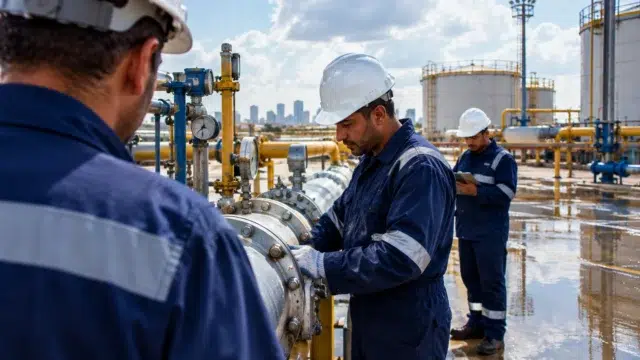
The sector-by-sector breakdown supports this reading. Non-oil manufacturing was the main driver of the financial year. Oil refining also rebounded, rising by 22.4% in the fourth quarter and 8.7% over the financial year as a whole. Meanwhile, the Suez Canal grew by 33.8% in the fourth quarter and 23.3% over the year, after a sharp contraction in 2024/2025.
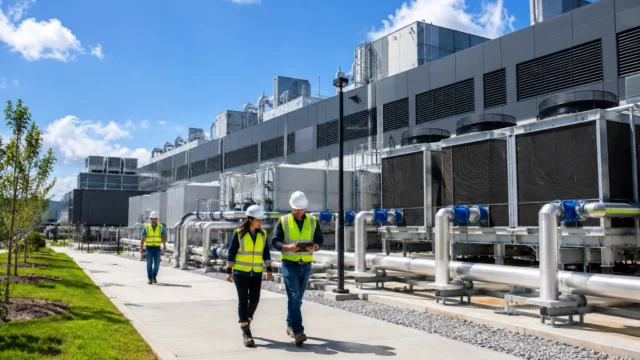
Digital services also played a part in the recovery. Telecommunications and information technology grew by 24.3% in the fourth quarter, according to official figures. This is not a minor statistical detail. It is a sign of an Egyptian economy relying more on high-value-added services, outsourcing and digital value chains.
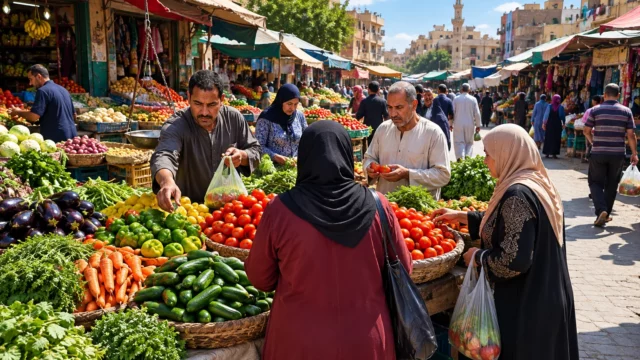
Tourism also supported activity. The authorities reported 19.3 million visitors over the financial year, while accommodation and food services grew by 6.5%. During 2025, the Ministry of Tourism announced nearly 19 million arrivals, up 21% from 2024, confirming the sector’s rebound.
Why these sectors carry so much weight in the Egyptian economy
The industrial recovery is not an abstract concept. It reflects an effort to localise production, as Egypt seeks to reduce its import bill and make better use of its industrial base. The clearest indicator is non-oil manufacturing, but also specific segments such as vehicles, chemicals, beverages, furniture, pharmaceuticals and clothing, which had already posted strong results in the first quarter of the financial year.
This approach aligns with the line advocated by the authorities: making the private sector a more visible engine of growth while strengthening exportable activities. Egypt’s Ministry of Planning said that growth in the first quarter of 2025/2026 was driven by non-oil industry, tourism and telecommunications. It also stressed that these sectors are part of a more productive model, better connected to external markets.
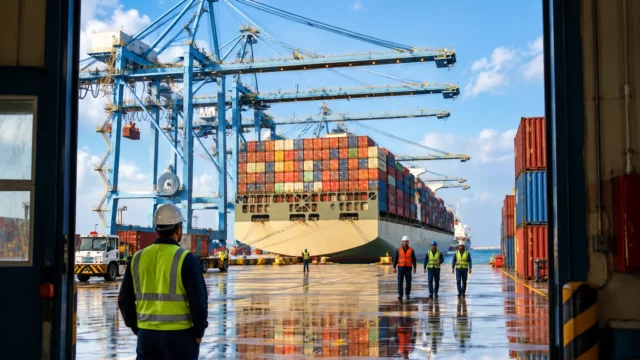
The Suez Canal remains a barometer in its own right. When traffic slows, the country’s external revenues come under pressure. When transit resumes, the effect is immediate on public finances and external accounts. The recent recovery in traffic, confirmed by the Canal Authority, shows that shipping is gradually returning to normal as the situation in the Red Sea stabilises.
The IMF sees the same dynamic. In its July 2026 review, the institution said the Egyptian economy remained resilient in the face of the repercussions of the war in the Middle East. But it also reiterated the need for firm monetary policy, continued fiscal discipline and a faster withdrawal of the state from certain sectors. In short, growth is returning, but it still needs to be made more robust.
A signal from Egypt that reaches beyond Cairo
For Egypt, the stakes go beyond the level of GDP. Growth driven by industry, trade and digital services benefits cities, port hubs, industrial zones and businesses already integrated into value chains more directly. It reaches peripheral areas and informal activities less quickly, however; these remain highly exposed to prices, credit and precarious employment. This matters in a country of more than 100 million people, where purchasing power remains a central concern.
At the continental level, Egypt’s trajectory matters to all of North Africa and to the AfCFTA, the African Continental Free Trade Area. Egypt is one of the main gateways between the Mediterranean, Africa and the Middle East. When its industry recovers, its exports strengthen and the Suez Canal returns to normal, a whole segment of regional flows can move more easily.
The next phase will depend on two factors. First, the country’s ability to turn a cyclical recovery into more stable growth, despite persistent inflationary pressures. Second, the pace at which structural reforms advance, particularly on the role of the state, private investment and fiscal sustainability. The IMF still forecasts a slowdown to 4.4% in 2026/2027. In other words, the opportunity is there, but remains fragile.