Algeria
 Libya
 Morocco
 Sudan
 Tunisia
 Benin
 Burkina Faso
 Cabo Verde
 Côte d'Ivoire
 Ghana
 Guinea
 Guinea-Bissau
 Liberia
 Mali
 Mauritania
 Niger
 Nigeria
 Senegal
 Sierra Leone
 The Gambia
 Togo
 Cameroon
 Central African Republic
 Chad
 DR Congo
 Equatorial Guinea
 Gabon
 Republic of the Congo
 São Tomé and Príncipe
 Burundi
 Comoros
 Djibouti
 Eritrea
 Ethiopia
 Kenya
 Madagascar
 Malawi
 Mauritius
 Mozambique
 Rwanda
 Seychelles
 Somalia
 South Sudan
 Tanzania
 Uganda
 Angola
 Botswana
 Eswatini
 Lesotho
 Namibia
 South Africa
 Zambia
 Zimbabwe
An African market for an Egyptian sector seeking scale
When a country produces more than it consumes, the real question is no longer just one of quality. It becomes one of finding markets. This is precisely the next step Egypt is seeking to take, as poultry farming becomes a major agricultural sector and Cairo now looks to African markets to absorb its surplus.
This approach forms part of a broader policy to diversify Egyptian agricultural exports. Egypt’s Agriculture Minister, Alaa Farouk, recently said the country’s agricultural exports had exceeded 5.8 million tonnes in the first half of 2026, while Cairo is targeting $14 billion in food exports this year. At the same time, diplomatic and commercial channels are multiplying with several African capitals.
In this context, Africa is not merely a zone of political solidarity. It is also a market, with its health regulations, technical barriers and cost considerations. The challenge for Egypt is clear: to turn an already strong production capacity into a lasting commercial presence on the continent.
Cairo, Kampala and Accra: poultry at the heart of economic diplomacy
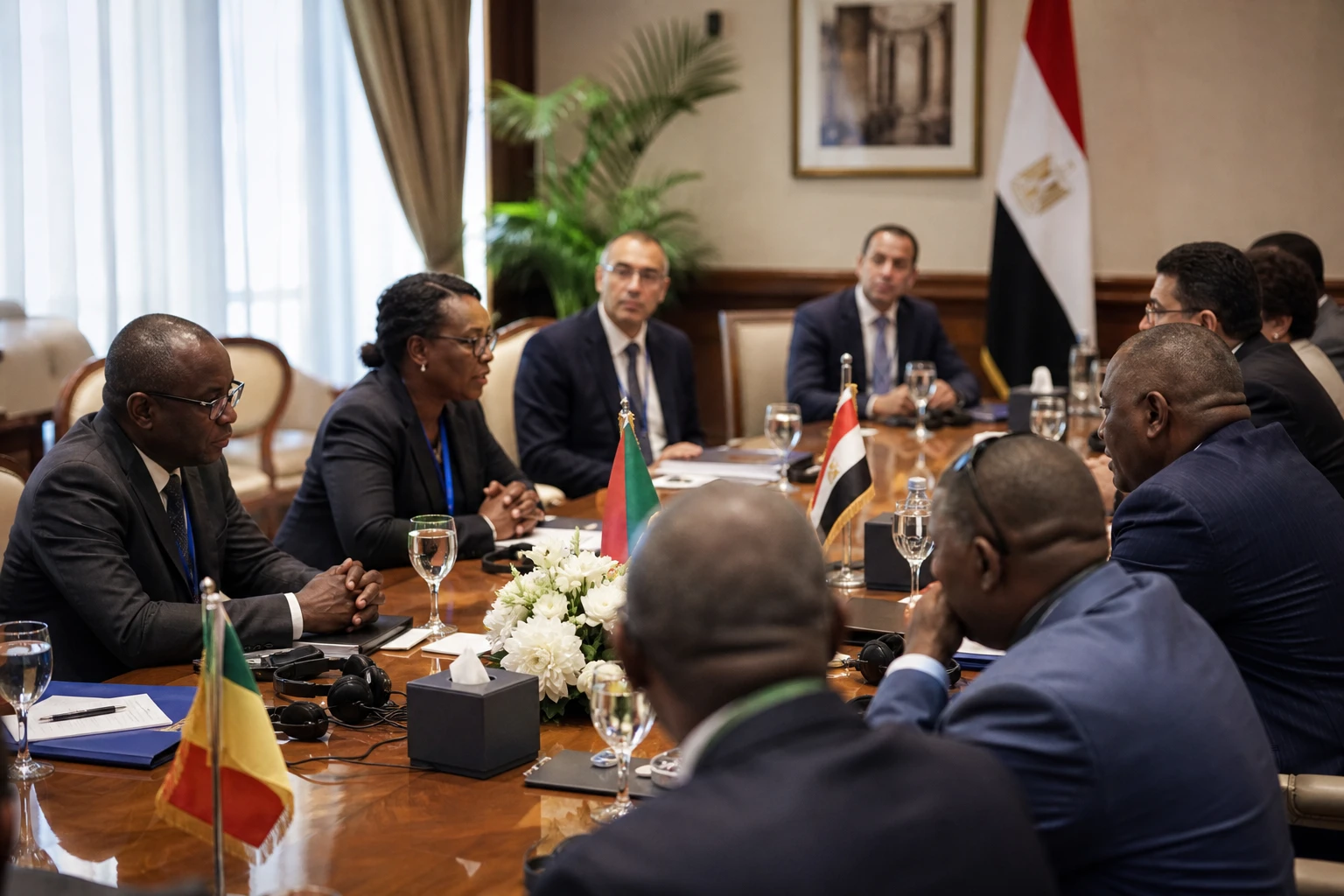
On 27 July 2026 in Cairo, Alaa Farouk received Frank Kagyigyi Tumwebaze, Uganda’s Minister of Agriculture, Animal Industry and Fisheries, as well as Robert Migadde Ndugwa, Uganda’s Minister of State for Agriculture. The discussions focused on strengthening bilateral co-operation in agriculture, livestock and fisheries, with particular emphasis on opening the Ugandan market to Egyptian poultry products and eggs.
A few weeks earlier, another signal had come from West Africa. On 7 July 2026 in Accra, Ghana’s Ministry of Trade, Agribusiness and Industry discussed possible co-operation in poultry and animal-feed production with Egypt’s ambassador, Wael Fathy Ahmed. Ghana’s stated aim is to reduce its dependence on imports, which weighs on its domestic sector.
These efforts also form part of a broader regional context. Uganda is a member of the East African Community, while Ghana operates in the West African region. In both cases, food security, logistics costs and health standards remain central issues. Poultry trade is growing at the intersection of agriculture, processing and food sovereignty.
Abundant Egyptian production, but markets still to be won
The diplomatic initiative has not come out of nowhere. In January 2026, the General Union of Egyptian Poultry Producers said the country had achieved self-sufficiency in the sector, with a production surplus estimated at 20% of national consumption. The organisation cited daily output of 4.8 million chickens and 1.5 million trays of eggs.
FAO data confirm the importance of the sector. Egypt is among Africa’s leading chicken-meat producers, with output of 2.59 million tonnes in 2024, according to FAOSTAT data cited by specialist sources. The FAO also notes that rising chicken-meat consumption in Egypt has driven up demand for feed maize, showing how poultry farming supports an entire value chain, from animal feed to urban distribution.
There is, then, genuine export potential. Egypt has an industrial base, veterinary expertise and geographical proximity to several African markets. But establishing a lasting presence in these markets means overcoming other hurdles: health certifications, reliable freight, price competitiveness, the cold chain and the ability to deliver regularly. In this field, Brazil, the United States and the European Union remain firmly established competitors.
What this strategy says about Egypt and the African market
For Egypt, the strategy is twofold. On the one hand, it supports producers seeking markets beyond the domestic one. On the other, it strengthens the country’s position as an agricultural supplier in an Africa where demand for animal protein is growing faster than local supply in several economies. This is an important distinction: this is not simply a matter of selling surplus, but a test of regional competitiveness.
For partner countries, the benefits are more nuanced. Co-operation with Egypt could accelerate the development of some sectors, particularly through the transfer of techniques, inputs and industrial experience. But it could also put pressure on local farmers if protection, sector development and financing policies do not keep pace. This is where the difference lies between beneficial trade liberalisation and a new form of dependence.
Across the continent, this issue illustrates a broader trend: intra-African agricultural trade remains low relative to its potential, but grows whenever a country can offer steady production, clear standards and reliable logistics. Egyptian poultry farming aims to position itself precisely in this space. What happens next will depend on the speed of health approvals, the ability to secure supply chains and how Cairo turns its commercial ambitions into concrete contracts, particularly with Uganda and Ghana.