Algeria
 Libya
 Morocco
 Sudan
 Tunisia
 Benin
 Burkina Faso
 Cabo Verde
 Côte d'Ivoire
 Ghana
 Guinea
 Guinea-Bissau
 Liberia
 Mali
 Mauritania
 Niger
 Nigeria
 Senegal
 Sierra Leone
 The Gambia
 Togo
 Cameroon
 Central African Republic
 Chad
 DR Congo
 Equatorial Guinea
 Gabon
 Republic of the Congo
 São Tomé and Príncipe
 Burundi
 Comoros
 Djibouti
 Eritrea
 Ethiopia
 Kenya
 Madagascar
 Malawi
 Mauritius
 Mozambique
 Rwanda
 Seychelles
 Somalia
 South Sudan
 Tanzania
 Uganda
 Angola
 Botswana
 Eswatini
 Lesotho
 Namibia
 South Africa
 Zambia
 Zimbabwe
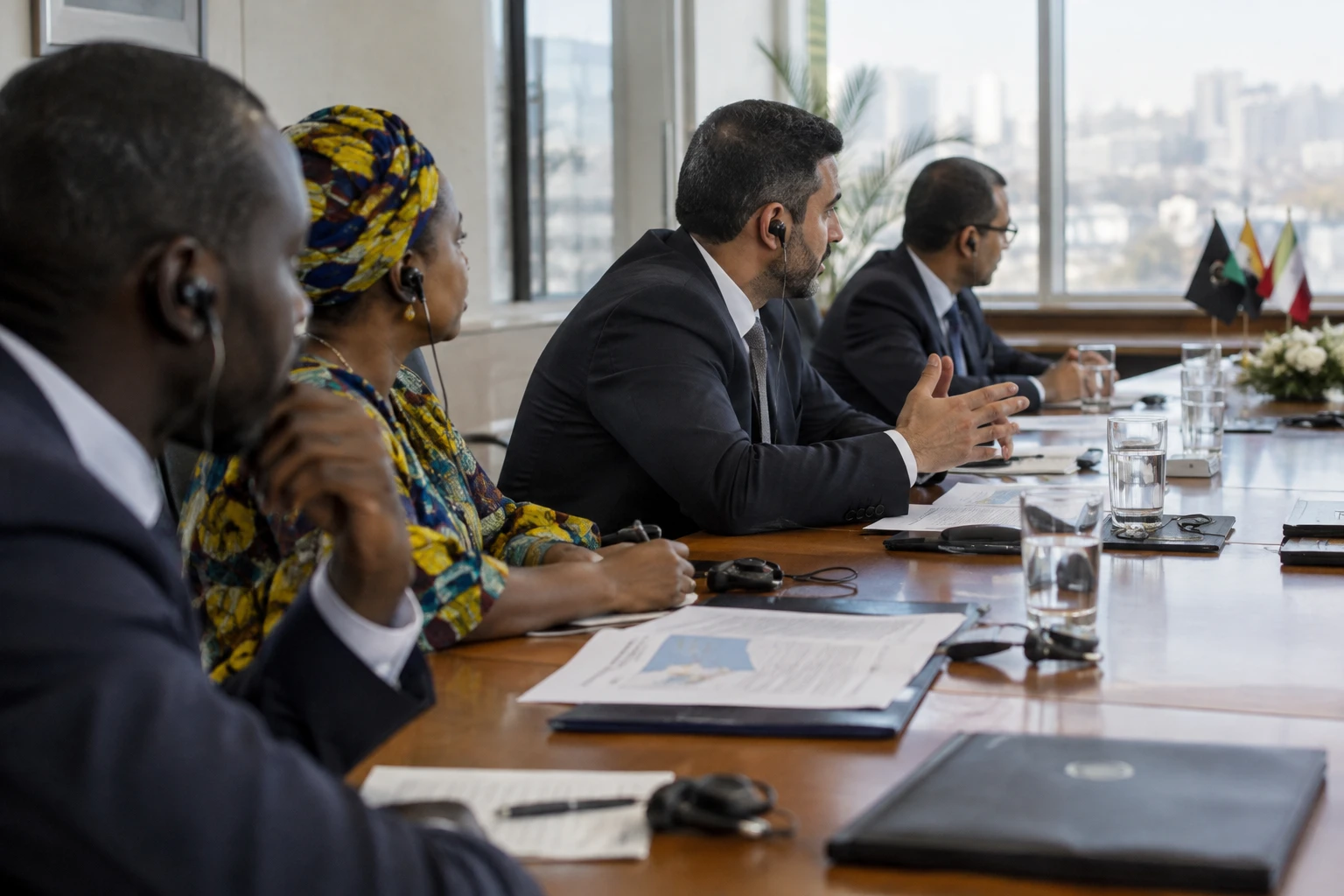
For Egypt, every additional cubic metre produced locally can reduce reliance on costly liquefied natural gas cargoes, which are exposed to market fluctuations. But between starting up a facility and supplying gas to the network lies a decisive step: ramping up production.
New capacity in the Western Desert
On 20 October 2026, Eni announced the start of start-up activities for the second phase of the Meleiha project in Egypt’s Western Desert. These are preparatory operations ahead of commissioning, not confirmation that the facility is already operating at full capacity.
The project is being developed by Agiba Petroleum Company, a joint venture between the Italian group and EGPC, Egypt’s state-owned oil company. The new facility will be able to process up to 100 million standard cubic feet of gas a day, or about 2.8 million cubic metres. It brings together wells, gathering networks and pipelines, including a gas pipeline intended to connect production to existing infrastructure.
Egypt’s Ministry of Petroleum also relayed the announcement. This corroborates the date, location and stated capacity, but the available information comes from the project partners. It does not yet specify when commercial production will begin or what daily volume will actually be delivered.
The stated processing capacity should therefore not be confused with production already available. The outcome will depend on the wells’ actual flow rates, the successful commissioning of the equipment and connection to the network. The announcement describes an important industrial milestone; it does not yet measure the project’s net contribution to national supply.
From exporter to import pressure
The project comes amid a strained energy situation. Egypt’s gas production has fallen since its 2021 peak, while domestic needs remain high. The offshore Zohr field, long a driver of national supply, has also seen its output decline. The country, once a gas exporter, has thus returned to the LNG market: gas cooled for transport by ship.
According to S&P Global data cited by Egyptian media outlet Arab Finance, LNG imports reached about 9.01 million tonnes in 2025. The same source estimated in early 2026 that they could reach 11.14 million tonnes that year, a 26.3% increase. This was a forecast published in January, not a final 2026 total.
This reliance weighs on public finances and makes the energy balance more sensitive to global prices and cargo availability. External purchases can support supply, but they cannot sustainably replace falling domestic production. For households and businesses, the practical question remains whether gas will be consistently available, particularly when demand rises.
A revival dependent on several projects
Meleiha alone is not an answer to the gap between supply and demand. Egypt’s Ministry of Petroleum said in September that four wells recently brought on stream or restored to operation had added 45 million cubic feet of gas a day, as well as condensates. These results show the role of connecting wells and restoring facilities in the revival strategy.
Egyptian business outlet Enterprise also reports that nine gas projects were completed during the financial year cited by the authorities, with 28 wells connected and $1.12 billion in investment. These figures give an indication of the effort under way, but are not enough to establish that the national trend has already been reversed: the net volumes added would need to be known and compared with the decline in existing fields.
The Western Desert has particular operational advantages: projects can draw on infrastructure already in place in an area where Eni has been active for several decades. The group says it produced about 242,000 barrels of oil equivalent per day in Egypt on an equity basis in 2025. However, this figure covers different hydrocarbons and does not relate solely to Meleiha’s gas.
The Merged Meleiha concession brings together Eni and Russia’s Lukoil, according to project information. Eni says the operating agreement has been extended until 2036. Contractual continuity can support investment, but the public interest also depends on the volumes actually delivered to the Egyptian market, the revenue generated and the terms agreed with partners.
A national issue with regional effects
In Cairo, the priority is to secure supply without allowing imports to absorb an increasing share of public resources. Major projects and supply contracts directly involve the state and energy companies. For consumers, the impact will be tangible only if the new capacity actually increases deliveries and eases pressure on the network.
The issue extends beyond Egypt’s borders. Egypt holds a strategic position in Eastern Mediterranean gas trade, thanks to its transport and liquefaction infrastructure. Its ability to produce, import or process gas therefore affects regional energy flows. The African Union, for its part, pursues goals on energy access and continental cooperation; but the short-term response depends first and foremost on national choices and energy partnerships.
The next indicator to watch will be the transition from testing to measurable production, followed by the volume actually fed into the networks. That contribution will also need to be compared with imports and demand trends. Meleiha is one part of Egypt’s revival. Its significance will depend less on the stated nameplate capacity than on the gas that actually reaches the market.