
 Algeria
 Libya
 Morocco
 Sudan
 Tunisia
 Benin
 Burkina Faso
 Cabo Verde
 Côte d'Ivoire
 Ghana
 Guinea
 Guinea-Bissau
 Liberia
 Mali
 Mauritania
 Niger
 Nigeria
 Senegal
 Sierra Leone
 The Gambia
 Togo
 Cameroon
 Central African Republic
 Chad
 DR Congo
 Equatorial Guinea
 Gabon
 Republic of the Congo
 São Tomé and Príncipe
 Burundi
 Comoros
 Djibouti
 Eritrea
 Ethiopia
 Kenya
 Madagascar
 Malawi
 Mauritius
 Mozambique
 Rwanda
 Seychelles
 Somalia
 South Sudan
 Tanzania
 Uganda
 Angola
 Botswana
 Eswatini
 Lesotho
 Namibia
 South Africa
 Zambia
 Zimbabwe
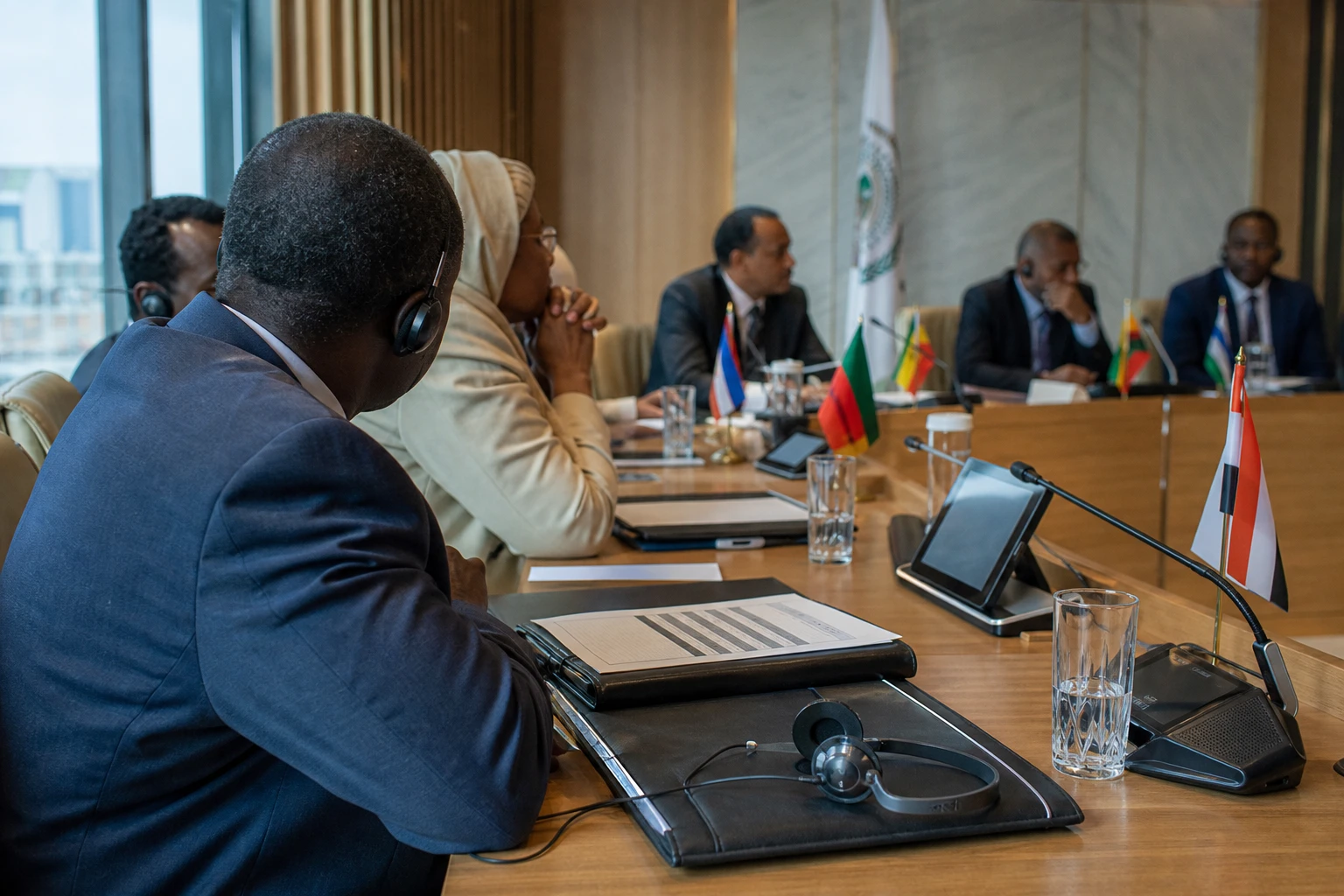
The stand-off between Cairo and Addis Ababa has reached a new threshold. Within hours, Egypt and Ethiopia each ordered a diplomat from the other country to leave within 48 hours. The reciprocal move comes as northern Ethiopia is plunged back into fighting and the Nile crisis continues to weigh on bilateral relations.
A diplomatic crisis amid regional tensions
On 1 October 2026, Ethiopia’s Ministry of Foreign Affairs declared Ahmed Moharam Ahmed Soliman, a member of the Egyptian diplomatic staff posted in Addis Ababa, persona non grata. The decision required him to leave Ethiopian territory within 48 hours.
The Ethiopian announcement did not publicly specify the allegations against the diplomat. It came, however, amid acute tensions with Egypt, Sudan and Eritrea, which Ethiopian officials have accused of supporting forces hostile to the federal government.
Cairo responded the same day. An Egyptian source quoted by the national press said a counsellor at the Ethiopian embassy in Cairo had also been declared persona non grata. He was likewise required to leave Egypt within 48 hours, under the principle of reciprocity.
The Egyptian measure was reported by Ahram Online in French. Ethiopia’s ENA news agency, for its part, confirmed the expulsion of the Egyptian diplomat and the deadline set by Addis Ababa.
A diplomatic expulsion does not automatically mean a rupture in relations. It is, however, a significant political signal. It erodes trust between the foreign ministries and could complicate discussions on security, economic and water-related issues.
Tigray at the centre of mutual accusations
The escalation comes after hostilities resumed in northern Ethiopia. According to several sources, fighting broke out again on 23 September 2026 between federal forces and the Tigray People’s Liberation Front, better known by its English acronym, TPLF.
The TPLF long dominated Ethiopia’s ruling coalition. It fought the federal army from November 2020 to November 2022, in a war that profoundly destabilised Tigray and neighbouring regions. An agreement signed in Pretoria, South Africa, helped bring the fighting to a halt, without resolving all political and territorial rivalries.
Ethiopia’s chief of staff, Field Marshal Birhanu Jula, accused Eritrea of providing financial support to Tigrayan forces. He also referred to alleged backing from Sudan and Egypt, without publicly presenting evidence to substantiate the accusations.
The Egyptian government rejected this account. An official in Cairo accused Ethiopia of seeking to blame foreign actors for its “successive internal crises”. The wording reflects Egypt’s determination not to let the Nile issue become entangled with Ethiopia’s political and military conflicts.
The accusations remain disputed. At this stage, the available information establishes a series of official statements and expulsions, but does not publicly confirm operational Egyptian support for the TPLF.
The Nile dam, a lasting fault line
The current crisis cannot be separated from the Grand Ethiopian Renaissance Dam, known by the acronym GERD. Built on the Blue Nile upstream of Sudan, the project is intended to increase Ethiopia’s electricity production and support its industrial development.
For Egypt, the dam poses a risk to national water security. The country relies heavily on the Nile for its water supply, agriculture and part of its economic activity. Cairo has for years called for a binding agreement on filling and operating the reservoir, particularly during prolonged droughts.
Addis Ababa, by contrast, defends its right to use its natural resources to generate electricity and reduce its energy deficit. Ethiopia believes the project should be negotiated among riparian states, without recognising the exclusive historical rights claimed by Cairo.
Discussions have gone through several phases of dialogue, but no mechanism fully accepted by the three main states concerned — Ethiopia, Sudan and Egypt — has yet resolved disputes over data, water releases and the management of dry years.
This explains why every diplomatic rapprochement in the Horn of Africa is closely watched in Cairo. It also explains why Addis Ababa sees some Egyptian partnerships as an attempt to widen pressure over the dam.
Cairo’s rapprochement with Asmara under scrutiny
Relations between Egypt and Eritrea have strengthened in recent months. The two countries share interests in the Red Sea and are closely monitoring security developments in the Horn of Africa, a region linking the maritime routes of the Suez Canal, the Gulf of Aden and the Indian Ocean.
The rapprochement worries Addis Ababa, which is seeking to diversify its trade access and secure a lasting opening to the Red Sea. Landlocked since Eritrea’s independence in 1993, Ethiopia relies mainly on Djibouti’s port infrastructure for its foreign trade.
Tensions between Addis Ababa and Asmara worsened further on 1 October. Ethiopia announced that it was closing its embassy in Asmara and expelling ten Eritrean diplomats, accusing them of activities that threatened national security. Eritrea subsequently announced a break in diplomatic relations with Ethiopia.
The rupture gives the Egypt-Ethiopia crisis a broader reach. It is no longer only about two capitals at odds over water. It is part of a wider set of rivalries involving Tigray, the Red Sea, access to ports and regional alliances.
What risks do populations and the region face ?
For leaders, expelling diplomats allows them to issue a warning without immediately crossing the threshold of a complete rupture. For populations, however, deteriorating relations could make consular services, travel and the flow of information between the two countries more difficult.
In northern Ethiopia, the stakes are more immediate. Medical facilities in Korem and Alamata have reported a rapid rise in the number of wounded people treated, while displaced residents fear they may have to flee again. These figures should still be treated with caution, as access to the conflict zones remains limited.
The renewed clashes also risk disrupting banking services, transport and supplies in the affected areas. The impact is generally greater on rural households, small traders and people already displaced than on economic actors based in the capitals.
At continental level, the African Union will have to monitor three linked issues. The first is preserving the Pretoria agreement. The second is preventing a direct confrontation between Ethiopia and Eritrea. The third remains the search for a lasting compromise on the Blue Nile.
The next step will be diplomatic. It remains to be seen whether the expulsions will be limited to an exchange of retaliatory measures or signal a lasting reduction in diplomatic representation between Cairo and Addis Ababa. In a region already weakened by conflict, African mediators have less room to manoeuvre as public accusations replace channels of dialogue.



