
 Algeria
 Libya
 Morocco
 Sudan
 Tunisia
 Benin
 Burkina Faso
 Cabo Verde
 Côte d'Ivoire
 Ghana
 Guinea
 Guinea-Bissau
 Liberia
 Mali
 Mauritania
 Niger
 Nigeria
 Senegal
 Sierra Leone
 The Gambia
 Togo
 Cameroon
 Central African Republic
 Chad
 DR Congo
 Equatorial Guinea
 Gabon
 Republic of the Congo
 São Tomé and Príncipe
 Burundi
 Comoros
 Djibouti
 Eritrea
 Ethiopia
 Kenya
 Madagascar
 Malawi
 Mauritius
 Mozambique
 Rwanda
 Seychelles
 Somalia
 South Sudan
 Tanzania
 Uganda
 Angola
 Botswana
 Eswatini
 Lesotho
 Namibia
 South Africa
 Zambia
 Zimbabwe
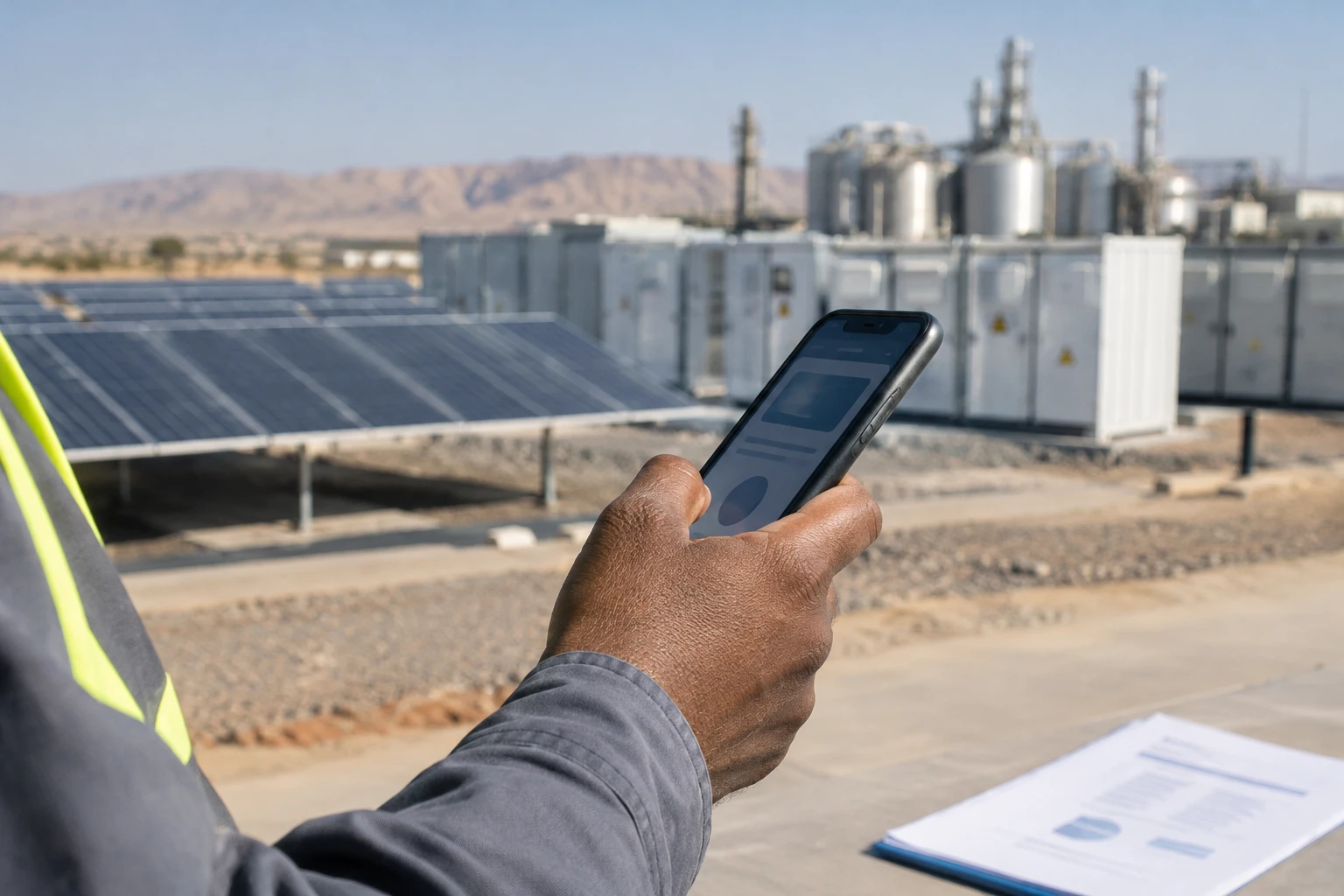
For an aluminium producer, electricity is not simply an expense: it affects costs, emissions and access to markets. In Egypt, a major solar project aims to supply some of this energy to EgyptAlum, linking the energy transition to industrial competitiveness.
From Qena sunshine to power for a factory
The Dandara project is located in Qena Governorate, near Nagaa Hammadi, in Upper Egypt. Its first phase combines a 569 MW photovoltaic plant with a 100 MWh battery. Electricity will be sold to Misr Aluminium Company, known as EgyptAlum, under a long-term power purchase agreement.
The European Investment Bank (EIB), through its EIB Global arm, is providing up to $90 million for this first phase. The African Development Bank (AfDB) and the European Bank for Reconstruction and Development (EBRD) are also participating in the financing. In total, the loans announced for the initial phase amount to $217 million, or about 80% of its estimated cost of $271 million.
Figures published by institutions and companies do not always describe the project at the same stage. In July, the AfDB presented a 500 MW phase, while more recent agreements and data from Scatec and the EIB put the figure at 569 MW. Scatec says loan agreements have been signed and construction is beginning. Commercial commissioning is targeted for the first half of 2028.
Expected output is estimated at about 1.4 terawatt-hours a year. The battery is intended to shift some solar electricity to periods of peak demand, particularly in the evening. It does not replace continuous generation: its main purpose is to make better use of energy produced when the sun is available.
An industrial and commercial imperative
EgyptAlum is a major player in Egypt’s industry and one of the continent’s leading aluminium producers. The company receives electricity through the national grid under a 25-year power purchase agreement. This arrangement links a renewable energy installation to a specific industrial consumer, rather than selling all its output on the general market.
The stakes go beyond the energy bill. According to Scatec, Dandara is expected to avoid more than 550,000 tonnes of carbon dioxide emissions a year. The AfDB also highlights Egyptian aluminium’s exposure to the new European carbon rules, which came into force in January 2026. For producers exporting to Europe, their carbon footprint is becoming a factor in competitiveness, although it is not the only determinant of sales.
This shift affects executives and shareholders, as well as EgyptAlum’s employees and the communities concerned. The AfDB estimates that more than 6,000 jobs at the company could be affected by maintaining its access to the European market. This figure refers to jobs supported by industrial activity; it does not mean the solar project will create as many positions. The bank expects about 2,500 temporary jobs during construction and 23 permanent jobs in operations.
The financing nevertheless remains subject to technical and financial requirements. The loans have no direct recourse to the state: repayment relies mainly on project revenues and its contracts. However, EgyptAlum’s payment obligation is backed by a sovereign guarantee, according to Scatec. The arrangement therefore combines private capital, development bank loans and a public guarantee.
A first step in Egypt’s energy strategy
Egypt is targeting a share of more than 42% renewables in its electricity mix by 2030, according to the national energy strategy cited by the authorities. To meet this goal, the country needs to increase solar and wind capacity, while also strengthening its grid and integrating storage. Dandara addresses these needs while directing some of its output straight to industry.
The full project, estimated to cost about $650 million, is ultimately expected to reach nearly 1,000 MW of solar capacity and 200 MWh of storage in two phases. The first phase, now financed, should therefore not be confused with the final capacity. Scatec plans to begin construction of the second phase in the first half of 2027.
The effects will not be the same for all consumers. The agreement provides for supplying EgyptAlum; it does not promise an immediate reduction in household tariffs, in Cairo or in the governorates. In areas hosting construction work, the project may bring temporary jobs, while integration into the grid will also depend on transmission and connection infrastructure.
Across North Africa, Dandara illustrates a transition pathway in which renewable energy also helps secure export industries. The Arab Maghreb Union, whose economic integration projects remain limited, is not a fully integrated regional electricity market. Attention will therefore initially focus on construction progress, the second phase and the Egyptian grid’s ability to absorb new generation. For Egypt, the test will be tangible: turning announced financing into delivered electricity, measurable emissions reductions and sustainable industrial activity.



