Algeria
 Egypt
 Libya
 Morocco
 Sudan
 Tunisia
 Benin
 Burkina Faso
 Cabo Verde
 Côte d'Ivoire
 Ghana
 Guinea
 Guinea-Bissau
 Liberia
 Mali
 Mauritania
 Niger
 Nigeria
 Senegal
 Sierra Leone
 The Gambia
 Togo
 Cameroon
 Central African Republic
 Chad
 DR Congo
 Equatorial Guinea
 Gabon
 Republic of the Congo
 São Tomé and Príncipe
 Burundi
 Comoros
 Djibouti
 Eritrea
 Ethiopia
 Kenya
 Madagascar
 Malawi
 Mauritius
 Mozambique
 Rwanda
 Seychelles
 Somalia
 South Sudan
 Tanzania
 Angola
 Botswana
 Eswatini
 Lesotho
 Namibia
 South Africa
 Zambia
 Zimbabwe
When a virus gains several months’ head start, the response loses ground
In an epidemic, the most dangerous factor is not always the speed of spread. Sometimes it is the time lost before anyone understands what is circulating. In the Democratic Republic of the Congo, this reality weighed heavily in the new Ebola outbreak detected in 2026, when health teams had to trace a chain of transmission that was already well established.
The starting point was in the east of the country, on the Ugandan border, in an area where people are constantly on the move and health facilities remain under pressure. The stakes therefore go beyond the affected province alone. They also concern cross-border surveillance, laboratory capacity and community trust, three essential links in any rapid response.
What the initial investigations show
On 15 May 2026, health authorities in the DRC and Uganda declared an outbreak of Ebola linked to the Bundibugyo virus. Genetic analyses later showed, however, that the virus had been circulating earlier, from February. This means there was a gap of several months between the likely appearance of the first cases and the official declaration.
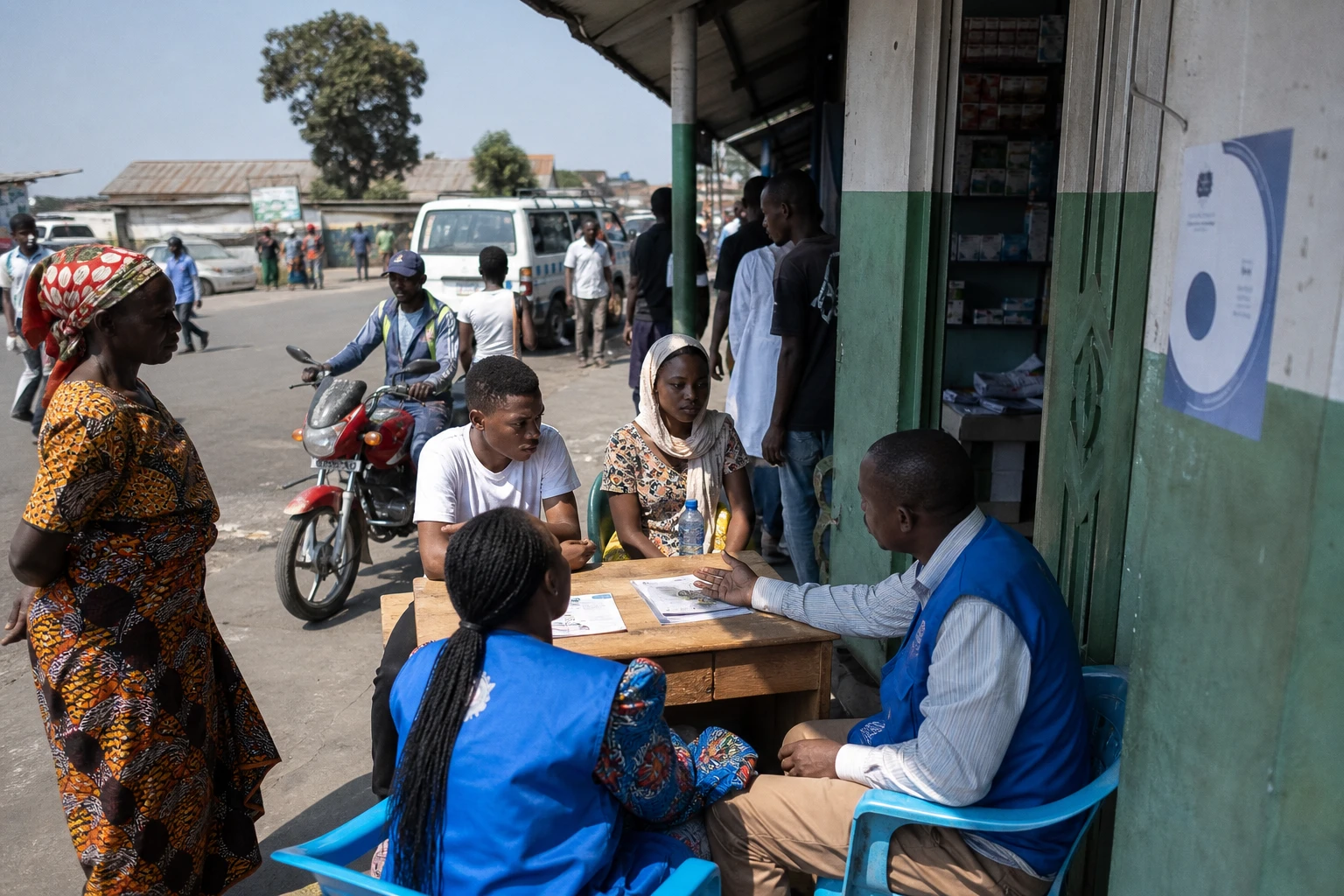
This delay had an immediate consequence: teams had to catch up with an outbreak that was already established. Before a diagnosis was confirmed, several patients had been given other labels, such as typhoid or malaria. In remote areas, where access to healthcare is limited, this confusion delays the isolation of cases and makes contact tracing more difficult.
The World Health Organization later confirmed that the outbreak had been declared an emergency in both countries on 15 May. Africa CDC, for its part, sounded the alarm that same day and described it as a regional threat requiring continental coordination. On 5 June, Africa CDC and WHO launched a joint preparedness and response plan for the period from June to November 2026, with an estimated funding requirement of $518 million.
Why the response was slowed
The first obstacle is medical. The Bundibugyo strain is not the Zaire strain, more often cited in previous crises in the DRC. There is no approved vaccine or treatment specifically for this strain. The available tools are therefore more limited than for other forms of Ebola.
The second obstacle is human. In several outbreak sites, the disease was first suspected and then disputed. This mistrust is not a minor issue. It affects how quickly families report a death, agree to a sample being taken or consent to care. Without community buy-in, the surveillance chain breaks down.
The third obstacle is logistical. The east of the DRC combines difficult roads, long distances and recurring insecurity. In hard-to-reach health zones, every day lost between notification, the delivery of a test and the return of the result weakens the response. The virus takes advantage of that interval.
On 24 May, WHO Africa reports were already recording rapid progress in the DRC, with 105 confirmed cases and 10 confirmed deaths as of that date, as well as 13 health zones affected across three provinces. By 21 June, the cumulative total in the DRC had reached 1,048 confirmed cases and 267 confirmed deaths. These figures show transmission that had moved well beyond the initial phase.
The DRC on the front line, Uganda as a health barrier
For Kinshasa, the crisis is a reminder of a constant in the DRC’s public health experience: repeated Ebola outbreaks, but also the gradual strengthening of surveillance services. The country has already experienced several major outbreaks, and each crisis has reinforced certain practices, from sequencing to dignified and safe burials. But the same constraint remains: the country’s size and unequal access to healthcare.
For Kampala, the stakes are different. Uganda confirmed an imported case from the DRC and then stepped up border surveillance. On 28 July 2026, the country announced that it was officially Ebola-free after the last patient was discharged. This rapid outcome shows that early alerts, rapid testing and close surveillance can contain transmission.
The difference in the two neighbours’ trajectories is instructive. It does not mean that one country is inherently better equipped than the other. Rather, it shows that a cross-border epidemic turns on the speed of alerts, the quality of laboratories and the level of trust between authorities and communities.
A test for African public health
The outbreak also has continental significance. Africa CDC and WHO have opted for a joint response, a sign that an epidemic in the Great Lakes region cannot be treated as an isolated local problem. Commercial, family and humanitarian movements immediately link the DRC, Uganda, South Sudan, Rwanda and beyond.
The issue also raises questions about African health sovereignty. Sequencing, coordination between ministries, emergency funding and the flow of information are all now taking place within a more integrated African public health space. Regional institutions, national laboratories and continental agencies play a central role in it.
What happens next will depend on three things. First, the ability to break transmission chains in health zones that remain active. Second, strengthening border surveillance, particularly between Ituri, neighbouring provinces and Uganda. Finally, the ability to sustain community engagement over time, because an Ebola epidemic is not won with mobile teams alone, but with communities that are properly informed and involved in the response.
In the Democratic Republic of the Congo, the episode is a reminder of a simple truth: when a disease circulates for longer than it is detected, the first battle is against delay, not just the virus.