Algeria
 Egypt
 Libya
 Morocco
 Sudan
 Tunisia
 Benin
 Burkina Faso
 Cabo Verde
 Côte d'Ivoire
 Ghana
 Guinea
 Guinea-Bissau
 Liberia
 Mali
 Mauritania
 Niger
 Nigeria
 Senegal
 Sierra Leone
 The Gambia
 Togo
 Cameroon
 Central African Republic
 Chad
 DR Congo
 Equatorial Guinea
 Gabon
 Republic of the Congo
 São Tomé and Príncipe
 Burundi
 Comoros
 Djibouti
 Eritrea
 Ethiopia
 Kenya
 Madagascar
 Malawi
 Mauritius
 Mozambique
 Rwanda
 Seychelles
 Somalia
 South Sudan
 Tanzania
 Uganda
 Angola
 Botswana
 Eswatini
 Lesotho
 Namibia
 Zambia
 Zimbabwe
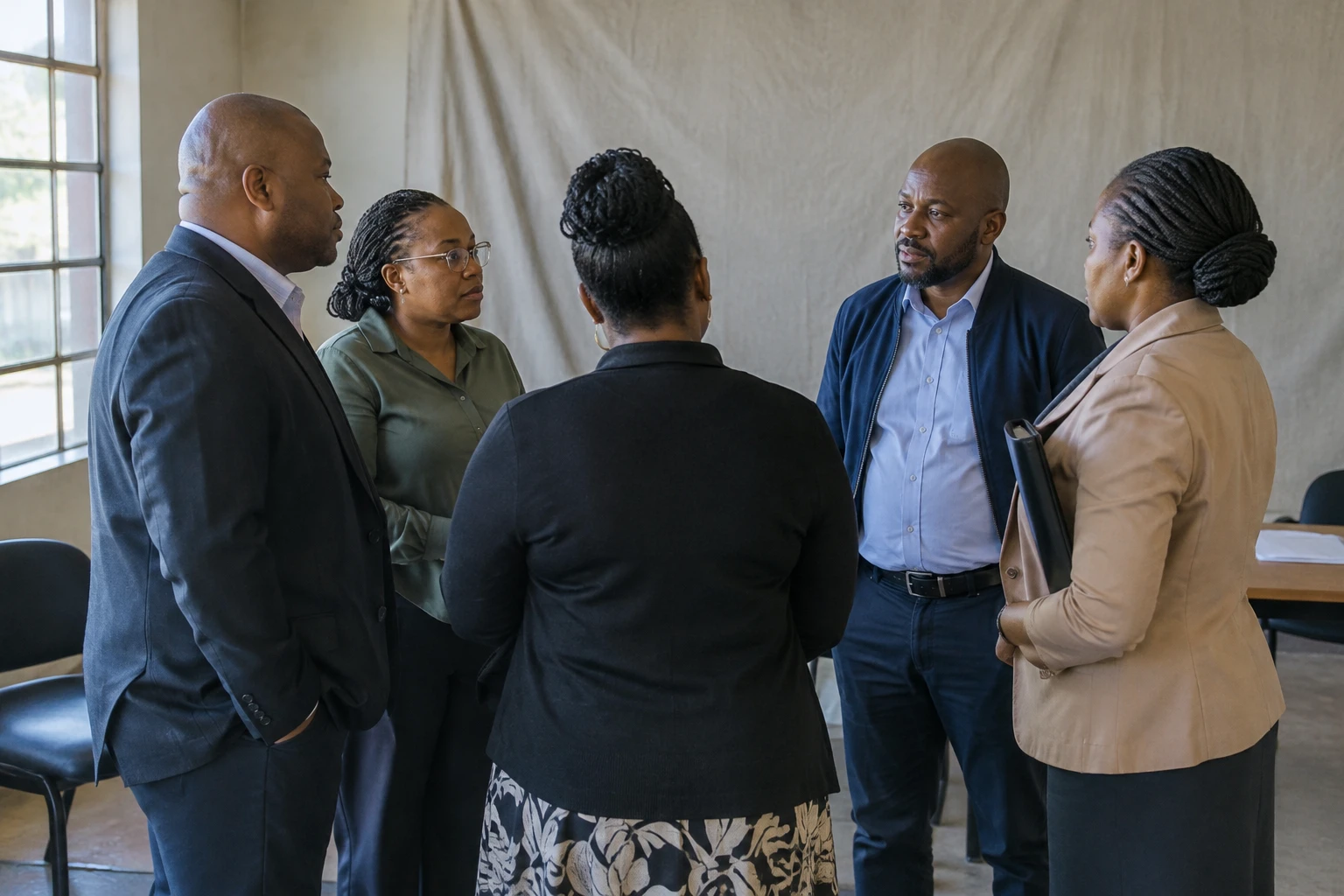
In Durban, choosing a municipal councillor is about more than debating public services. In some constituencies, political competition has been accompanied by threats and targeted killings. As South Africa’s 2021 municipal elections approached, this violence raised a practical question: who can campaign and serve in office without facing intimidation?
Local competition under pressure in KwaZulu-Natal
Durban is the main urban centre of KwaZulu-Natal province. The city is part of the eThekwini metropolitan municipality, whose decisions directly affect access to water, sanitation, transport and refuse collection. A seat on the municipal council therefore carries genuine public responsibility, but also access to resources and contracts that can inflame rivalries.
Over the years, the province has seen killings linked to local politics. A provincial commission of inquiry, the Moerane Commission, was established to examine the root causes of the murders of political figures. Its work took place against a backdrop in which party rivalries, competition for positions and criminal interests can intersect, although not every killing can be attributed to a political motive.
The 2021 municipal elections were due to take place on 1 November, after the poll was postponed from its original date in October. The official date was set by the South African authorities. It was the sixth municipal election since the end of apartheid in 1994. Voters chose their local representatives, who would then form councils and elect mayors.
Threats also target candidates and elected officials
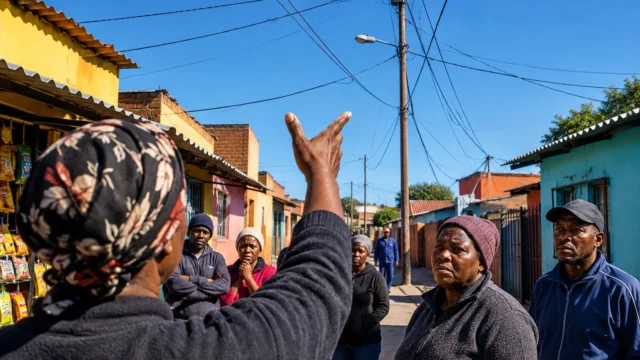
During the campaign, elected officials and activists reported intimidation targeting municipal councillors. Tactics cited included death threats and ammunition being left outside someone’s home. These accounts describe a climate of pressure, but on their own do not establish the total number of victims or the motive behind each attack.
The figure of 43 political killings cited in reports at the time was attributed to the Global Initiative Against Transnational Organized Crime, a research organisation that compiles reported cases. South African authorities, meanwhile, gave a lower figure. These numbers should not be confused with a consolidated official tally: counting methods and the classification of motives may differ. In a retrospective analysis, the organisation recorded 30 political killings for the 2021 election year as a whole, according to its own database.
This discrepancy highlights a central challenge: the South African police do not always publish a distinct, consistent series covering targeted killings. Researchers often have to cross-check public and media reports. The figures indicate a trend and its severity, but do not replace judicial investigations that establish responsibility.
KwaZulu-Natal accounted for a significant share of the concerns. Studies of targeted killings in the province describe possible links between political clashes, criminal networks and rivalries in the minibus taxi sector, where control of routes can represent a major economic stake. This does not mean these factors explain every killing: the circumstances and suspected perpetrators must be established case by case.
Municipal office, a political and economic prize
Councillors are often the public officials closest to residents. They receive complaints about services, work in neighbourhoods and take part in municipal decisions. This proximity can expose them to greater pressure from local rivalries, whether involving political factions, criminal groups or people seeking to influence the allocation of contracts and positions.
For the ANC, then in power nationally, the municipal elections were also an electoral test. The party was facing a decline in support. But violence did not affect only parties in government: candidates and activists from other parties could also be at risk. A disrupted campaign does not merely deprive officials of a safe political environment. It limits voters’ ability to compare policies and participate freely.
Unemployment, cited by local religious leaders as a source of frustration and competition for paid positions, is a contextual factor, not a sufficient explanation. Reducing the killings to poverty or a lack of jobs would obscure the specific mechanisms that need to be examined: candidate selection, internal disputes, public contracts, witness protection and the effectiveness of investigations.
Civil society organisations and religious leaders at the time proposed mediation, dialogue and support for whistleblowers. These initiatives can help prevent tensions and bring threats to light. They cannot, however, replace police protection, independent investigations or prosecutions where the evidence allows.
A lesson for local democracy in southern Africa
South Africa’s municipal elections do not take place within ECOWAS, the West African regional organisation, but within the Southern African Development Community (SADC). The 2021 poll primarily concerned South Africa’s local institutions. It nevertheless raised a wider regional question: how can open political competition be guaranteed when local officials face threats?
The Moerane Commission and the creation of police teams dedicated to political killings show that institutions have recognised the issue. The persistence of attacks nonetheless raises questions about prevention, coordination of investigations and protection for those who report wrongdoing. For residents, the stakes are also reflected in municipal services: an administration weakened by rivalries and fear may be less able to respond effectively to everyday needs.
Data published after the election confirm that political violence remains under scrutiny in South Africa, but they do not justify treating every homicide as a political killing. Vigilance is therefore needed on two fronts: establishing the facts rigorously and safeguarding the ability of candidates, elected officials and communities to participate in public life. In Durban, as elsewhere in the country, the safety of local actors is an integral part of democratic quality.
For information on the election dates, local issues and documented trends, see details of the official date of South Africa’s 2021 municipal elections, the Moerane inquiry into political killings in KwaZulu-Natal and analyses by the Institute for Security Studies on targeted killings.