Algeria
 Egypt
 Libya
 Morocco
 Sudan
 Tunisia
 Benin
 Burkina Faso
 Cabo Verde
 Côte d'Ivoire
 Ghana
 Guinea
 Guinea-Bissau
 Liberia
 Mali
 Mauritania
 Niger
 Nigeria
 Senegal
 Sierra Leone
 The Gambia
 Togo
 Cameroon
 Central African Republic
 Chad
 DR Congo
 Equatorial Guinea
 Gabon
 Republic of the Congo
 São Tomé and Príncipe
 Burundi
 Comoros
 Djibouti
 Eritrea
 Ethiopia
 Kenya
 Madagascar
 Malawi
 Mauritius
 Mozambique
 Rwanda
 Seychelles
 Somalia
 South Sudan
 Tanzania
 Uganda
 Angola
 Botswana
 Eswatini
 Lesotho
 Namibia
 Zambia
 Zimbabwe
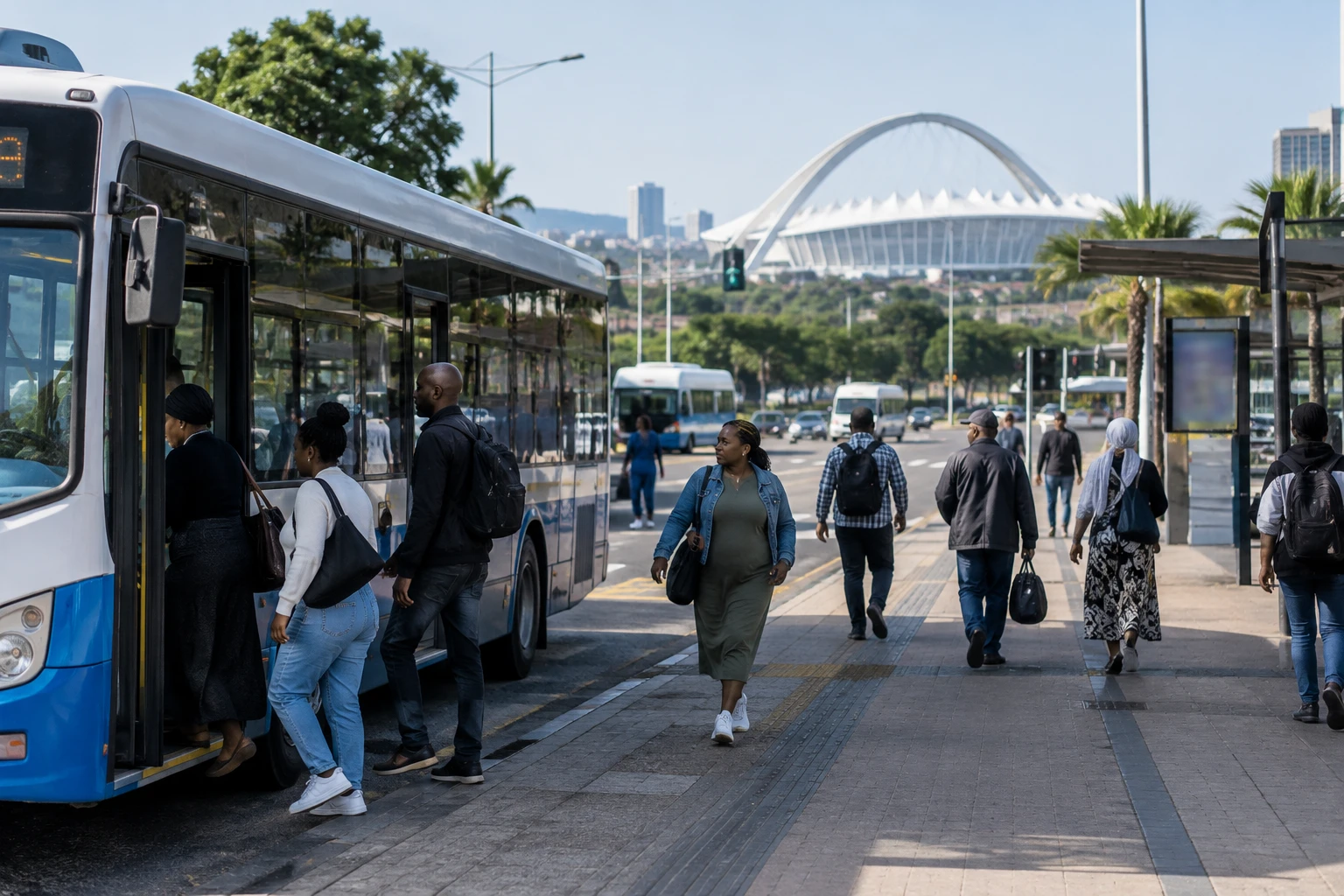
Hosting the Summer Olympic Games in Africa would be a first. For Durban and South Africa, the challenge therefore goes beyond choosing a stadium: they will have to show that a project on this scale can be funded, organised and remain useful long after the closing ceremony.
The South African Olympic Committee has named Durban as the main city in its bid for the 2036 or 2040 Olympic and Paralympic Games. The announcement, made on Thursday 29 October by its acting president, Lwandile Simelane, opens a new stage. It does not guarantee that the International Olympic Committee (IOC) will select the bid, or that the Games will be held in South Africa.
A bid from the Indian Ocean coast
Durban is in KwaZulu-Natal province, on the Indian Ocean coast. With a population of about four million in its metropolitan area, it is one of the country’s major urban centres. South Africa’s proposal could bring together several cities: Durban would be the anchor, while some events would be held elsewhere.
Johannesburg and Cape Town had also been considered. The final choice of Durban is based in particular on Moses Mabhida Stadium, built for the 2010 FIFA World Cup. The 56,000-seat venue is an existing facility; however, that alone does not establish that all the necessary infrastructure would be available or suitable.
The precedent of 2010 matters. South Africa hosted the first FIFA World Cup held on the continent. But a football tournament and a multi-sport Olympic Games do not have the same requirements for transport, accommodation, competition venues or funding.
Durban had already been mentioned as a potential Olympic city after the World Cup. The project did not go ahead, partly amid concerns about cost. More recently, the city was stripped of the 2022 Commonwealth Games after failing to provide the required guarantees, particularly financial ones. These precedents make the budget a central issue from the outset.
Funding: the project’s decisive test
South African officials have not yet published a cost estimate for a possible Games. The lack of a figure does not mean the project is impossible; it does, however, make it impossible at this stage to assess its needs and risks precisely. State guarantees, the division of costs between public authorities and organisers, and the future use of venues will all need to be clarified.
Any benefits would also depend on concrete decisions. Construction work can support employment and improve some services, but the benefits are not automatically shared among residents. Public spending on venues and transport must be weighed against everyday needs, particularly in neighbourhoods far from infrastructure and among people working in the informal economy.
A multi-city bid could spread events across locations and make use of facilities already built. In return, it would require strong co-ordination between municipalities, provinces and the national government. Distances, rail and road links, the safety of journeys and spectator access would all be critical. The scale of these needs cannot be assessed without a detailed plan.
Recent history therefore calls for a distinction between sporting ambition and the ability to deliver. The 2010 World Cup is an organisational benchmark, but Durban’s loss of the Commonwealth Games also shows that an international event requires credible financial commitments. The bid will have to set out not only the proposed venues, but also how spending will be controlled and facilities maintained after the Games.
An international race and a regional opportunity
South Africa is among the seven countries the IOC currently lists as interested in hosting the 2036 Games: Germany, Hungary, India, Qatar, South Korea, South Africa and Türkiye. Choosing Durban is a national step in this contest; it does not mean the bid has been selected for the final phase.
The IOC’s timetable provides for the host city of the 2036 Games to be elected in mid-2029. Under the process it has announced, strategic dialogue is due to begin in March 2027, followed by a targeted dialogue phase from December 2028 involving a limited number of candidates. The committee will assess the projects, including their feasibility and the guarantees attached to them.
Regionally, the bid could give Southern Africa greater prominence in Olympic and sporting discussions. The Southern African Development Community (SADC), a regional co-operation organisation, brings together states neighbouring South Africa; it is not the authority that will choose the host, but regional partnerships could matter for transport, accommodation or sporting participation.
The recent Youth Olympic Games in Dakar, Senegal, also set a continental precedent for hosting an Olympic event. They do not replace an assessment of a Summer Games project, which is far larger, but they are a reminder that Africa’s hosting capacity and sporting ambitions are not confined to one country.
For Pretoria, South Africa’s capital and the seat of government, the next milestone will be turning the announcement into a documented project: costs, guarantees, venues, transport and a legacy for residents. The question is therefore not only whether Durban can host the Games, but whether the bid can convince the IOC without obscuring the public choices it entails.
Verification sources: SABC Sport on the choice of Durban, IOC on the selection timetable and an independent report on the announcement.