Algeria
 Egypt
 Libya
 Morocco
 Sudan
 Tunisia
 Benin
 Burkina Faso
 Cabo Verde
 Côte d'Ivoire
 Ghana
 Guinea
 Guinea-Bissau
 Liberia
 Mali
 Mauritania
 Niger
 Nigeria
 Senegal
 Sierra Leone
 The Gambia
 Togo
 Cameroon
 Central African Republic
 Chad
 DR Congo
 Equatorial Guinea
 Gabon
 Republic of the Congo
 São Tomé and Príncipe
 Burundi
 Comoros
 Djibouti
 Eritrea
 Ethiopia
 Kenya
 Madagascar
 Malawi
 Mauritius
 Mozambique
 Rwanda
 Seychelles
 Somalia
 South Sudan
 Tanzania
 Uganda
 Angola
 Botswana
 Eswatini
 Lesotho
 Namibia
 Zambia
 Zimbabwe

When a regional summit takes place, security becomes a political test too
In Durban, the 46th summit of the Southern African Development Community has brought home a simple truth: in a region on the move, the movement of people and delegations requires clear rules. The arrests over access badges are not a mere protocol issue. They point to something broader about security at major African gatherings, and about how South Africa organises its role as host in Pretoria, its political capital, and in Durban, a temporary diplomatic showcase for southern Africa.
The summit opened as SADC put industrialisation, infrastructure, agriculture and critical minerals at the centre of its agenda. The Durban meeting also marked an important institutional moment for South Africa, which has taken over the coordination of regional preparatory bodies for 2026-2027. In this context, every security incident immediately becomes a matter of credibility for the organisation, the host country and the services responsible for screening.
Arrests expose the tension between regional openness and access controls
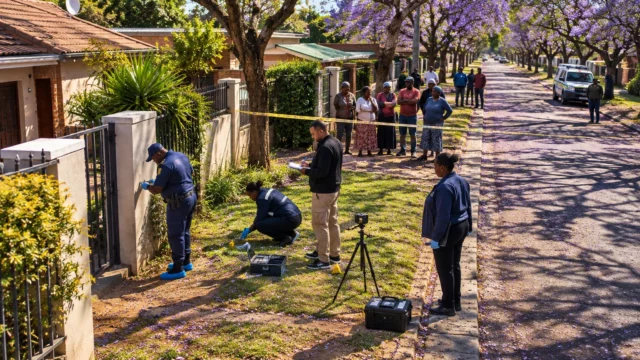
According to information made public, two Congolese nationals were arrested in Durban after attempting to enter a secure area of the summit using badges belonging to other people. They are to remain in custody until 24 August, when their bail application is due to be considered. The charges reportedly include fraud, identity theft and violating South African regulations on the security of gatherings.
A Zimbabwean national was also arrested as part of the same operation. He is suspected of trying to obtain accreditation by posing as an artist, while the authorities also accuse him of staying in South Africa illegally. At a summit of this kind, accreditation is not an administrative formality. It is a security filter. The authorities have also stressed that official badges may not be lent, shared, forged or used by anyone other than the person to whom they were issued.
This tougher approach forms part of a broader framework. The joint security and intelligence structure, NATJOINTS, had already said that comprehensive protection plans were in place for the Durban meeting. The structure coordinates the police, intelligence services and emergency services. It has a dual objective: to protect the heads of state attending and to prevent any incident that could disrupt the meeting. The arrest of people trying to bypass controlled access shows that the surveillance system worked, at least in this particular instance.
However, a simplistic interpretation should be avoided. Southern Africa is a region of intense movement. Congolese, Zimbabwean, South African, Mozambican and Botswanan nationals regularly cross borders to work, trade, study or join family members. The issue, then, is not mobility itself. It is bypassing access rules for a sensitive area, in an environment where summit security depends on the strict identification of authorised individuals.
What Durban says about South Africa and SADC
For South Africa, the stakes go beyond its public-order image. The country is hosting a summit even as its domestic security policy remains under pressure, amid efforts to combat trafficking, manage migration and protect major events. In this context, holding a SADC meeting without any major incident would send a diplomatic signal. It would show that the South African administration can manage a high-level regional gathering while ensuring the movement of delegations and enforcing access controls.
For SADC, the episode is a reminder of another obvious point: regional integration depends on trust. Industrialisation, logistics corridors, agriculture and youth employment are often discussed. But these ambitions can advance only if shared institutions are reliable. A summit that is secure but vulnerable to accreditation failures sends an ambiguous message. By contrast, rigorous security strengthens the bloc’s ability to organise regular meetings, host sensitive decisions and preserve institutional continuity.
The Durban summit also set out several key priorities. SADC wants to accelerate agricultural transformation, develop skills, encourage innovation and support job creation for young people. It also wants to facilitate trade in agricultural products and reduce non-tariff barriers, the administrative obstacles that slow regional commerce. Finally, climate issues featured prominently, particularly in the face of droughts and the effects of El Niño, which are undermining food supplies in several southern African countries.
This is where the continental significance becomes clear. In Africa, regional summits are more than ceremonies. They are testing grounds for collective governance. What is at stake in Durban concerns SADC, but also the broader idea of an Africa capable of holding its meetings, securing its institutions and harmonising its rules without relying on external arbitration. At a time when the African Union is encouraging greater coordination among regional economic communities, the practical success of a summit carries almost as much weight as its final communiqué.
The next meeting of SADC heads of state and government is already scheduled for Zambia, which is to host the organisation’s 47th summit. Until then, Durban will leave a clear lesson: in a region where cooperation is central, secure access, reliable accreditation and discipline in shared security arrangements are also signs of political maturity.