Algeria
 Egypt
 Libya
 Morocco
 Sudan
 Tunisia
 Benin
 Burkina Faso
 Cabo Verde
 Côte d'Ivoire
 Ghana
 Guinea
 Guinea-Bissau
 Liberia
 Mali
 Mauritania
 Niger
 Nigeria
 Senegal
 Sierra Leone
 The Gambia
 Togo
 Cameroon
 Central African Republic
 Chad
 DR Congo
 Equatorial Guinea
 Gabon
 Republic of the Congo
 São Tomé and Príncipe
 Burundi
 Comoros
 Djibouti
 Eritrea
 Ethiopia
 Kenya
 Madagascar
 Malawi
 Mauritius
 Mozambique
 Rwanda
 Seychelles
 Somalia
 South Sudan
 Tanzania
 Uganda
 Angola
 Botswana
 Eswatini
 Lesotho
 Namibia
 Zambia
 Zimbabwe
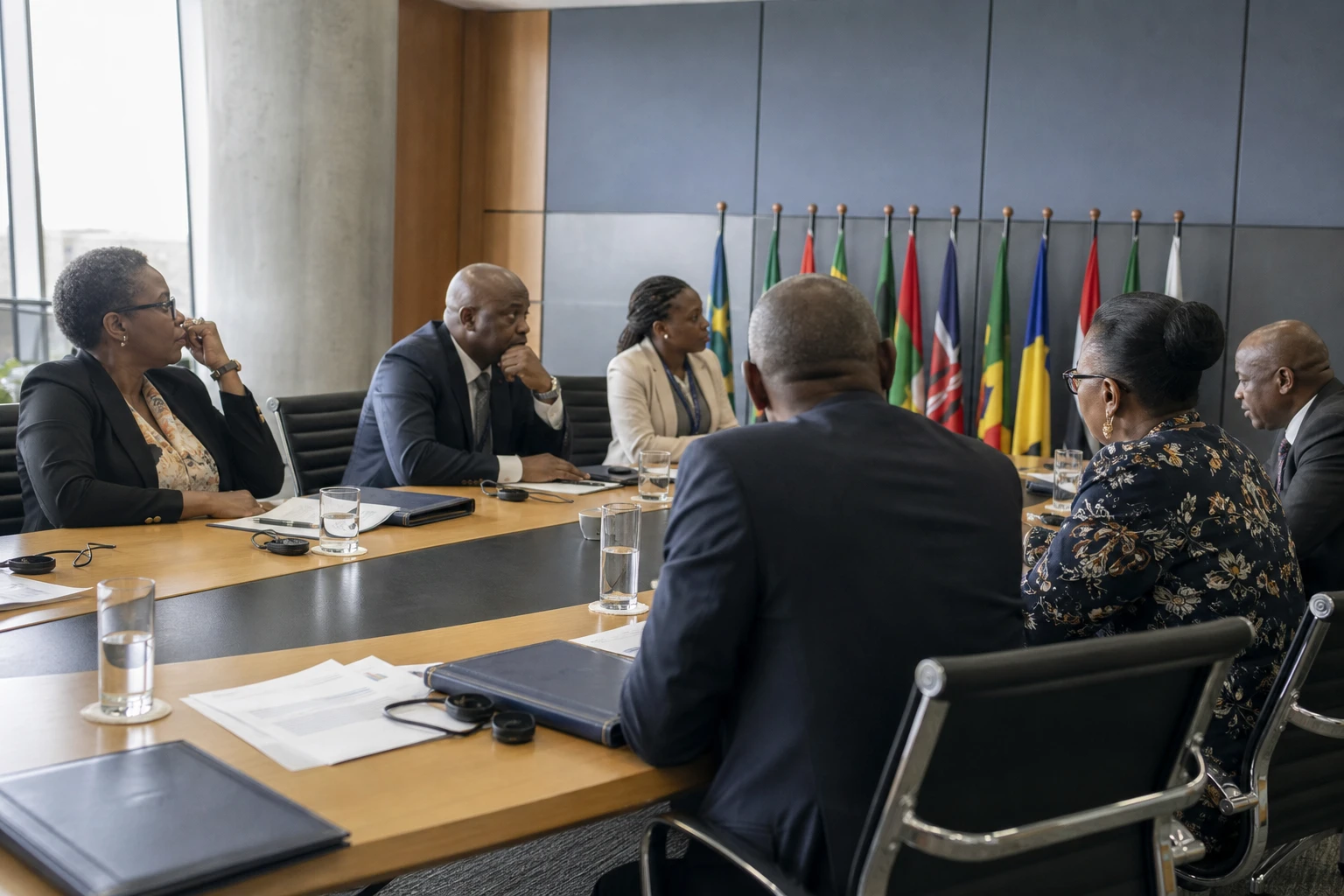
In Durban, migration is no longer an issue confined to government offices. It has moved into the streets, among shops, working-class neighbourhoods and queues outside public services. On Wednesday 30 September 2026, a new protest showed that tensions remain high, three months after the nationwide demonstrations of 30 June.
In Durban, a smaller protest but tensions remain high
Dozens of people marched through central Durban in response to a call by March and March, a civic movement demanding stricter immigration controls and the departure of people in an irregular situation. The march was led by Jacinta Ngobese-Zuma, a prominent figure in the movement and a former radio presenter in KwaZulu-Natal province.
Protesters repeated their demands on jobs, housing, security and access to public services. The turnout, however, appeared lower than at the demonstration held on 30 June, when several South African cities saw coordinated protests against irregular immigration.
The movement had set 30 September as a new political and symbolic deadline. Yet no civic group has the legal power to expel anyone from the country. In South Africa, checks, arrests and deportations are the responsibility of the state, notably the Department of Home Affairs, the Border Management Authority and the police.
South African authorities have also stressed that individuals cannot demand identity documents from people in the street or carry out immigration checks themselves. The government says it wants to combat irregular immigration through administrative and judicial procedures while protecting foreign nationals from intimidation.
Many departures, but figures are hard to compare
More than 200,000 people are reported to have left South Africa since the campaign began, according to a tally attributed to figures provided by several African governments that organised the return of their nationals. The total, however, covers different circumstances: deportations ordered by the authorities, voluntary repatriations and departures prompted by fear.
Official South African data offer a more precise, but more limited, picture. The government said that 68,327 people in an irregular situation had been repatriated between 14 June and 24 July 2026. Of them, 81% were identified as Malawian nationals, 16% as Zimbabweans and 3% as Mozambicans.
In a separate update, the Department of Home Affairs reported 18,816 formal deportations between 1 April and 31 July. These figures cannot simply be added together. They cover different periods and do not always refer to the same legal procedure.
The distinction matters. A person deported following an administrative decision is not in the same situation as a national who agrees to a return organised by their embassy. Similarly, the term “foreigner” encompasses very different circumstances: a lawful worker, asylum seeker, refugee, student, trader or person without a residence permit.
Anger fuelled by social hardship
In Durban, as in other South African cities, demands to curb immigration are rooted in real problems. Residents complain about delays in public services, unemployment, housing costs, trafficking and insecurity. In neighbourhoods where the administration is failing, the presence of foreign nationals can become a visible sign of a wider crisis.
But this view can quickly cast migrants as responsible for problems that also stem from national policy decisions. Informal employment, for example, depends on employers who often recruit vulnerable workers. The South African government has announced inspections that will also target companies employing people without authorisation.
The issue of public services requires the same caution. South Africa’s Constitution and several national laws protect access to essential healthcare and children’s rights, regardless of their parents’ nationality. Tensions in schools, hospitals or aid centres therefore cannot be reduced to a simple confrontation between South Africans and foreigners.
On the ground, the consequences are very real. Foreign traders have closed their shops for fear of looting. Families have left their homes. In Durban, asylum seekers and migrants have also gathered outside government offices to seek protection, saying they had been driven from their homes or workplaces.
The events of 30 June are still fresh in people’s minds
The September protest comes after a period of violence and intimidation. South African authorities have confirmed that at least four people died in violence linked to the anti-immigration surge. Several African governments have reported higher death tolls among their nationals. These discrepancies show that the toll remains incomplete and should be presented with caution.
The events of 2026 have stirred painful memories. In 2008, xenophobic violence left more than 60 people dead and displaced tens of thousands. In 2019, fresh attacks hit Johannesburg and Durban, among other places. The recurrence of these episodes explains the increased police presence around current demonstrations.
The government is trying to hold a difficult line. It wants to present a tougher immigration policy in response to growing electoral and social pressure. At the same time, it must prevent enforcement operations from turning into collective hunts or targeting people on the basis of their appearance, language or perceived origin.
An issue that extends beyond South Africa’s borders
The consequences reach far beyond South Africa. The main countries affected by the returns are its neighbours in southern Africa, notably Malawi, Zimbabwe and Mozambique. Departures disrupt the incomes of families that rely on remittances sent from Durban, Johannesburg or mining areas.
The Southern African Development Community, or SADC, is directly concerned. The regional organisation supports the movement of people, cross-border trade and cooperation between states. It must also contend with each country’s sovereign right to control its borders and deport people who do not meet the conditions for staying.
For Pretoria, the next step will be to show that firm administrative action can go hand in hand with the protection of fundamental rights. For countries of origin, the urgent task is to support their nationals, verify the conditions of returns and prevent reprisals. As for Durban’s residents, they are above all waiting for progress on jobs, security and public services.
The new demonstration on 30 September does not bring this chapter to a close. Rather, it confirms that migration has become a lasting feature of South Africa’s public debate. The next enforcement operations, court decisions and authorities’ ability to prevent violence will show whether the crisis remains a political battle or continues to drive forced departures.