Algeria
 Egypt
 Libya
 Morocco
 Sudan
 Tunisia
 Benin
 Burkina Faso
 Cabo Verde
 Côte d'Ivoire
 Ghana
 Guinea
 Guinea-Bissau
 Liberia
 Mali
 Mauritania
 Niger
 Nigeria
 Senegal
 Sierra Leone
 The Gambia
 Togo
 Cameroon
 Central African Republic
 Chad
 Equatorial Guinea
 Gabon
 Republic of the Congo
 São Tomé and Príncipe
 Burundi
 Comoros
 Djibouti
 Eritrea
 Ethiopia
 Kenya
 Madagascar
 Malawi
 Mauritius
 Mozambique
 Rwanda
 Seychelles
 Somalia
 South Sudan
 Tanzania
 Uganda
 Angola
 Botswana
 Eswatini
 Lesotho
 Namibia
 South Africa
 Zambia
 Zimbabwe
Extracting cobalt or copper is not enough to build an industry. For the Democratic Republic of the Congo (DRC), the challenge now is to process more of its minerals locally, then ensure the Congolese economy benefits from the associated jobs, skills and revenues.
This ambition was brought back to the centre of debate in Kinshasa on Monday 23 November 2026. But several conditions still need to be met to turn political will into factories capable of producing sustainably: electricity, transport, financing and predictable rules.
From the ground to value chains
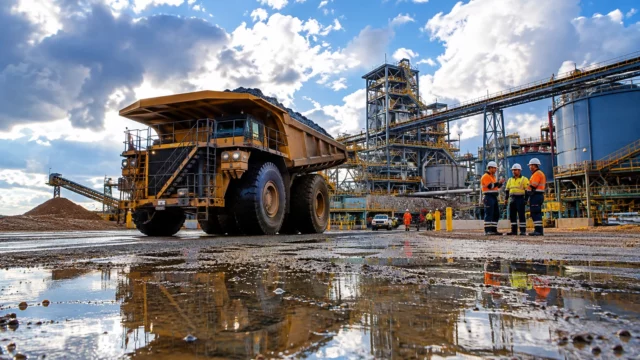
The DRC plays a major role in global mineral supply. In 2024, it accounted for about 75% of the world’s mined cobalt, according to the US Geological Survey. This gives the country strategic weight, as cobalt and copper are part of industrial supply chains linked in particular to batteries, electricity grids and technological equipment.
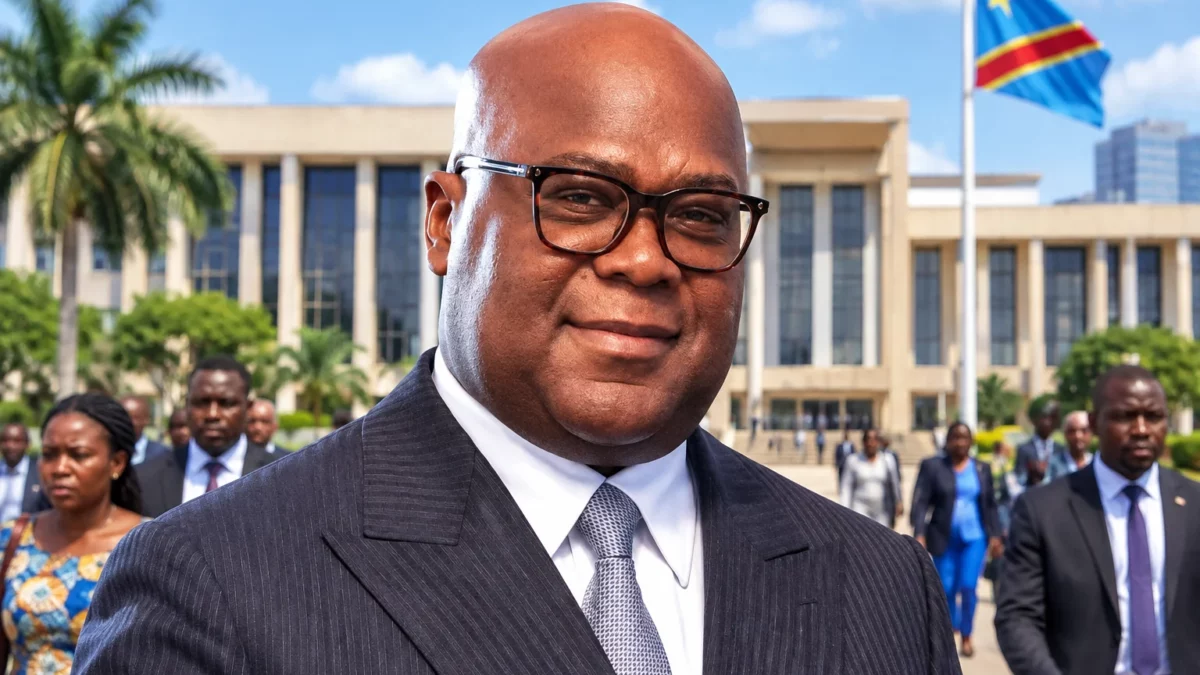
Yet producing a raw material does not mean controlling the stages that follow. Refining, component manufacturing and assembly often take place elsewhere. A share of the added value, skilled jobs and expertise is then lost to producer countries. This is the imbalance Félix Tshisekedi denounced at the opening of the 2026 Makutano Mining Forum, devoted to critical minerals.
“Our country must no longer be content with being a major mineral producer. It must become an economy capable of exercising greater control over their processing and value creation,” the Congolese president said, according to the presidency. He also cited access to energy, transport infrastructure, training and transparency among the conditions that need to be strengthened.
A course already set, but still to be made reality
The speech is part of a broader strategy. The 2024-2028 National Strategic Development Plan provides for support for metallurgy, the development of certain mining by-products and the creation of value chains around strategic minerals. The DRC and Zambia have also worked on a plan for a cross-border special economic zone for batteries and electric vehicles.
Processing activities already exist. The DRC’s report to the World Trade Organization notes, in particular, a hydrometallurgical plant inaugurated in 2023, germanium concentrates processed locally since 2024 and the launch of a pilot gold refinery in Kalemie in March 2026. These steps show that processing is more than an announcement. They do not, however, yet amount to an integrated industry capable of treating a wide range of minerals and supplying finished products on a large scale.
The distinction matters. Processing ore locally can increase its value, but does not automatically ensure that the benefits are shared with the communities concerned. Skilled jobs, local businesses able to supply the sites, transparently applied tax rules and measures to limit environmental damage are also needed. Without these safeguards, added value may remain concentrated in the hands of a few players.
Electricity and transport corridors: prerequisites for the industrial drive
The first obstacle is practical. Processing facilities consume large amounts of electricity and need a reliable supply. A company cannot plan production if it has to compensate for power cuts or bear high energy costs. The mining areas of Haut-Katanga and Lualaba therefore need reliable electricity capacity, as well as roads and railways to transport inputs and processed products.
Regional corridors can broaden access to markets. The Lobito Corridor, which links mining areas in the DRC and Zambia to the Angolan port of Lobito, aims to facilitate trade with international markets. It does not replace domestic infrastructure or investment in industrial capacity. It could, however, help reduce the logistical isolation of some regions if connections, services and trade rules are in place.
Local processing also requires capital, technology and skills. Governments must strike a balance between attracting investors and preserving national bargaining power. For mining companies, a processing requirement is viable only if energy and transport are available. For workers and local businesses, the challenge is to ensure projects deliver training, subcontracting opportunities and lasting jobs, rather than merely exports of intermediate products.
A Congolese issue with regional implications
The issue extends beyond the DRC’s borders. As a member of the Southern African Development Community (SADC), a regional economic cooperation organisation, the country shares resources, infrastructure and market opportunities with its neighbours. The battery strategy pursued with Zambia illustrates this interdependence: a production chain can involve several countries, from extraction to refining and manufacturing.
This cooperation can strengthen producer countries’ bargaining power in international markets. It nonetheless requires partners to agree on the sharing of investment, standards, access to energy and the distribution of jobs. At continental level, the African Union is also advocating greater processing of resources in Africa. But shared ambitions will yield results only if projects are funded, implemented and assessed transparently.
In Kinshasa, the president’s message sets a direction; it does not yet prove that the industrial shift is assured. Progress will be measured by concrete decisions: the availability of electricity, infrastructure development, workforce training and the commissioning of processing plants. For Congolese people living near mining sites as well as workers in cities, this is where the difference will be made between extracted wealth and an activity that sustains the national economy over the long term.