Algeria
 Egypt
 Libya
 Morocco
 Sudan
 Tunisia
 Benin
 Burkina Faso
 Cabo Verde
 Côte d'Ivoire
 Ghana
 Guinea
 Guinea-Bissau
 Liberia
 Mali
 Mauritania
 Niger
 Nigeria
 Senegal
 Sierra Leone
 The Gambia
 Togo
 Cameroon
 Central African Republic
 Chad
 DR Congo
 Equatorial Guinea
 Gabon
 Republic of the Congo
 São Tomé and Príncipe
 Burundi
 Comoros
 Djibouti
 Eritrea
 Ethiopia
 Kenya
 Madagascar
 Malawi
 Mauritius
 Mozambique
 Rwanda
 Seychelles
 Somalia
 South Sudan
 Tanzania
 Angola
 Botswana
 Eswatini
 Lesotho
 Namibia
 South Africa
 Zambia
 Zimbabwe
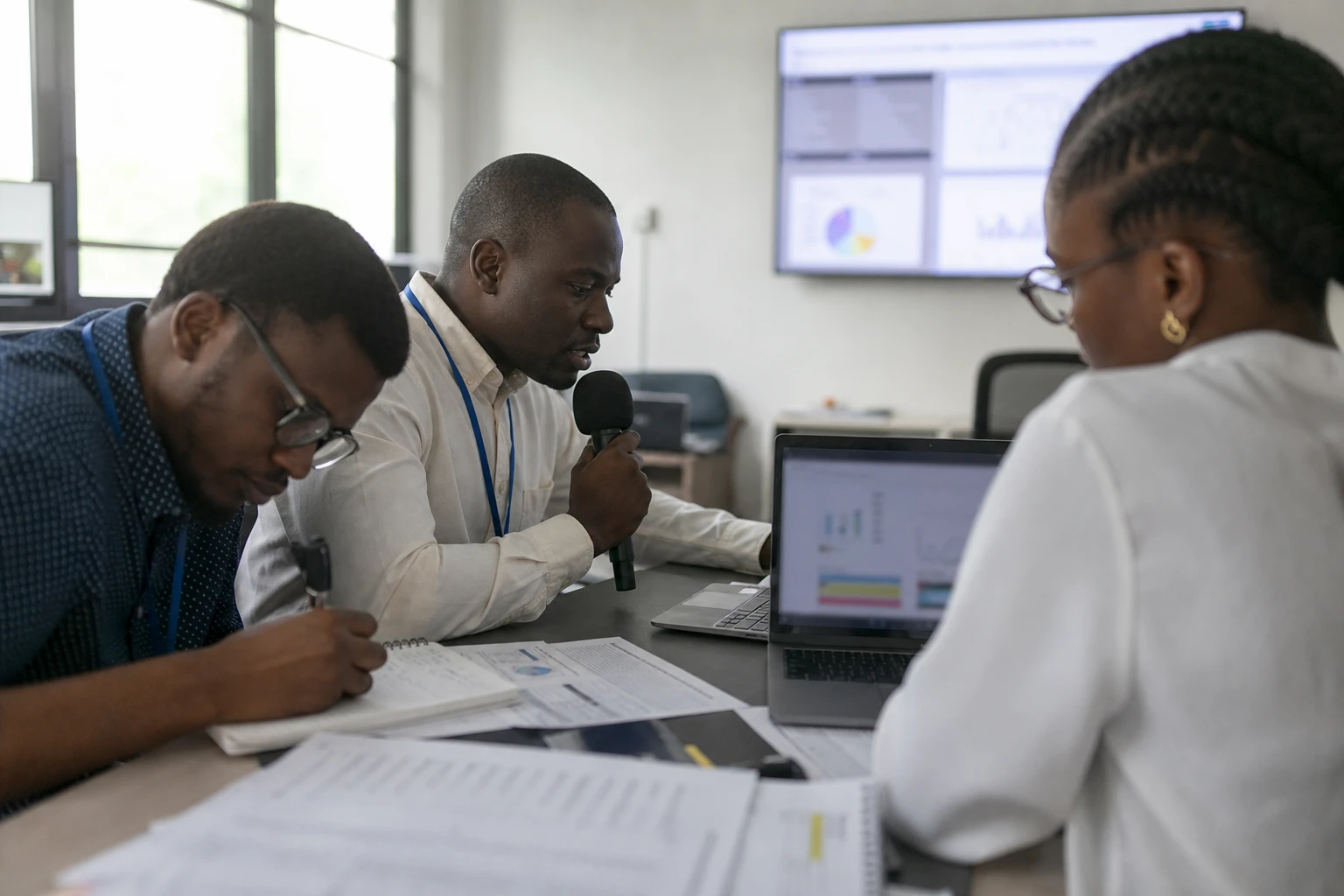
In Ituri, the response is unfolding as much in villages as in treatment centres
In the east of the Democratic Republic of the Congo, Ebola is never just an epidemiological curve. The virus moves through fragile health zones, along difficult roads, among displaced families and in communities that have already learned to be wary of health alerts. Once again, the focus is on Ituri, with a simple and stark objective: break the chain of transmission before it reaches other provinces and further fuels the regional crisis.
The context matters. The DRC is facing its 17th Ebola outbreak since the virus was discovered in 1976 in Yambuku, in what is now Équateur province. This time, the outbreak is concentrated mainly in Ituri, but also affects North Kivu, South Kivu, Haut-Uele and Tshopo. In a country where health crises often overlap with insecurity and population displacement, controlling Ebola depends as much on medicine as on access to affected areas and local trust.
What the official figures show
The latest data published by the WHO show that the outbreak in the DRC remains active. As of 15 July 2026, the organisation had recorded 2,124 confirmed cases and 828 confirmed deaths in the country. Meanwhile, Uganda had reported no new cases since 21 June and, on 16 July, entered the 42-day countdown that precedes the official end of an outbreak, provided no new cases emerge.
The figures change quickly, as laboratory investigations sometimes catch up with reporting delays. The WHO notes that some newly reported cases and deaths may relate to older records awaiting confirmation. As of 16 July, the agency said the outbreak in the DRC had already passed 2,073 cases and 796 deaths, making it the third-largest Ebola outbreak ever recorded at that point.
On the ground, the scientific response offers an encouraging sign. On 2 July, a clinical trial called PARTNERS began enrolling patients in Ituri to test the first effective treatments for disease caused by the Bundibugyo virus, an Ebola strain. The trial is being co-ordinated in the DRC by the National Institute of Biomedical Research, with the Antwerp Institute of Tropical Medicine and the University of Oxford, under the WHO’s sponsorship and with support from Africa CDC, the African Union’s health agency.
Why the outbreak matters beyond the DRC
Uganda’s experience shows the regional dynamics of Ebola. The first cases there were linked to travel from the DRC, followed by a few secondary transmissions. The WHO confirms that there was no sustained community transmission in Uganda, underscoring the importance of border checks, clinical surveillance and rapid data-sharing between Kampala and Kinshasa.
For Africa, the stakes extend beyond the Ituri-Kampala corridor. Africa CDC has urged countries to avoid general travel restrictions, which it considers ineffective and costly for communities, trade and humanitarian aid. The continental agency instead advocates targeted measures: surveillance at points of entry, cross-border co-ordination, protection for health workers and dialogue with communities. This approach aligns with the WHO’s emphasis on involving local populations in the response.
The United States, meanwhile, has tightened its measures. US authorities have suspended or restricted entry for some people who recently stayed in the DRC, Uganda or South Sudan, while stepping up health screening on arrival. These restrictions illustrate a familiar tension: how to protect people without paralysing the movement needed for trade, families and healthcare. For Kinshasa, the issue is sensitive, as excessive restrictions could worsen the logistical isolation of areas that are already difficult to reach.
What the situation reveals about African public health
This outbreak says something important about Africa’s response capacity. On the one hand, it highlights the persistent fragility of health systems in the east of the DRC: a shortage of nearby laboratories, insecurity, the spread of rumours and delays in treatment. On the other, it also shows real progress: regional co-ordination, clinical trials conducted locally, community engagement and the growing role of Africa CDC in continental health governance.
The course of the outbreak in the DRC remains decisive for the entire Great Lakes region. If Ituri holds, pressure will ease on North Kivu, South Kivu and neighbouring countries. If the chain of transmission continues, the consequences will quickly extend beyond healthcare: slower cross-border trade, increased monitoring at crossing points, strained health systems and social distrust. At the continental level, the situation is also a reminder that a health alert in one African country can become, within days, a test of regional solidarity and scientific sovereignty.