Algeria
 Egypt
 Libya
 Morocco
 Sudan
 Tunisia
 Benin
 Burkina Faso
 Cabo Verde
 Côte d'Ivoire
 Ghana
 Guinea
 Guinea-Bissau
 Liberia
 Mauritania
 Niger
 Nigeria
 Senegal
 Sierra Leone
 The Gambia
 Togo
 Cameroon
 Central African Republic
 Chad
 DR Congo
 Equatorial Guinea
 Gabon
 Republic of the Congo
 São Tomé and Príncipe
 Burundi
 Comoros
 Djibouti
 Eritrea
 Ethiopia
 Kenya
 Madagascar
 Malawi
 Mauritius
 Mozambique
 Rwanda
 Seychelles
 Somalia
 South Sudan
 Tanzania
 Uganda
 Angola
 Botswana
 Eswatini
 Lesotho
 Namibia
 South Africa
 Zambia
 Zimbabwe
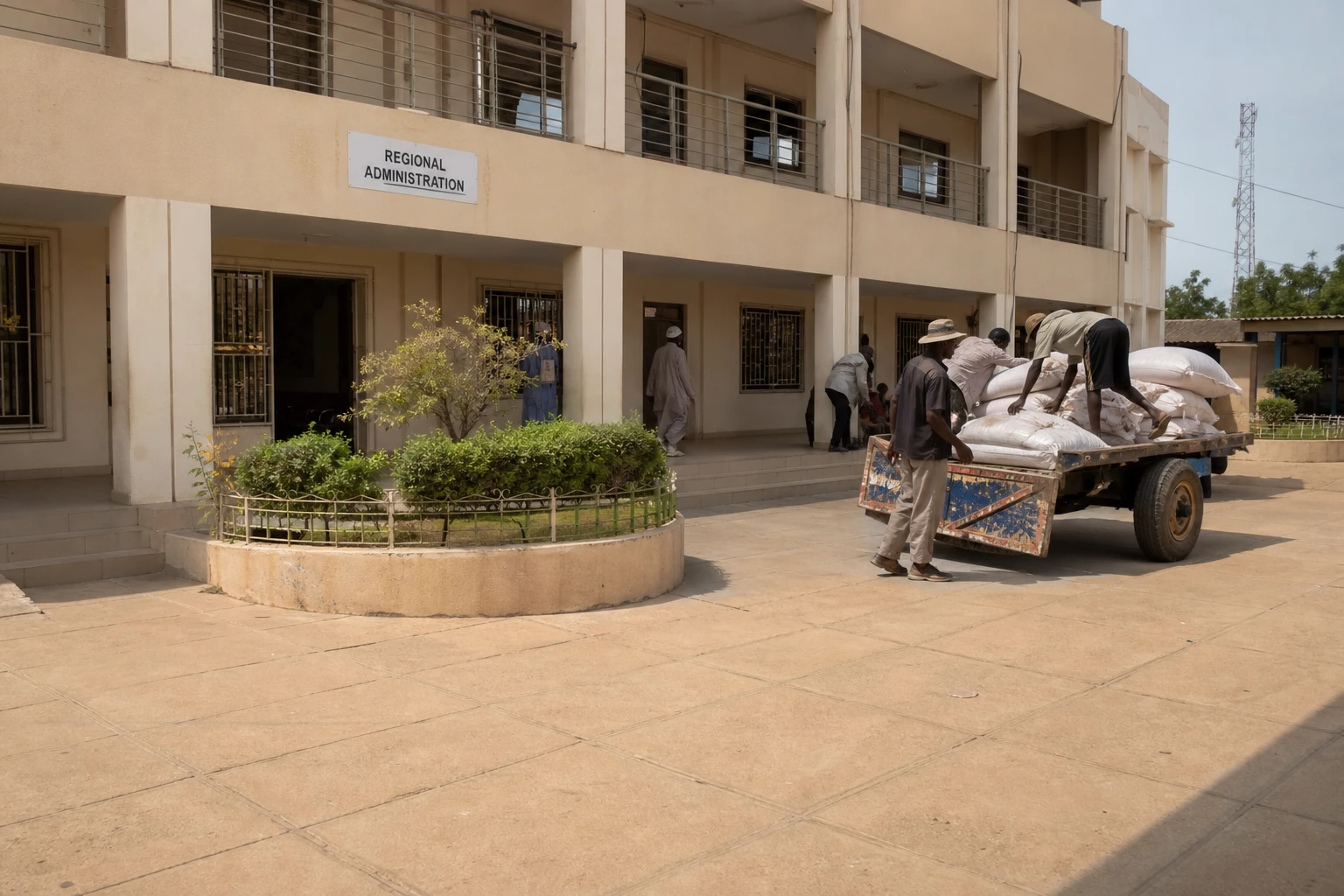
Long-awaited supplies in an area where every shipment counts
In Diafarabé, in the Ténenkou cercle, the arrival of supplies is no mere logistical episode. In this commune in central Mali, a convoy can determine what people eat for a week, sometimes a month. When land access is cut off, the river becomes the last lifeline, and every sack of rice takes on political as well as nutritional significance.
The town has been under pressure for months from the Group for the Support of Islam and Muslims, or JNIM, an al-Qaeda-linked jihadist coalition. Local sources and authoritative analyses describe an active blockade of Diafarabé since 2025, with direct effects on food, medicine and movement. In the Inner Niger Delta, where canoes remain a common means of transport, a town’s isolation quickly takes on a different character when it becomes prolonged.
Central Mali is not peripheral in any limited sense of the word. It is an area of transport, fishing, livestock-rearing and trade, structured around the Niger River and its tributaries. Diafarabé is part of this geography. When roads are closed, supplies depend on the season, the wind, water levels and security. The problem is therefore not only military. It is also economic, social and nutritional.
What the arrival of the canoes tells us
On Monday 27 July, around 30 canoes loaded with supplies finally reached Diafarabé. The transport was organised by residents, with security support from the Malian army. The arrival brought relief to a population exhausted by months of shortages. But the operation was only partial. The quantities delivered did not meet the needs of the local market or the most vulnerable households.
This renewed supply comes after several warnings. In the spring, Diafarabé’s mayor had already warned that the population risked running out of food. Humanitarian reports and regional analyses also pointed to persistent blockages in several localities in Mopti, with people forced to move to other cercles and growing pressure on basic foodstuffs. Diafarabé’s case therefore illustrates a crisis that did not begin on 27 July. It has been going on for some time.
The choice of the river route is not incidental. It partly avoids exposed roads, while recalling a long-established reality in the country: in the Inner Niger Delta, canoes are not an improvised rescue measure, but an entrenched means of transport. That said, a makeshift solution remains fragile. The wind, the load, the condition of the boats and the security of the riverbanks can all be enough to halt a convoy. This helps explain the small volumes that arrived.
The relief expressed by residents should not obscure the underlying problem. As long as the blockade remains in place, every supply delivery will resemble a temporary breakthrough, not a lasting return to normality. The immediate risks are well known: renewed stock shortages, soaring prices, greater dependence on local networks and continued pressure on families, especially in an area where informal activity accounts for a large share of incomes.
A local issue, but a test for Bamako and the region
For the Malian authorities, Diafarabé poses a simple but difficult question: how can an area be reopened without exposing it to greater danger? In a country where JNIM has imposed blockades on several routes since 2025, the response cannot be purely military. It also requires securing supply chains, supporting local authorities and maintaining regular contact with isolated populations. Without that, the blockade becomes a war of attrition.
The Mopti region sits at the intersection of several vulnerabilities: insecurity, restricted movement, pressure on resources and populations whose livelihoods depend on the river, markets and local trade. Local authorities, traders, fishers and livestock herders are not affected by the crisis in the same way. Towns feel supply disruptions first. Rural areas are isolated more quickly. And women, who are often responsible for managing household food supplies, bear a substantial share of the social cost.
Regionally, Diafarabé’s case resonates far beyond Mali. ECOWAS condemned terrorist attacks in the country in April 2026, while security discussions on the Sahel continue to be closely followed by the African Union and regional partners. The issue therefore extends beyond a single commune: it affects the movement of goods, the stability of trade corridors and the ability of West African states to protect transit areas.
What needs to be watched now comes down to one question: will the supply delivery on 27 July remain an isolated event, or will it mark the beginning of more regular access? In central Mali, the answer will say much about the state’s ability to regain a foothold in localities under pressure. It will also show whether jihadist blockades continue to dictate the pace of daily life, or whether civilian supply routes can gradually gain the upper hand.