Algeria
 Egypt
 Libya
 Morocco
 Sudan
 Tunisia
 Burkina Faso
 Cabo Verde
 Côte d'Ivoire
 Ghana
 Guinea
 Guinea-Bissau
 Liberia
 Mali
 Mauritania
 Niger
 Nigeria
 Senegal
 Sierra Leone
 The Gambia
 Togo
 Cameroon
 Central African Republic
 Chad
 DR Congo
 Equatorial Guinea
 Gabon
 Republic of the Congo
 São Tomé and Príncipe
 Burundi
 Comoros
 Djibouti
 Eritrea
 Ethiopia
 Kenya
 Madagascar
 Malawi
 Mauritius
 Mozambique
 Rwanda
 Seychelles
 Somalia
 South Sudan
 Tanzania
 Uganda
 Angola
 Botswana
 Eswatini
 Lesotho
 Namibia
 South Africa
 Zambia
 Zimbabwe
A case that has become a test for Benin’s justice system
In Cotonou, a case opened amid uncertainty in 2010 has just reached a decisive stage. For Beninese people, the Dangnivo case is not merely an old judicial matter. It concerns the disappearance of a senior state official, the credibility of the public investigation and the ability of the justice system to rule on a dispute clouded by suspicion, delays and conflicting accounts.
Benin, whose capital is Porto-Novo and whose main judicial and political centre is Cotonou, is emerging from a period in which confidence in institutions has often been openly debated. In this context, every sensitive decision is read as having significance beyond its criminal implications. It says something about the country’s relationship with evidence, judicial time and the memory of political or trade union disappearances.
What the court decided
On Wednesday 22 July 2026, the Cotonou court sentenced Codjo Cossi Alofa to 30 years’ imprisonment in the case linked to the disappearance of Pierre Urbain Dangnivo. His co-defendant, Donatien Amoussou, was acquitted. The first reports available also indicate that the court rejected the defence’s request for handwriting analysis and ordered Dangnivo’s remains to be returned to his family.
The verdict follows a long series of proceedings. In March 2025, Benin’s Ministry of Justice announced that the trial would resume in the criminal sessions, following various additional investigative steps. The resumption confirmed that the case remained legally active, despite the years that had passed since the disappearance of the trade unionist and opposition figure, which occurred in August 2010 according to information published by the sources consulted.
The chronology matters. In this kind of case, time affects more than public opinion. It also weighs on the preservation of evidence, the reliability of testimony and the memory of events. The longer a case drags on, the more the justice system must offset the loss of clarity with greater rigour. That is precisely what the Cotonou trial was expected to demonstrate.
A legal case, but also a matter of public trust
The Dangnivo case has taken on particular significance because it brings together several fault lines. First, the disappearance has never been fully explained in the public sphere in Benin. Then there is the long-running debate over the quality of the initial investigations. Finally, there is the challenge facing a justice system that comes under criticism when a trial takes more than a decade to reach a conclusion. In the case’s early years, Benin’s Constitutional Court was also petitioned, notably over the defendants’ pre-trial detention and allegations of violations of fundamental rights.
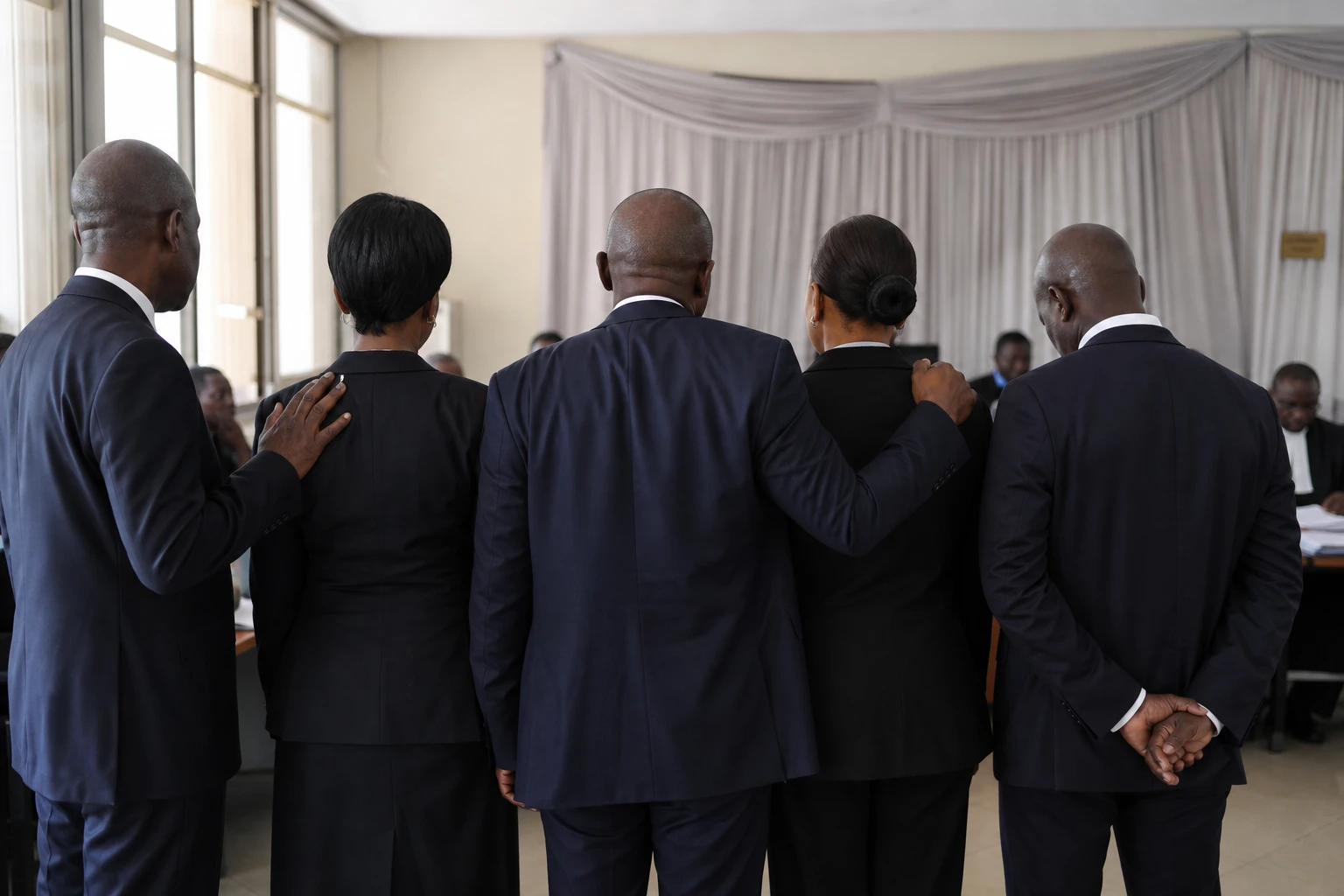
The sensitive issue is not only the sentence handed down. It also concerns perceptions of procedural fairness. According to several reports published on the day of the verdict, lawyers for the defence and the civil party left the courtroom, leaving it almost empty when the decision was delivered. In a case of such symbolic importance, that image matters as much as the ruling itself, since it fuels the view among some members of the public that the trial’s legitimacy will remain contested.
The recent proceedings also revealed another point: prosecutors had sought 30 years’ imprisonment for Codjo Alofa and the acquittal of Donatien Amoussou, while the defence challenged the consistency of dates, documents and material evidence. The court followed the main thrust of that position in Alofa’s case, but not in Amoussou’s. This closes part of the case without dispelling questions about how the original investigation was conducted.
What this means for those involved
For Pierre Urbain Dangnivo’s family, the co-defendant’s acquittal and the main defendant’s conviction may be seen as a step towards a form of judicial recognition. But the decision does not heal every wound. A disappearance remains a disappearance until the public account fully aligns with the experience of those closest to the person concerned. In cases of this kind, a verdict rarely brings relief on its own.
For the Beninese state, the significance is different. The justice system has shown it can see an old case through to its conclusion, even when it is politically and symbolically charged. That is an important signal in a member state of ECOWAS, where institutional stability also depends on courts’ ability to handle sensitive cases without allowing doubt to take root for the long term. The question here is not only one of punishment. It is about convincing people that the rule of law can withstand the passage of time.
For Beninese society, the stakes are broader still. The case is a reminder that disappearances, prolonged detention and political disputes are never viewed solely through the lens of an individual. They affect trade unions, the opposition, families and the public services responsible for preserving records of proceedings. In Porto-Novo as in Cotonou, the demand remains the same: transparent institutions, solid evidence and a justice system that speaks plainly.
Regional significance beyond Benin
Across West Africa, the case resonates beyond Benin. ECOWAS states all face, to varying degrees, the same twin challenge: safeguarding judicial independence and reassuring public opinion, which is often wary of trials with a strong political dimension. The Dangnivo case is a reminder that the duration of judicial proceedings can become a matter of sovereignty as much as a matter of law.
The case also says something about Benin’s place in the region. A country with a relatively well-established reputation for institutional stability, it is seeking to maintain that standing at a time when other West African states are experiencing military transitions, electoral tensions or debates over access to justice. A much-anticipated decision in such a long-running case thus becomes a regional benchmark for judicial practice.
One simple question now remains: does the verdict bring the case to an end, or does it open a new phase of litigation? The next steps will depend on the possible avenues of appeal and on whether the parties accept or challenge what the Cotonou court has decided. In a case in which time has already stretched everything out, what comes next will show whether Benin’s justice system has closed a chapter or merely set a new marker in a story still burdened by memory.