Algeria
 Egypt
 Libya
 Morocco
 Sudan
 Tunisia
 Burkina Faso
 Cabo Verde
 Côte d'Ivoire
 Ghana
 Guinea
 Guinea-Bissau
 Liberia
 Mali
 Mauritania
 Niger
 Nigeria
 Senegal
 Sierra Leone
 The Gambia
 Togo
 Cameroon
 Central African Republic
 Chad
 DR Congo
 Equatorial Guinea
 Gabon
 Republic of the Congo
 São Tomé and Príncipe
 Burundi
 Comoros
 Djibouti
 Eritrea
 Ethiopia
 Kenya
 Madagascar
 Malawi
 Mauritius
 Mozambique
 Rwanda
 Seychelles
 Somalia
 South Sudan
 Tanzania
 Uganda
 Angola
 Botswana
 Eswatini
 Lesotho
 Namibia
 South Africa
 Zambia
 Zimbabwe
A Beninese official at a pivotal post in eastern Congo
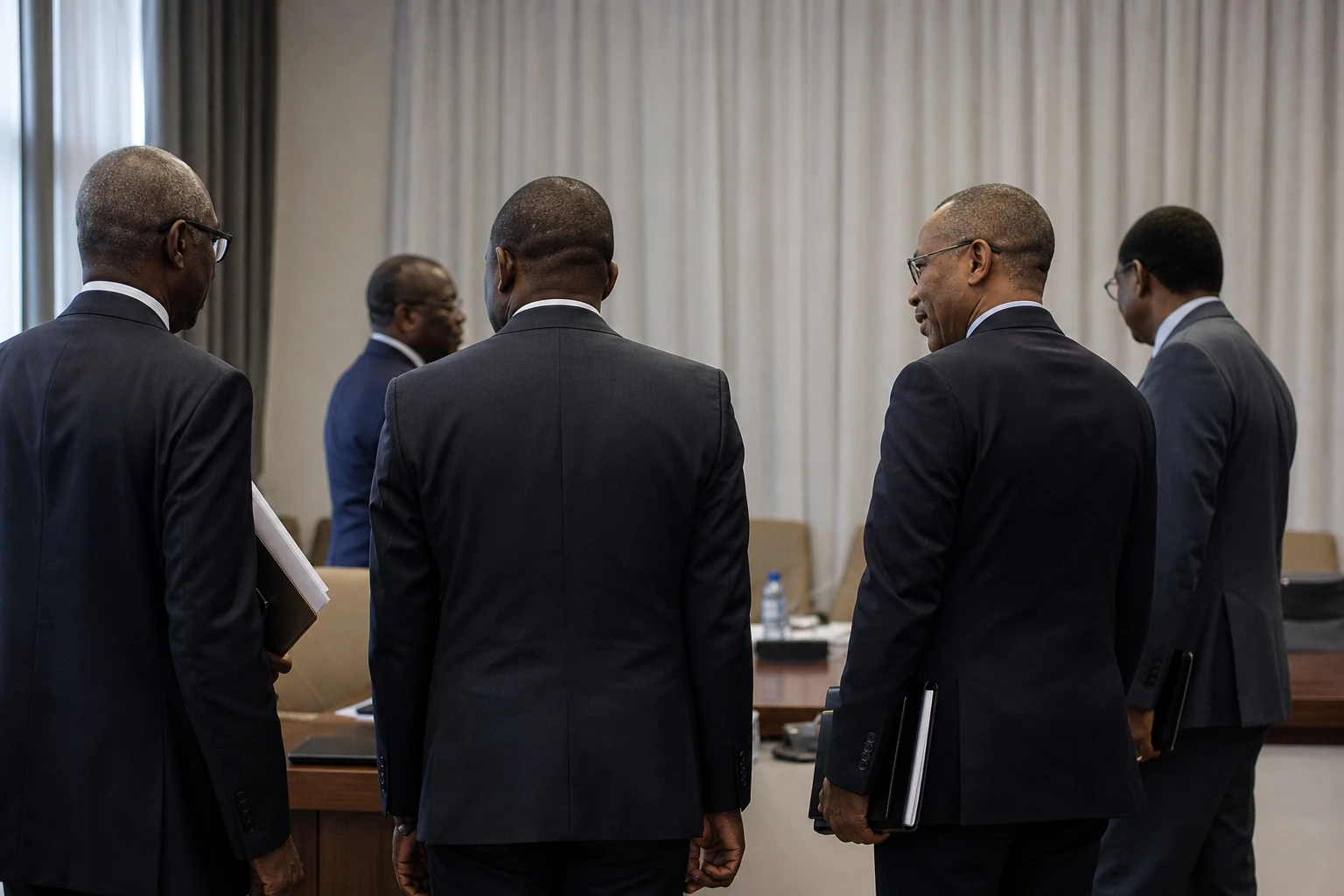
In Kinshasa and Bunia alike, the same urgent issues intersect: security, health, population displacement and the functioning of the state. In this environment, Damien Mama’s appointment places a Beninese official at the crossroads of several fronts in the UN’s work in the Democratic Republic of the Congo. Benin, whose constitutional capital is Porto-Novo, thus sees one of its citizens take up a role spanning stabilisation, humanitarian coordination and development.
The DRC remains a major area of work for the United Nations. MONUSCO retains a mandate to protect civilians and support peace, while the country team coordinates aid, programmes and emergency responses. In the east, the effects of armed violence continue to spill over into the local economy, roads, markets and access to healthcare. The UN mission is therefore operating in a setting where security is not a backdrop, but the very condition for public action.
What his new role entails
The UN Secretary-General has appointed Damien Mama Deputy Special Representative in the DRC, with the rank of Deputy Head of MONUSCO, while also entrusting him with the roles of acting Resident Coordinator and Humanitarian Coordinator in the country. In other words, he will have to link the mission’s diplomacy, emergency aid and planning across the UN system. This kind of post carries considerable weight, serving as an interface between the Congolese state, specialised agencies and international partners.
The role is not symbolic. It comes at a time when eastern Congo continues to face enormous needs and multiple risks. The United Nations said that, in June 2026, nearly 15 million people in the DRC needed humanitarian assistance, while more than half of all displaced people were living in areas affected by the Ebola epidemic and security unrest. Coordination is therefore a matter of logistics, prioritisation and protecting teams in the field.
Damien Mama succeeds Bruno Lemarquis in the acting role; Lemarquis has now been called to take on other responsibilities within the UN system. The change comes as the UN chain of command seeks to maintain continuity in a country where crises are piling up. James Swan’s appointment as head of MONUSCO has already marked a change in leadership, and Mama’s arrival completes this new leadership duo.
An African career forged in several fragile settings
Damien Mama’s profile is first and foremost that of a field practitioner. The United Nations describes him as an official with more than 20 years’ experience in development, humanitarian affairs and peacebuilding. Before his new assignment, he was the UNDP Resident Representative in the DRC, then acting Humanitarian and Resident Coordinator. This continuity matters, as it gives him first-hand insight into the key players, administrative tensions and provincial priorities.
His career has taken him to Burundi, Togo, Mali, South Sudan, Sierra Leone and Kosovo. He has also served with MONUSCO and MINUSMA, the UN mission deployed in Mali. In short, he knows settings where the state must be supported without being replaced. He has also worked with NGOs in West Africa on governance and civic education, two areas that help explain citizens’ expectations beyond immediate security concerns.
His education reinforces this profile. He holds a master’s degree in development management from Ruhr University Bochum in Germany, and a master’s degree in geography and land-use planning from the University of Abomey-Calavi in Benin. This dual grounding in technical and territorial matters partly explains his career in multilateral coordination systems. It links public policy to the realities of places, roads and services.
Why the appointment matters beyond Kinshasa
For the DRC, the immediate challenge is straightforward: to bring security, healthcare and relief efforts together in provinces where needs change rapidly. In Ituri, the epicentre of the 17th Ebola outbreak, declared on 15 May 2026, MONUSCO has already supported the transport of medical supplies and coordination with the WHO. The new official will have to maintain this link between the health emergency and humanitarian access, as the authorities and partners seek to prevent the epidemic from worsening displacement and hardship.
For Benin, the appointment illustrates something else: the movement of African expertise within major international organisations. An official educated at Abomey-Calavi and involved in African operations now holds a post that directly affects the stability of a country neighbouring Central Africa. This kind of career path also speaks to ECOWAS, the West African economic community, where the movement of public-sector and humanitarian experts remains an asset for member states.
At the continental level, the message is clear: peace missions are no longer confined to military deployments. They also rely on public health, mediation, displacement management, local reconstruction and coordination between agencies. This is the combination of challenges facing Damien Mama. What happens next will depend on the ability of MONUSCO, the Congolese government and African partners to contain crises without separating emergency action from long-term efforts.