
 Algeria
 Egypt
 Libya
 Morocco
 Sudan
 Tunisia
 Benin
 Burkina Faso
 Cabo Verde
 Côte d'Ivoire
 Ghana
 Guinea
 Guinea-Bissau
 Liberia
 Mali
 Mauritania
 Niger
 Nigeria
 Sierra Leone
 The Gambia
 Togo
 Cameroon
 Central African Republic
 Chad
 DR Congo
 Equatorial Guinea
 Gabon
 Republic of the Congo
 São Tomé and Príncipe
 Burundi
 Comoros
 Djibouti
 Eritrea
 Ethiopia
 Kenya
 Madagascar
 Malawi
 Mauritius
 Mozambique
 Rwanda
 Seychelles
 Somalia
 South Sudan
 Tanzania
 Uganda
 Angola
 Botswana
 Eswatini
 Lesotho
 Namibia
 South Africa
 Zambia
 Zimbabwe
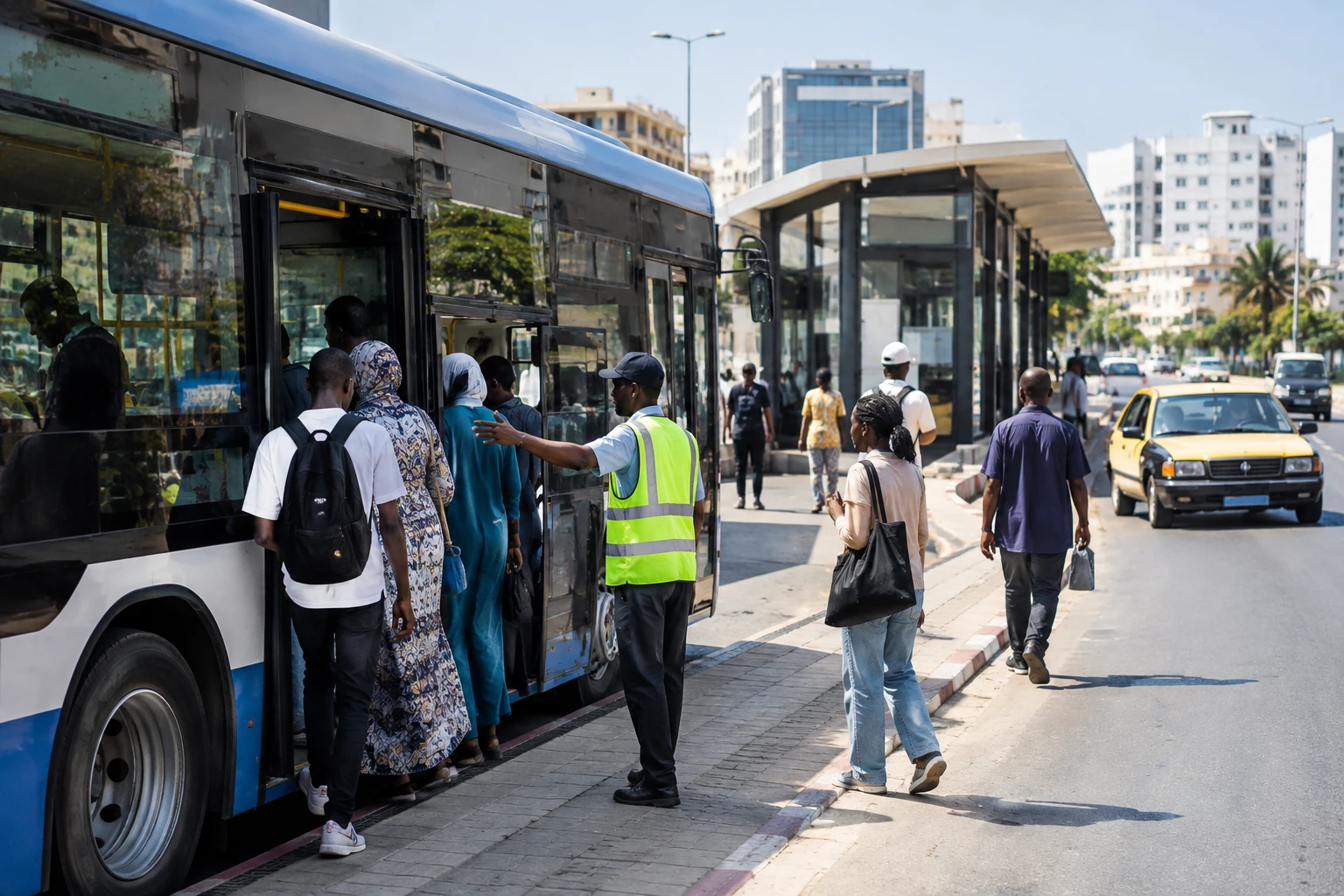
In Dakar, the Youth Olympic Games (YOG) are not being played out only in stadiums. Since they opened on 31 October, events have been spread across Dakar, Diamniadio and Saly. For residents and visitors alike, the challenge is to reach the venues without bringing to a standstill a capital where daily travel remains essential.
Three hubs, a transport network under pressure
The YOG are being held in Senegal from 31 October to 13 November 2026. Some 2,700 young athletes are taking part in the first Olympic competition to be held on the African continent. The venues are far apart: Dakar is hosting several events, Diamniadio is home to the Abdoulaye-Wade Stadium, among other facilities, and Saly is hosting competitions on the Petite-Côte. This geography makes it necessary to coordinate urban transport and intercity links.
The system relies on networks already used by Senegalese people: the Regional Express Train (TER), which links Dakar and Diamniadio; the Bus Rapid Transit (BRT); bus routes; and dedicated shuttles. CETUD, the public body responsible for organising urban transport in the Dakar region, is coordinating mobility information with the authorities and operators. The mobility committee is also planning operational monitoring of travel during the Games.
This organisation is part of a broader transformation of transport in the capital. The TER, which began operating in 2021, links Dakar and Diamniadio. The BRT, a bus system running on dedicated lanes, now supplements services on a major route across the urban area. But this infrastructure does not eliminate traffic jams or the dependence of many passengers on minibuses and informal public transport. The Games are therefore testing the ability to make different networks work together.
Shuttles and trains to reach the venues
For travel linked to the competitions, the YOG shuttle network supplements regular services. Information published by the mobility committee lists departures from several points in the region, including the African Renaissance Monument, Grand Médine, the National Arena, Guédiawaye, Keur Massar and Rufisque. Services also run to Thiès, Mbour and Saly. Timetables and frequencies vary by route, so it is better to check official information before setting out than to assume services run at the same frequency everywhere.
In Dakar, the BRT and buses can bring spectators closer to some venues. For Diamniadio, the TER provides a key link from the capital. Shuttles and buses then serve the competition venues. However, the distances to walk between a station and a venue may still be substantial. The final leg of the journey should therefore be planned in advance, particularly by people with reduced mobility, families and spectators travelling with children.
In Saly, dedicated services and park-and-ride facilities are intended to make it easier to reach the competitions. The principle is simple: leave your car away from the busiest areas, then continue by shuttle. This solution can reduce pressure around the venues, but its effectiveness depends on departure frequency, signage and coordination between the different transport services.
Motorists must also take account of temporary restrictions. Sections of the Corniche Ouest are due to close on 7, 8 and 10 November, from 6am to 4pm, for road events. Changes are also planned around Saly during certain competitions. Access to the motorways in Diamniadio may be restricted depending on vehicles and authorisations. These measures do not affect every neighbourhood or every day, so checking the day’s notices is essential.
The challenge: keeping the city moving
A traffic plan announced by the authorities comprises 166 measures across Dakar, Diamniadio and Saly. It includes diversions, checkpoints and lanes reserved for certain vehicles. The governor of Dakar summed up the aim as follows: “Allow the Games to function without preventing Dakar from functioning”, the Senegalese media outlet Dekkbi reported. The phrase highlights a practical constraint: Olympic lanes and restrictions must coexist with the journeys of workers, pupils, patients and local residents.
The impact will not be the same for everyone. Spectators with tickets can plan around shuttles and dedicated transport. Residents of neighbourhoods near the routes, meanwhile, may face detours or access checks. Workers who rely on cars, delivery drivers and small businesses are particularly affected by route changes and closure times. Conversely, frequent, well-signposted public transport can reduce the number of vehicles around the venues.
The system must also bring formal transport into line with the everyday economy. Taxis, minibuses and other local operators are part of how people actually get around Dakar. An organisation focused solely on delegations and spectators could risk overlooking residents’ needs. The challenge for the authorities is therefore as much social as logistical: keep access routes clear, inform local residents early enough and preserve ordinary journeys during peak periods.
A test that goes beyond the Games
For Senegal, the Games are a showcase for the continent, but also a test of coordination between cities and operators. Dakar, Diamniadio and Saly belong to different urban and economic areas. Connecting them during an international event offers a measure of the ability to organise travel beyond the boundaries of the capital. The challenge also concerns local authorities, security services, transport operators and passengers, not just the organising committee.
ECOWAS, the economic community of West African countries, is not organising transport for the Games. But Senegal’s experience could inform regional exchanges on urban transport, managing major events and serving outlying areas. The pan-African significance of Dakar 2026 is therefore also reflected in practical solutions: real-time information, reliable connections and equitable access to venues.
The Games continue until 13 November. Until then, traffic changes may evolve according to the competition schedule. The main measure of success will be the ability to welcome spectators without making Senegalese people’s ordinary journeys more difficult. Future assessments will need to distinguish between traffic flow around the venues and the everyday experience in the neighbourhoods along the routes.



