
 Algeria
 Egypt
 Libya
 Morocco
 Sudan
 Tunisia
 Benin
 Burkina Faso
 Cabo Verde
 Côte d'Ivoire
 Ghana
 Guinea
 Guinea-Bissau
 Liberia
 Mali
 Mauritania
 Niger
 Nigeria
 Sierra Leone
 The Gambia
 Togo
 Cameroon
 Central African Republic
 Chad
 DR Congo
 Equatorial Guinea
 Gabon
 Republic of the Congo
 São Tomé and Príncipe
 Burundi
 Comoros
 Djibouti
 Eritrea
 Ethiopia
 Kenya
 Madagascar
 Malawi
 Mauritius
 Mozambique
 Rwanda
 Seychelles
 Somalia
 South Sudan
 Tanzania
 Uganda
 Angola
 Botswana
 Eswatini
 Lesotho
 Namibia
 South Africa
 Zambia
 Zimbabwe
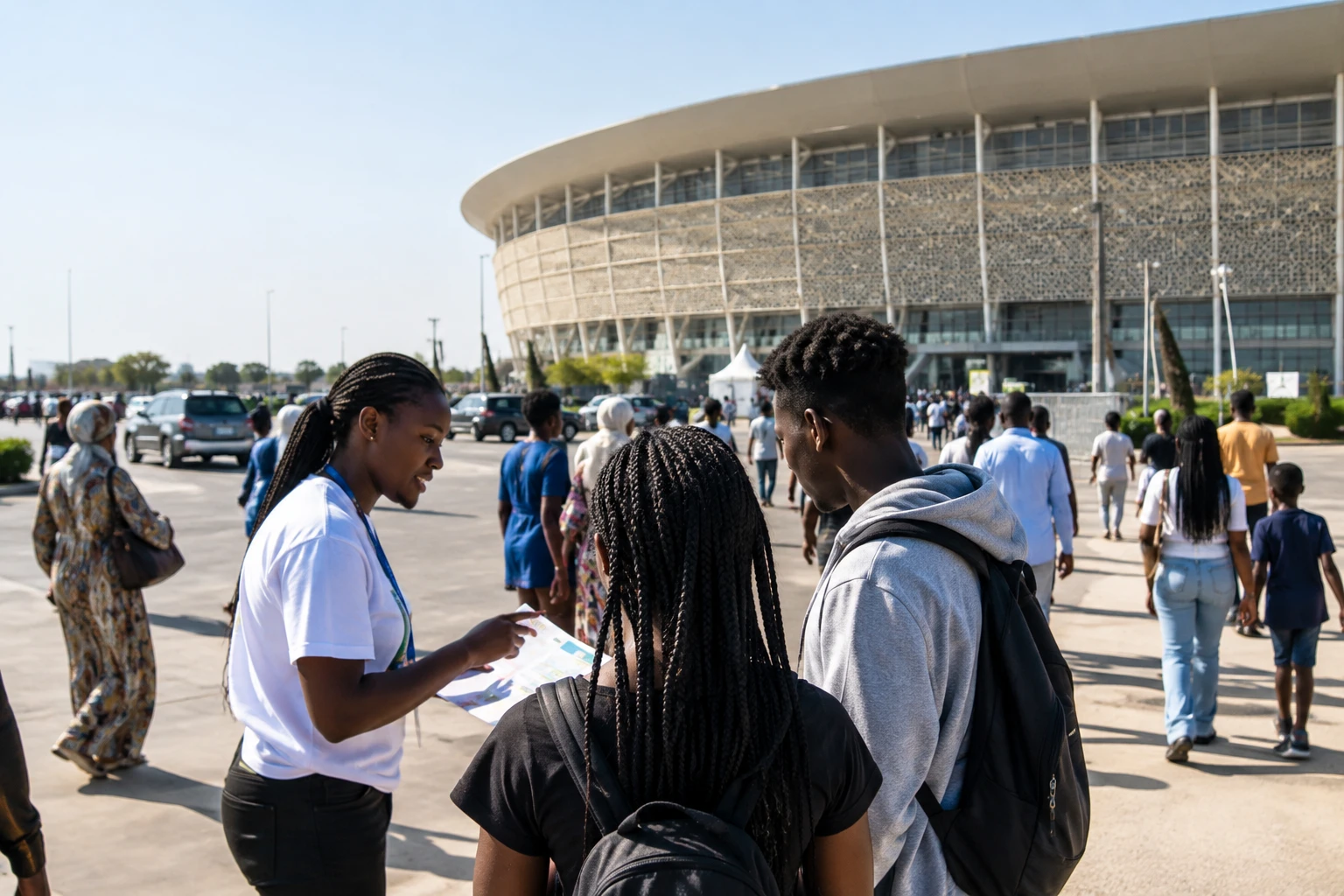
In Diamniadio, the opening of the Youth Olympic Games (YOG) put Senegal at the centre of an unprecedented sporting event for the continent. But the stakes go beyond the ceremony: for two weeks, the country is hosting thousands of young athletes and testing its ability to organise an international event while asserting its own place in the Olympic movement.
An Olympic first in Senegal
On Saturday 31 October 2026, the Abdoulaye Wade Stadium in Diamniadio hosted the opening ceremony of the Dakar YOG. The event blended references to Senegalese and African cultures, artistic performances and Olympic symbols. The International Olympic Committee (IOC) said more than 1,100 artists and performers had taken part in the show. The Senegalese Press Agency (APS) also reported on the ceremony held at the stadium.
The opening marks a first: no Olympic event has ever been held on African soil. The Games run from 31 October to 13 November across three host areas: Dakar, Diamniadio and Saly. According to IOC figures, about 2,700 athletes aged 17 or under are expected to compete in 25 sports. The programme also includes educational and cultural activities.
The competition was initially scheduled for 2022. Senegal and the IOC subsequently agreed to postpone it to 2026 amid the Covid-19 pandemic. The delay extended preparations, but also placed the YOG in a national calendar in which infrastructure, transport and youth engagement are under scrutiny beyond the sporting event itself.
Culture, hospitality and representation
The opening show gave a prominent place to African creativity and cultural references. This choice reflects the Games’ slogan, “Africa Welcomes, Dakar Celebrates”, and the stated aim of making encounters between delegations as much a part of the event as the competitions. The IOC also presents the ceremony as a celebration of Senegal’s tradition of teranga, often translated as hospitality.
This staging matters because Senegal is not merely the backdrop to an international competition. The artists, technicians, craftspeople, volunteers and businesses involved all contribute to making the event. The IOC reports, in particular, that costumes were made locally with contributions from craftspeople and creative professionals. These institutional figures shed light on the ambition to showcase Senegalese expertise, although they are not, on their own, enough to measure lasting economic benefits.
Gender parity is another marker of this edition. The IOC says Dakar 2026 has achieved gender equality in athlete quotas, sports, disciplines and events. Equal representation alone does not guarantee lasting and equitable access to sport. It does, however, give young female athletes significant visibility, and their journeys and results could influence the place of women’s sport in clubs and federations.
Beyond the stadium, the organisation is put to the test
The competitions are not concentrated in the capital. Dakar, Diamniadio and the seaside resort of Saly are hosting different activities. This spread-out organisation puts transport, accommodation, security, coordination between venues and public access to the test. It directly affects residents, traders and workers in the host areas, as well as delegations and visitors.
Potential benefits and constraints are not necessarily distributed in the same way. Formal businesses that may provide services to the organisers experience the event differently from small shops and informal economy operators, who depend more on visitor numbers and access conditions at the venues. Similarly, residents living near facilities may benefit from new activities while also being more exposed to disruption caused by transport or organisational measures. Concrete outcomes will depend on the day-to-day running of the Games and how the facilities are used after they close.
The event also has a long-term sporting dimension. For young athletes, the YOG provide an international platform and competition experience. For Senegalese federations, they offer an opportunity to promote sports and strengthen development pathways. But legacy is not just about facilities or visibility: it will also be judged by the continuity of programmes, young people’s access to infrastructure and the support given to clubs, in the capital as well as in other regions.
A regional signal, with no automatic guarantee of legacy
The significance of Dakar 2026 extends beyond Senegal’s borders. Hosting the first Olympic event in Africa gives the continent a new place in the international sporting movement’s calendar. It also fuels debate about African countries’ ability to host major competitions and the geographical distribution of such events, long concentrated in other parts of the world.
This visibility should not obscure practical questions. Senegalese authorities and organisers will have to ensure the competitions run smoothly, make the venues accessible and clarify how the facilities will be used in future. For regional observers, the key question will be whether the experience helps build local expertise in sports organisation and foster exchanges between African federations and young athletes.
The 31 October ceremony therefore opened more than a programme of competitions. It ushered in a period in which Senegal welcomes the world, while Africa watches to see what place it is given in Olympic sport. The YOG’s record will be measured as much by performances and participation as by what remains after 13 November for athletes and residents of the host cities.



