
 Algeria
 Egypt
 Libya
 Morocco
 Sudan
 Tunisia
 Benin
 Burkina Faso
 Cabo Verde
 Côte d'Ivoire
 Ghana
 Guinea
 Guinea-Bissau
 Liberia
 Mali
 Mauritania
 Niger
 Nigeria
 Sierra Leone
 The Gambia
 Togo
 Cameroon
 Central African Republic
 Chad
 DR Congo
 Equatorial Guinea
 Gabon
 Republic of the Congo
 São Tomé and Príncipe
 Burundi
 Comoros
 Djibouti
 Eritrea
 Ethiopia
 Kenya
 Madagascar
 Malawi
 Mauritius
 Mozambique
 Rwanda
 Seychelles
 Somalia
 South Sudan
 Tanzania
 Uganda
 Angola
 Botswana
 Eswatini
 Lesotho
 Namibia
 South Africa
 Zambia
 Zimbabwe
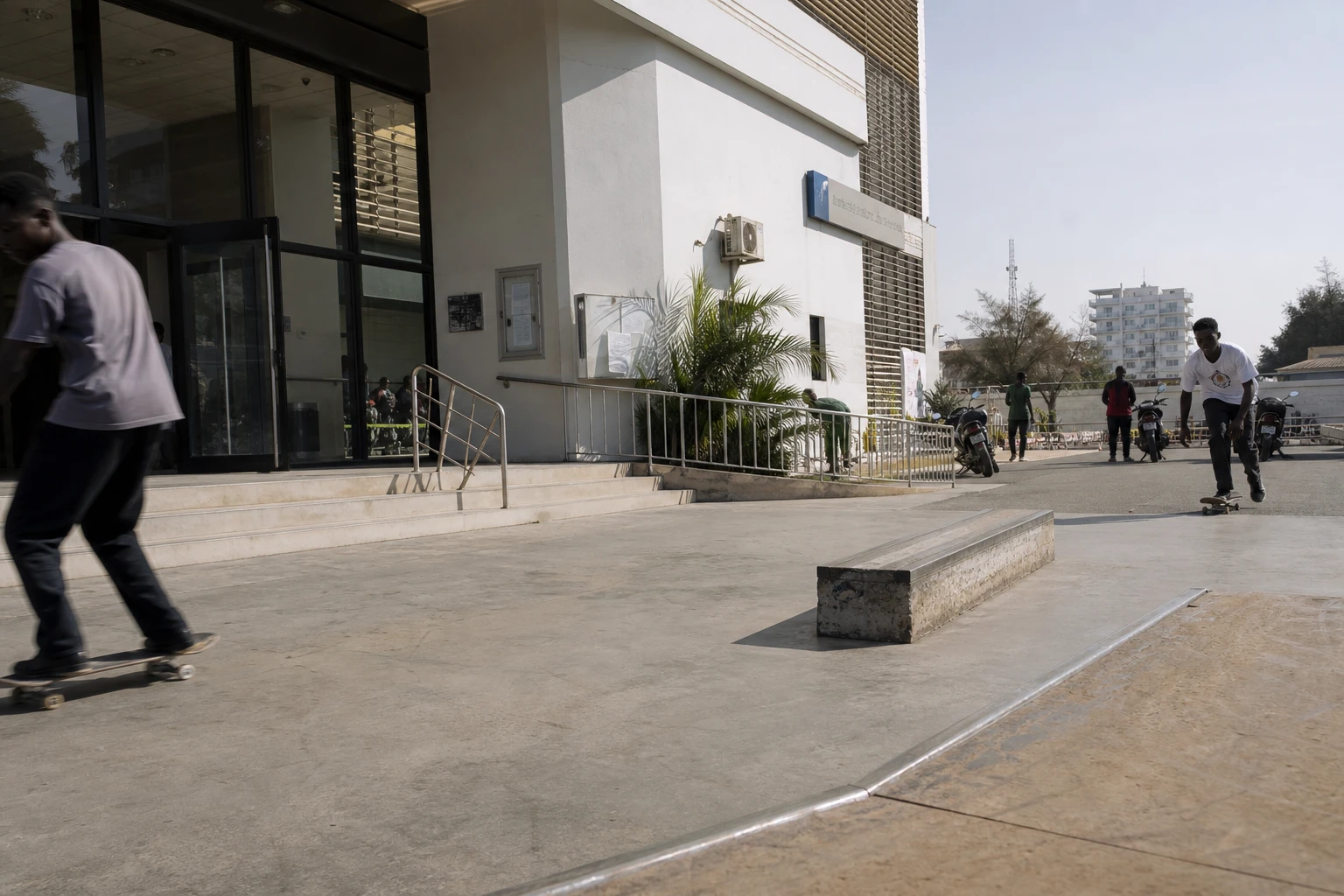
In Dakar, a skateboard means more than a sporting fad
In Senegal’s capital, skateboarding is no longer just a pastime by the seaside or in the neighbourhood. It has become a marker of a generation, public space and national ambition. As Dakar hosts the Youth Olympic Games, an urban pursuit long seen as marginal is also gaining new status.
Senegal is not simply hosting a competition. From 31 October to 13 November 2026, Dakar is set to host the first Olympic event ever held on the African continent. The programme includes 2,700 athletes aged 17 or under, competing across 25 sports and taking part in 10 engagement sports, with organisers promising gender parity. Street skateboarding is among the disciplines selected.
The choice is no accident. Skateboarding speaks to an urban youth that is mobile, creative and often connected to street culture, music and social media. In Dakar, it also intersects with other established sports scenes, such as roller skating, surfing and breaking. The Senegalese Roller & Skateboard Federation, founded in 2010, says it is part of this momentum, with an avowedly local base and partnerships with sports and urban institutions.
Senegal hosts; Africa watches
The context extends well beyond the skatepark. The Dakar 2026 Youth Olympic Games were conceived as a test of organisational capacity, but also as a political and symbolic signal. The IOC says the Games will take place in Dakar, Diamniadio and Saly, bringing together 2,700 young athletes for 153 events. For Africa, the stakes go beyond the medal table: the aim is to show that a major Olympic event can be hosted on the continent, with its constraints, talents and distinctive cultural codes.
The Olympic flame’s recent arrival in Dakar confirmed this shift. At Place du Souvenir Africain in the Senegalese capital, the ceremony brought together music, dance and prominent women assembled for the occasion. Agence France-Presse noted that the relay in Dakar forms part of the countdown to the first Olympic event held in Africa, while Senegal’s public broadcaster highlighted the cultural and territorial significance of the flame’s tour through the country’s 14 regions.
The flame’s journey says something important: Dakar 2026 is not conceived as an interlude confined to the capital. The project also extends to Diamniadio, where recent infrastructure is concentrated, and to Saly, which completes the coastal axis of the event. Senegal is thus using a sporting event to tell the story of its territory, connect the city with the regions and diaspora, and present Senegalese hospitality in a contemporary setting.
What skateboarding means for Senegalese youth
The schedule itself gives a sense of the moment. According to the provisional programme published by the Senegalese Press Agency, the street skateboarding events are due to take place in Dakar on 4 and 5 November. This is no technical detail. It means that a discipline long seen as peripheral is becoming an Olympic event, followed, organised and covered by the media on Senegalese soil.
On the ground, this growing momentum is having tangible effects. For young skaters, it opens up the prospect of recognition. For coaches, it brings more demanding standards in training, safety and judging. For local authorities, it raises the question of lasting facilities beyond the Games’ peak. Senegalese urban-sports figures are already championing the idea of a lasting legacy, with skatepark projects designed to endure beyond 2026.
This legacy is essential. A major event is meaningful only if it leaves more than memories. In Dakar, that means better-distributed sports facilities, better-trained clubs and greater recognition for disciplines that appeal to teenagers in neighbourhoods as well as young people in secondary cities. The partnership announced in August 2026 with US skateboarding champions, who came to lead workshops and work with Senegalese coaches, illustrates an approach based on exchanging expertise rather than simply creating an international showcase.
The signal also reaches beyond Senegal’s borders. In West Africa, where ECOWAS capitals often seek to link sport, youth employment and urban planning, Dakar could become a model. If the infrastructure holds up, technical know-how is passed on and local clubs strengthen their foundations, skateboarding could join the disciplines that help build a more diverse African sports ecosystem for the long term. That is where the true significance of Dakar 2026 will be measured, beyond the podiums: in Senegal’s ability to turn a global celebration into a useful legacy for its youth and, more broadly, for an urban Africa creating its own sporting codes.



