Algeria
 Egypt
 Libya
 Morocco
 Sudan
 Tunisia
 Benin
 Burkina Faso
 Cabo Verde
 Côte d'Ivoire
 Ghana
 Guinea
 Guinea-Bissau
 Liberia
 Mali
 Mauritania
 Niger
 Nigeria
 Sierra Leone
 The Gambia
 Togo
 Cameroon
 Central African Republic
 Chad
 DR Congo
 Equatorial Guinea
 Gabon
 Republic of the Congo
 São Tomé and Príncipe
 Burundi
 Comoros
 Djibouti
 Eritrea
 Ethiopia
 Kenya
 Madagascar
 Malawi
 Mauritius
 Mozambique
 Rwanda
 Seychelles
 Somalia
 South Sudan
 Tanzania
 Uganda
 Angola
 Botswana
 Eswatini
 Lesotho
 Namibia
 South Africa
 Zambia
 Zimbabwe
In Dakar, urban sports become a national priority
In less than a year, Dakar will be more than a host capital. It will become the first African city to host the Youth Olympic Games, scheduled for 31 October to 13 November 2026. The choice of disciplines such as Breaking, street skateboarding and Baseball5 is no accident. They speak to a city where urban cultures have already found their places, codes and practitioners.
The event is also part of a broader moment for Senegal. Dakar 2026 must show that a major sporting event can be conceived from Africa, and not only for Africa. The official programme confirms that the Tour de l’Œuf complex, on the city’s western edge, will host Baseball5, Breaking and street skateboarding, among other events. The most urban competitions will therefore take place in the heart of the Senegalese capital, close to a young and densely populated community.
A programme designed for the ground, not just the showcase
The IOC has selected a programme of 25 sports for Dakar 2026, including disciplines already featured at the Paris 2024 Games or on the programme for Los Angeles 2028, as well as Baseball5, which is still little known to the wider public. The idea is simple: to offer sports that can find an immediate following in African cities, where streets, schools and public spaces often serve as the first training grounds.
Breaking, which became an Olympic discipline at Paris 2024, will not feature in Los Angeles in 2028. Skateboarding, by contrast, will remain on the Olympic programme. Baseball5, meanwhile, will be one of the new events at Dakar 2026. For young Senegalese people, this trio therefore tells a story of transition: from an already visible urban pursuit to an emerging discipline that the Olympic event can accelerate.
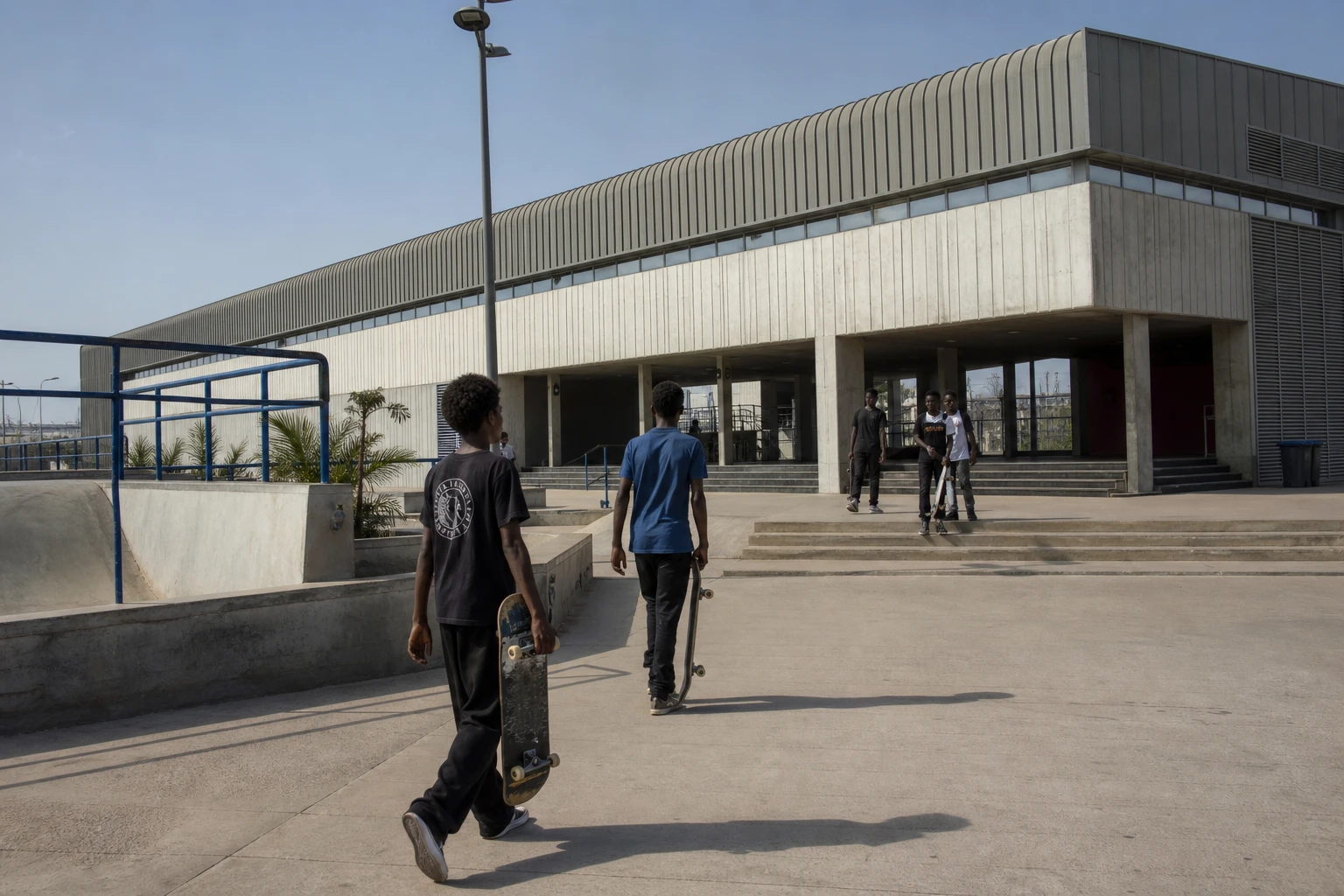
Skateboarding is a particularly telling case. In Grand-Yoff, the Place des cultures urbaines was inaugurated in October 2023, with a public skatepark covering more than 1,000 m², designed also for dancers and other street arts. This kind of facility provides a setting for activities that have long remained informal. Above all, it shows that Dakar is not waiting for the event to develop its relationship with urban sport.
Breaking is following the same path. Its presence at Dakar 2026 builds on dance communities already active in the city and in several African countries. The discipline has rules, but remains easy to follow: two dancers face off in a battle, judged on technique, creativity and musicality. It is more than a spectacle. It is also a way of recognising urban culture as a sporting practice in its own right.
Baseball5: simplicity as a strategy for building a following
Baseball5 comes with a different promise. This five-a-side version is played on a small area, without a bat or glove. The ball is hit by hand. The game is mixed by design, with teams required to maintain a balance between girls and boys. The WBSC describes it as a fast, accessible sport that can be replicated almost anywhere. That is precisely what makes it a credible candidate for the African continent.
Senegal began preparing the ground in 2021, with development campaigns, training courses and coaching sessions. In Thiès, young people have even gathered to prepare for the Olympic event. The goal is clear: to build a local base for a discipline that cannot survive on an Olympic tournament alone. Without clubs, coaching and regular participation, Baseball5 would remain a curiosity. With them, it can become a gateway to other forms of school and neighbourhood sport.
The challenge, however, has not been fully resolved. WBSC documents noted in 2025 that the development of a Senegalese Baseball5 team had not progressed as quickly as hoped. This warning does not undermine the sport’s appeal. It simply serves as a reminder that an international event is not enough to create a pathway. It takes time, federations, coaches and regular participation.
What Dakar 2026 could change beyond the medals
For young Senegalese athletes, the stakes go beyond the podium. The Youth Olympic Games could open up pathways in dance, skateboarding, refereeing, sports coaching or event organisation. They could also strengthen places such as Grand-Yoff, which already brings together sport, artistic creation and urban social life. In a city where public facilities remain unevenly distributed, this kind of infrastructure matters as much for access as for image.
For the Senegalese authorities, Dakar 2026 is also a test of credibility. They must host, secure and provide transport for the competition, and make it work across several venues in Dakar, Diamniadio and Saly. Above all, they must leave a useful legacy after the Olympic flame has gone out. At major African events, the real question is not only how they open, but what they leave behind: who uses the facilities, who supports the activities and who benefits in the long term.
The regional context gives the moment added significance. In West Africa, ECOWAS is seeking to preserve areas of cooperation despite political and security tensions. Dakar 2026 offers another narrative: that of a country investing in a modern, urban and inclusive sporting scene. The stakes are broader still for the continent. If Senegal succeeds, Africa will not merely be the backdrop to an Olympic event. It will become a centre of sporting, cultural and organisational production watched by the entire Olympic world.
The schedule is now set. Preliminary competitions and urban events are due to begin in early November 2026, with Baseball5, Breaking and street skateboarding in the spotlight. Until then, Dakar faces a quieter but essential challenge: turning an Olympic promise into a lasting practice, for Senegalese people and the rest of the continent.