Algeria
 Egypt
 Libya
 Morocco
 Sudan
 Tunisia
 Benin
 Burkina Faso
 Cabo Verde
 Côte d'Ivoire
 Ghana
 Guinea
 Guinea-Bissau
 Liberia
 Mali
 Mauritania
 Niger
 Nigeria
 Sierra Leone
 The Gambia
 Togo
 Cameroon
 Central African Republic
 Chad
 DR Congo
 Equatorial Guinea
 Gabon
 Republic of the Congo
 São Tomé and Príncipe
 Burundi
 Comoros
 Djibouti
 Eritrea
 Ethiopia
 Kenya
 Madagascar
 Malawi
 Mauritius
 Mozambique
 Rwanda
 Seychelles
 Somalia
 South Sudan
 Tanzania
 Uganda
 Angola
 Botswana
 Eswatini
 Lesotho
 Namibia
 South Africa
 Zambia
 Zimbabwe
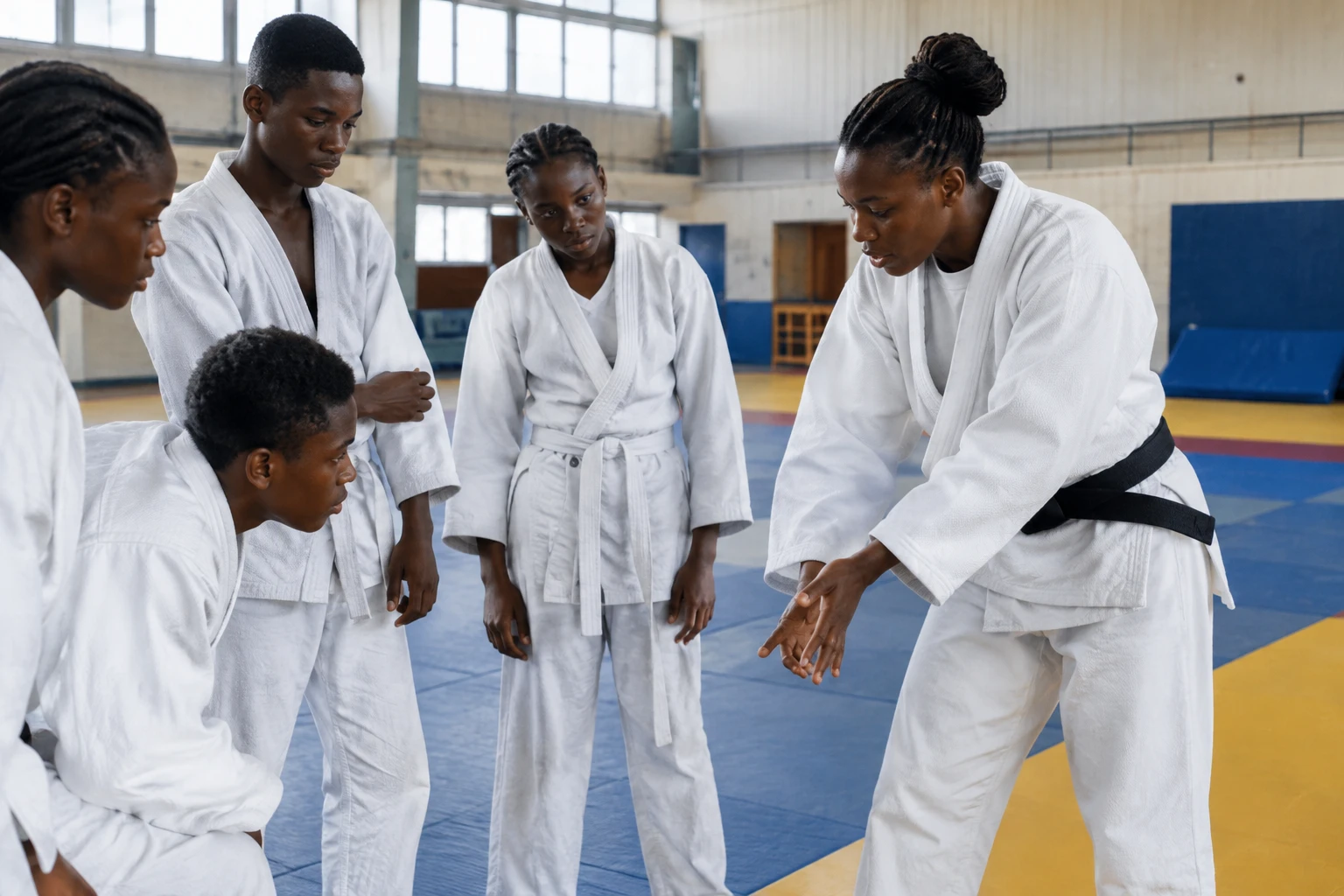
In Diamniadio, young judokas are not just looking for a medal. They are also discovering what it means to take part in an international competition, manage pressure and get back up after a defeat. Alongside them, champion Clarisse Agbégnénou is sharing an experience that results do not always tell.
A first for Senegal and the continent
From 31 October to 13 November 2026, the Youth Olympic Games (YOG) are bringing together young athletes in Dakar, Diamniadio and Saly. It is the first Olympic event to be held on African soil. Around 2,650 athletes from 204 national Olympic committees are taking part, alongside an Refugee Olympic Team, according to the International Olympic Committee (IOC). The competitions cover 25 sports, with ten additional participation disciplines.
For Senegal, hosting these Games marks a milestone in its place within the international sporting movement. But the stakes go beyond ceremonies and infrastructure: the event must also engage the country’s young people and pass on skills to local stakeholders. The competition extends beyond the capital to Diamniadio and Saly, bringing delegations from around the world together.
This regional reach is also symbolic. Young Africans can watch athletes their own age compete on an Olympic stage hosted on the continent, rather than from afar. But the legacy cannot be measured by visibility alone: access to facilities, training and sporting activities after the Games will determine who benefits in the long term.
A champion alongside young judokas
The IOC selected Clarisse Agbégnénou as one of the athlete role models for Dakar 2026. These experienced athletes meet participants, advise them and contribute to workshops on mental preparation, injury prevention and career management. The International Judo Federation confirms that the French judoka is in Senegal in this role.
A three-time Olympic champion and six-time world champion, Agbégnénou knows the demands that come with elite sport. In Diamniadio, she spoke with the young judokas before the events began. “I am immensely proud to be here,” she told the International Judo Federation, describing her joy at meeting future champions.
Her message also focuses on perseverance and confidence, particularly for young girls. In an interview in Diamniadio, she said she wants to show them that they can continue in sport and aim to win, even when puberty makes their journey more challenging. This is her personal testimony: it is no substitute for medical support or the work of coaches, but it gives a human face to a high-level sporting career.
The Youth Games serve a particular purpose. They combine competition and learning before athletes move on to senior circuits and the Olympic Games. For a teenage athlete, meeting a champion can help demystify the tatami and the pressures of international competition. It does not guarantee a future career, but it can make the challenges seem more familiar and show that champions, too, have gone through stages of learning.
Passing on experience, beyond medals
The athlete role model programme is based on a simple idea: sporting experience can be passed on in ways other than standing on the podium. Conversations cover the less visible moments of a career, such as managing pressure, injuries and long-term choices. In Dakar, mentors are also present at training sessions and among local communities.
The meeting has particular significance for girls. Teenage girls may face physical, social or material obstacles that make it harder to stay involved in sport. The presence of a champion who speaks openly about continuing and having ambition offers a tangible example. For this impact to last beyond a few days, however, there must be accessible clubs, trained coaches and pathways suited to young sportswomen.
In Senegal, as elsewhere, access to sport varies according to location and family resources. The visibility of an international event is therefore not enough to guarantee regular participation for everyone. Clubs, schools, federations and local authorities will have an essential role in sustaining the momentum after the competitions end.
A legacy to be measured after the Games
Dakar 2026 opens a historic door for African sport, but its success will also be judged over time. Will the facilities serve clubs and schools? Will young Senegalese people be able to access activities and training linked to the Games? And will the ties formed between delegations lead to new sporting exchanges? These questions will matter as much as the results on the leaderboard.
The continental significance is already clear in the diversity of the participants and in the fact that Africa is hosting an Olympic event for the first time. For African federations, this edition offers an opportunity to develop youth coaching and strengthen cross-border sporting exchanges. What follows, however, will depend on the resources devoted to these goals after 13 November.
In Diamniadio, Agbégnénou’s role is measured less by the advice she gives than by the conversations it prompts. The teenagers will leave with their results, but also with a first Olympic experience and, perhaps, reference points for what comes next. Senegal’s challenge is to ensure that this experience does not remain confined to the days of competition.
The account of Clarisse Agbégnénou’s meeting with young judokas in Dakar and the IOC’s details on the athlete role model programme shed light on this initiative. The dates and scale of the Games are also confirmed by the report on the opening of Dakar 2026.