
 Algeria
 Egypt
 Libya
 Morocco
 Sudan
 Tunisia
 Benin
 Burkina Faso
 Cabo Verde
 Ghana
 Guinea
 Guinea-Bissau
 Liberia
 Mali
 Mauritania
 Niger
 Nigeria
 Senegal
 Sierra Leone
 The Gambia
 Togo
 Cameroon
 Central African Republic
 Chad
 DR Congo
 Equatorial Guinea
 Gabon
 Republic of the Congo
 São Tomé and Príncipe
 Burundi
 Comoros
 Djibouti
 Eritrea
 Ethiopia
 Kenya
 Madagascar
 Malawi
 Mauritius
 Mozambique
 Rwanda
 Seychelles
 Somalia
 South Sudan
 Tanzania
 Uganda
 Angola
 Botswana
 Eswatini
 Lesotho
 Namibia
 South Africa
 Zambia
 Zimbabwe
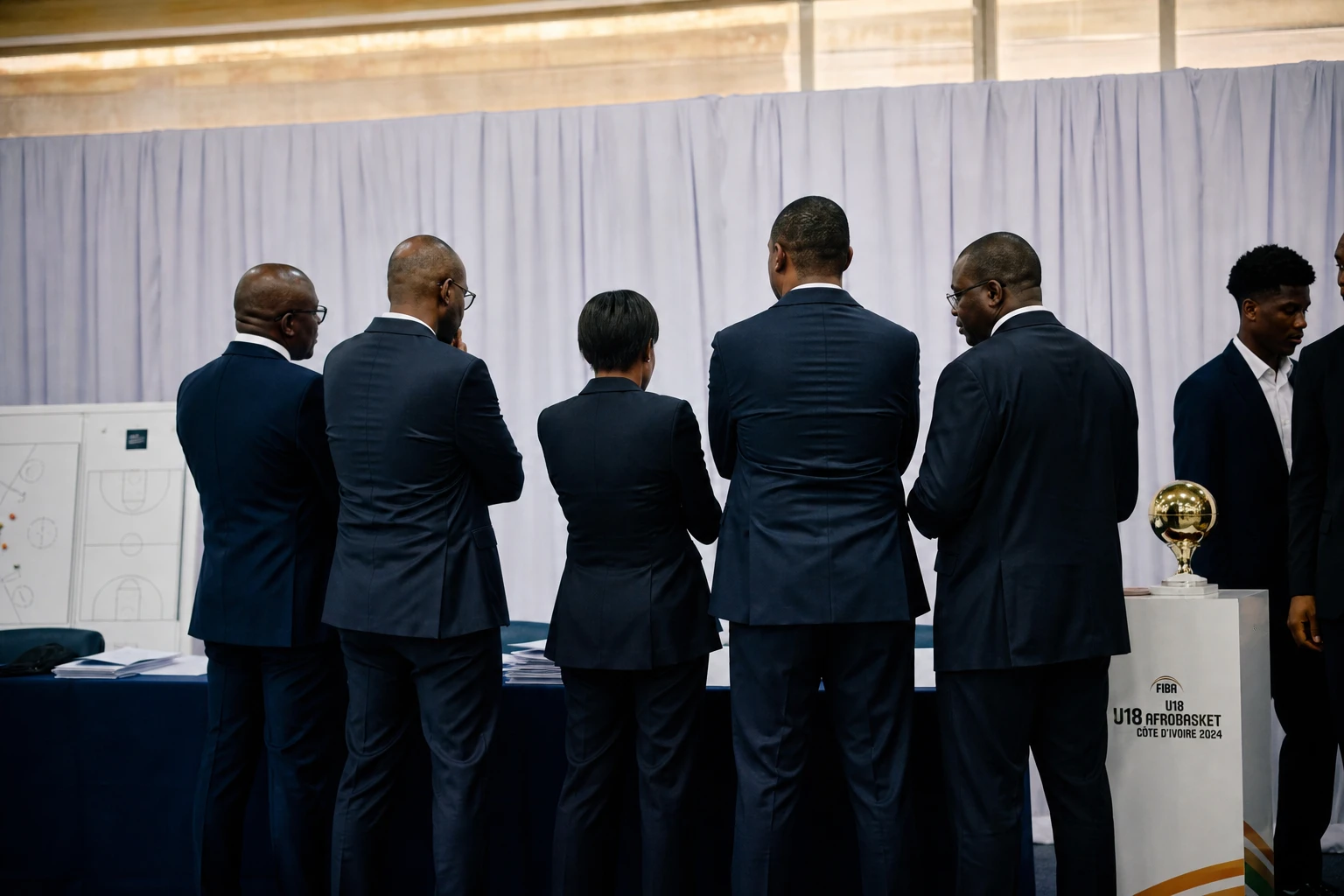
In Treichville, a final that also reflects the rise of Ivorian basketball
In Abidjan, the AfroBasket U18 final is about more than a match between two youth teams. It also says something broader: Côte d’Ivoire’s ability to organise, host and showcase a continental competition on home soil.
At a time when youth sport is becoming a marker of soft power, the event at the Palais des Sports de Treichville has taken on particular significance. For host nation Côte d’Ivoire, the U18 category serves as a showcase. For Senegal, it remains a test of high standards, with a generation under scrutiny in a West Africa where grassroots basketball is progressing rapidly.
Ivorians take control from the outset
On Sunday 16 August, in Treichville, the young Elephants seized the initiative in the opening minutes of the final against Senegal’s young Lions. The first quarter set the tone: Côte d’Ivoire led 16-7. The second confirmed the gap, with an 18-17 advantage for the period, leaving the score at 34-24 at half-time.
After the break, the momentum remained with Côte d’Ivoire. Two three-pointers widened the gap further, to 49-32 during the third quarter. In that spell, Côte d’Ivoire never let Senegal regain control. The lead never changed hands after the opening tip. The Ivorians also put together an 8-0 run, the best of the match, while Senegal’s best response was a 6-0 run.
The statistics support the impression of control. Côte d’Ivoire spent 19 minutes and 29 seconds in the lead. Senegal never led. Shooting percentages remained modest for a continental final, at 27% for the Ivorians and 29% for the Senegalese. But the hosts made better use of their trips to the line, converting 84.21% of their free throws against 62.5% for their opponents.
What this final means for both teams
Beyond the score, the match highlights two different trajectories. Côte d’Ivoire had reached an U18 final for the first time since 2012. That return alone matters. It shows that a development policy can produce visible results, especially when backed by the advantages of competing at home and the experience gained from hosting major events in Abidjan.
Senegal, for its part, confirmed its status as one of the continent’s leading nations in youth basketball. Its run to the final, following a narrow win over defending champions Mali, is a reminder of the strength in depth of West African basketball. In this sub-region, sporting rivalry between Gulf of Guinea and Sahelian countries has for years fuelled genuine competition, particularly among young players.
Individually, two names stood out at half-time. Papa Ndiack Faye was leading the Senegalese side with a rating of 13. On the other side, Nathan Djako, who had already impressed in the semi-final against Cameroon, had a rating of 9 and established himself as one of Côte d’Ivoire’s key offensive players. Profiles like theirs are attracting attention beyond this final. At this age, a strong continental performance can open the door to training centres, senior national teams and university circuits.
The significance is also institutional. Côte d’Ivoire secured the hosting rights for this 2026 edition after the success of the 2025 Women’s AfroBasket in Abidjan. In FIBA Africa competition terms, that means renewed confidence in the country’s logistical capacity. For political capital Yamoussoukro, but above all for Abidjan, the country’s economic and sporting centre, the stakes go beyond the court: they touch on the image of stability, hospitality and expertise that the Ivorian state seeks to project.
A West African showcase with continental resonance
The final also has regional significance. ECOWAS, a space for movement and sporting competition in West Africa, regularly sees youth teams emerge that go on to strengthen their senior sides. Basketball is becoming an area of development there, alongside football, with federations under pressure to invest more in talent identification, school championships and youth leagues.
The Treichville event is also a reminder that youth competitions have a very tangible continental impact. Both finalists have qualified for the 2027 FIBA U19 World Cup in the Czech Republic. For Côte d’Ivoire and Senegal alike, the final is therefore not just about adding a name to the honours list. It is also a handover towards the highest level, where the international profile of African talent is built.
It remains to be seen which of these two U18 basketball programmes will emerge from the final with the trophy, and which will leave with valuable confidence for what lies ahead. Either way, Abidjan will have provided a credible stage for a generation already seeking its place in the future of African basketball.



